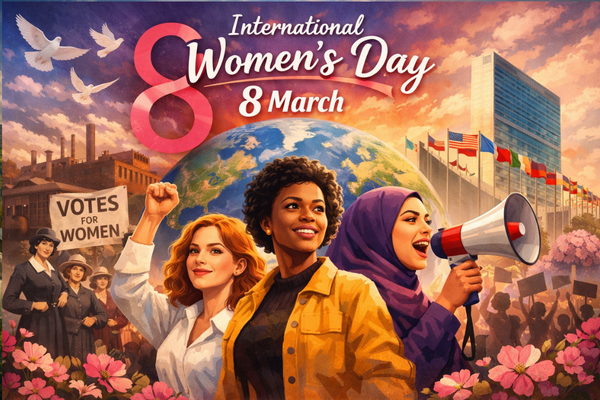
International Women’s Day (8 March): Full History, Origin, and Significance
International Women’s Day, celebrated every year on 8 March, is one of the most important global observances dedicated to recognizing the achievements and struggles of women. It is a day that highlights women’s contributions to society, raises awareness about gender equality, and encourages action for women’s rights. Across the world, millions of people celebrate the day with events, campaigns, conferences, educational programs, and social initiatives that honor women’s social, economic, cultural, and political accomplishments.
Today, International Women’s Day is celebrated in more than 100 countries and has become a powerful symbol of equality, empowerment, and respect for women.
What is International Women’s Day?
International Women’s Day (IWD) is an annual international celebration that recognizes the achievements of women and highlights the ongoing fight for gender equality. The day focuses on issues such as women’s rights, equal pay, education, leadership opportunities, and protection against discrimination and violence.
The observance encourages societies to acknowledge women’s contributions in various fields including science, politics, business, education, arts, and sports. It also reminds people that although significant progress has been made, gender equality is still not fully achieved in many parts of the world.
International Women’s Day serves three main purposes:
-
Celebrating women’s achievements
-
Promoting gender equality
-
Raising awareness about women’s rights issues
In many countries, the day is marked by rallies, conferences, cultural events, and community programs designed to empower women and girls.
Why is International Women’s Day Celebrated?
International Women’s Day is celebrated to recognize the historical struggle of women for equal rights and better living conditions. In the late 19th and early 20th centuries, women across the world faced severe discrimination. They had limited rights, lower wages, poor working conditions, and little political representation.
Women began organizing movements demanding:
-
Equal pay for equal work
-
Voting rights
-
Better working conditions
-
Access to education
-
Freedom from discrimination
These early protests and movements laid the foundation for International Women’s Day. The celebration serves as a reminder of those struggles and the progress achieved over time.
Even today, the day highlights ongoing issues such as:
-
Gender pay gaps
-
Violence against women
-
Limited leadership representation
-
Education inequality
By raising awareness of these challenges, International Women’s Day encourages individuals, governments, and organizations to work toward a more equal society.
The Birth of International Women’s Day
The origin of International Women’s Day dates back to the early 20th century when industrialization was transforming societies in Europe and North America. During this period, many women worked in factories under harsh conditions and were paid significantly less than men.
1908: Women Workers Protest in New York
One of the earliest events associated with the creation of International Women’s Day occurred in 1908, when thousands of women garment workers marched in New York City. They protested against long working hours, unsafe conditions, and low wages.
The protesters demanded:
-
Shorter working hours
-
Better pay
-
Voting rights
-
Improved working conditions
Their protests drew international attention to women’s rights and inspired further activism worldwide.
1909: The First National Women’s Day
In 1909, the Socialist Party of America organized the first National Women’s Day in the United States on 28 February. The day was dedicated to advocating women’s rights and honoring the women workers who had protested the previous year.
This event marked the beginning of a movement that would soon spread internationally.
1910: The Concept of Creating a Global Day for Women Emerges
The idea of creating a global day for women was proposed in 1910 at the International Socialist Women’s Conference held in Copenhagen, Denmark.
A German activist named Clara Zetkin suggested that women around the world should celebrate a special day each year to promote women’s rights and demand equality.
Her proposal received unanimous support from more than 100 women from 17 countries, including representatives from trade unions and socialist organizations.
This historic decision led to the creation of International Women’s Day.
1911: The First International Celebration March 8
The first International Women’s Day celebration took place in 1911 in several European countries, including:
-
Germany
-
Austria
-
Denmark
-
Switzerland
Millions of people participated in rallies and meetings demanding women’s rights.
Their main demands included:
-
The right to vote
-
The right to hold public office
-
Equal work opportunities
-
Protection from discrimination
The movement gained rapid support and spread across Europe.
1917: A Historic Moment in Russia
One of the most significant events in the history of International Women’s Day occurred in 1917 in Russia.
During World War I, women in Petrograd (modern-day St. Petersburg) organized massive demonstrations demanding “Bread and Peace.”
They protested against:
-
Food shortages
-
Poor living conditions
-
The ongoing war
The protests sparked the Russian Revolution, which eventually led to the abdication of the Russian Tsar. Shortly afterward, women in Russia were granted the right to participate in national elections.
Because of this historic protest, the date March 8 became permanently associated with International Women’s Day.
1922–1960: Expansion of the Celebration
After the Russian Revolution, International Women’s Day began to spread across many countries, particularly in socialist nations.
In 1922, Russian leader Vladimir Lenin officially declared March 8 as International Women’s Day in the Soviet Union.
During the following decades, the celebration became popular in:
-
Eastern Europe
-
Asia
-
Latin America
The day gradually evolved from a political movement into a broader celebration of women’s achievements.
1975–1977: United Nations Recognition
The global recognition of International Women’s Day increased significantly when the United Nations (UN) began promoting the observance.
Key milestones include:
1975
The UN celebrated International Women’s Day for the first time during the International Women’s Year.
1977
The United Nations General Assembly officially invited countries around the world to celebrate March 8 as International Women’s Day.
This recognition helped transform the day into a truly global celebration.
How March 9 International Women’s Day is Celebrated Today
Today, International Women’s Day is observed in many different ways across the world.
Common activities include:
Public Events
Governments, organizations, and communities host conferences, seminars, and discussions about women’s rights.
Awareness Campaigns
Many organizations launch campaigns promoting gender equality and women’s empowerment.
Awards and Recognition
Women who have made outstanding contributions in fields like science, politics, education, and social work are honored.
Cultural Celebrations
Concerts, exhibitions, and artistic performances celebrate women’s achievements and culture.
Gifts and Appreciation
In many countries, people give flowers or gifts to mothers, wives, sisters, and colleagues as a sign of respect and appreciation.
Annual Themes of International Women’s Day
Each year, International Women’s Day is celebrated with a specific theme to focus global attention on important issues affecting women.
For example, the 2026 theme is “Give to Gain.” This theme encourages people to support women and girls through education, mentorship, and opportunities, emphasizing that empowering women benefits society as a whole.
Previous themes have focused on:
-
Gender equality
-
Women in leadership
-
Innovation and technology
-
Ending violence against women
These themes help guide global discussions and initiatives.
Importance of International Women’s Day
International Women’s Day plays an essential role in promoting gender equality worldwide.
1. Celebrating Achievements
The day highlights the achievements of women in various fields including science, politics, sports, and business.
2. Promoting Equality
It encourages societies to address discrimination and promote equal opportunities.
3. Inspiring Future Generations
Young girls are inspired by the stories of successful women and motivated to pursue their dreams.
4. Raising Awareness
The day brings global attention to issues like unequal pay, lack of education, and violence against women.
Women’s Progress Over the Years
Since the early women’s rights movements, significant progress has been made.
Some major achievements include:
-
Women gaining voting rights in most countries
-
Greater access to education
-
Increased participation in politics
-
More women in leadership positions
However, challenges still remain, and International Women’s Day continues to push for further progress.
International Women’s Day in Different Countries
The celebration varies from country to country.
Russia and Eastern Europe
It is a public holiday and women receive flowers and gifts.
China
Many companies give women half a day off work.
Italy
People traditionally give yellow mimosa flowers to women.
United States and United Kingdom
The day focuses on conferences, awareness campaigns, and social activism.
The Future of International Women’s Day
International Women’s Day continues to evolve as a global platform for change.
With the rise of digital media and global activism, the movement is reaching more people than ever before.
Future goals include:
-
Closing the gender pay gap
-
Increasing women’s leadership roles
-
Ensuring education for girls worldwide
-
Ending violence against women
By working together, societies can build a world where gender equality becomes a reality.
International Women’s Day, celebrated on March 8, is far more than a symbolic holiday. It is a powerful reminder of the long struggle for women’s rights and the remarkable progress achieved over the past century.
From early labor protests in the United States to international recognition by the United Nations, the history of International Women’s Day reflects the courage and determination of women who fought for equality.
Today, the day celebrates women’s achievements while encouraging continued efforts to build a fair and equal world. As societies move forward, International Women’s Day remains a vital platform for inspiring change, empowering women, and promoting justice for all.