Why is Kosovo considered a third world country?
Quick answer
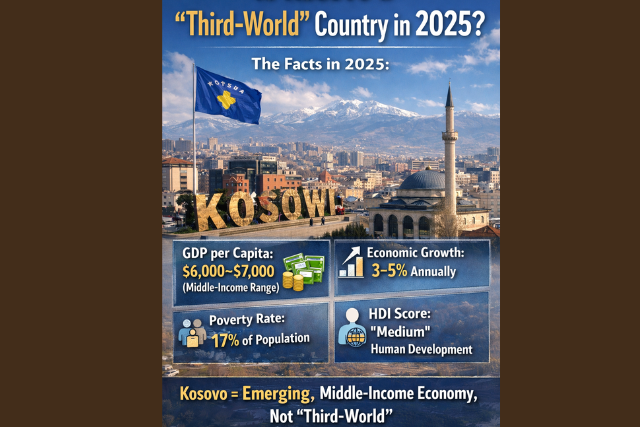
No — calling Kosovo a “third-world” country in 2025 is misleading. The Cold-War term “Third World” is outdated; by modern development and income metrics Kosovo is an emerging, middle-income economy with clear development challenges (poverty pockets, weak institutions, political risks) but also steady growth and improving human development indicators. Key numbers: Kosovo’s GDP per capita in recent reporting sits in the roughly $6–7k range (placing it in the World Bank middle-income band), with positive GDP growth and active international engagement.
Where the phrase “third-world” comes from — and why it trips people up
The label “Third World” comes from Cold War geopolitics: countries that were neither aligned with NATO/Western bloc (the “First World”) nor the Soviet bloc (the “Second World”) were lumped together as the “Third World.” Over time the phrase became shorthand for poverty and underdevelopment — but that usage conflates a political alignment term with development status. Today, most analysts, international institutions, and media prefer terms like low-income, lower-middle income, upper-middle income, developing, or emerging economy, and use objective indicators (GNI/GDP per capita, Human Development Index, poverty rates) rather than Cold War labels. For clarity: modern classification by the World Bank uses GNI per capita thresholds, so it’s more useful to compare Kosovo to those bands than to an obsolete Cold War label.
Kosovo’s economic snapshot (latest data through 2024–mid-2025)
To judge whether Kosovo fits any modern “low development” category, let’s look at the core economic facts:
-
GDP per capita (current US$): Recent World Bank datasets and country data put Kosovo’s GDP per capita in the roughly $6–7k range (2024 figures), which places Kosovo above low-income thresholds and inside the World Bank’s middle-income range.
-
Growth: Kosovo recorded positive growth in recent years — modest but persistent — with growth estimates in the mid-single digits (around 3–5% in recent reporting), reflecting expanding domestic demand and some foreign investment.
-
IMF and fiscal stance: IMF reviews highlight prudent fiscal policies and a banking sector that is broadly stable, while flagging common vulnerabilities (informality, dependence on remittances and labor migration). The IMF’s country notes for 2024–2025 provide context on public finances and reform priorities.
Collectively, those numbers indicate Kosovo is not in the “low-income” or fragile economy bracket that many associate with the outdated “third-world” label. Instead, Kosovo behaves like a small, emerging, middle-income European economy with structural gaps to close.
Human development, poverty and social indicators
Economic averages can hide inequality and local hardship. Important social indicators for Kosovo show both progress and persistent challenges:
-
Human Development (HDI) & services: Kosovo has seen improvements in education and health metrics over recent decades, but its HDI and certain service delivery indicators still lag many EU neighbors. UNDP and regional assessments highlight gains in institutional capacity but also warn of slowing progress globally and the special vulnerabilities of smaller economies.
-
Poverty and inequality: Official poverty statistics indicate non-negligible poverty rates in some areas and vulnerable groups; youth unemployment and emigration remain central social challenges. The IMF and World Bank note that while macro indicators have strengthened, social inclusion must be a priority.
So: while Kosovo is not a “failed” state nor a low-income country by global thresholds, many citizens face real economic hardship — which explains why casual observers sometimes (inaccurately) call it “third-world.”
Political context matters — recognition, EU path, and regional politics
Part of what complicates perceptions of Kosovo is its political and diplomatic situation:
-
International recognition and EU accession: Kosovo declared independence in 2008 and is recognized by many countries, but some states (including Serbia, Russia, China, and several EU members) do not recognize it. That partial recognition affects EU accession dynamics, regional cooperation, and access to certain international forums. Recent reporting and analyses show Kosovo still navigating recognition and EU relations.
-
Domestic politics: Political instability, periodic tensions with Serbia, and internal governance challenges can slow reforms and infrastructure projects, which in turn affects investment and average living standards. News and international institution reports in 2024–2025 document both progress and moments of tension.
Political limitations help explain why development progress is sometimes slower than Kosovo’s raw GDP figures might imply — but they don’t make the economy “third-world” in a technical sense.
Infrastructure, remittances, and the labor market
Kosovo’s economy has specific structural features worth noting:
-
Remittances and migration: Remittances from Kosovars abroad are a significant source of household income and foreign exchange; migration and labor mobility relieve unemployment pressures but also create “brain drain” risks. International reports emphasize remittances’ stabilizing role.
-
Infrastructure & investment: Development prospects are influenced by shortcomings in transport, power supply, and digital networks, along with an economy largely driven by small and mid-sized businesses. Donor programs, EU-backed projects, and World Bank initiatives target these gaps — progress is visible, but long-term investment is needed.
These features are common in many emerging European economies: visible progress mixed with clear development tasks.
Why the “third-world” label is misleading for Kosovo in 2025
Summarizing the evidence, here are the main reasons the “third-world” tag misses the reality:
-
The term is obsolete and ambiguous. It’s a Cold War political category, not a modern development classification. Modern institutions use income bands and HDI.
-
Kosovo’s per-capita income places it in the middle-income range. At roughly $6–7k GDP per capita (2024 data) Kosovo lands solidly above low-income thresholds and into the World Bank’s middle-income bands. That excludes the classic economic meaning people assign to “third-world.
3. Macroeconomic stability and growth. Kosovo has seen consistent positive growth and relatively prudent fiscal management, according to IMF and World Bank reporting — patterns inconsistent with the imagery the “third-world” label conjures (collapsed economies, state failure.
4. Real social challenges remain. High youth unemployment, regional disparities, and political constraints are real and must be addressed — but these make Kosovo a country in transition, not a Cold-War era “third-world” basket case.
What Kosovo needs next: policy priorities that would accelerate development
To move from “emerging with problems” to “stable, prosperous EU-integrated economy,” Kosovo will likely need to focus on:
Improving rule of law and governance to attract higher volumes of foreign direct investment.
World BankUpgrading infrastructure (energy, transport, digital) to reduce business costs and raise productivity.
World Bank DocsLabor market reforms and education to convert migration and remittances into sustainable domestic productivity gains.
IMFProgress on international recognition and regional normalization to unlock full EU integration benefits and larger financing windows.
The New Union PostThese are the practical levers that determine whether living standards catch up with the policy potential.
In 2025, Kosovo should not be called a “third-world” country. That label is outdated, politically loaded, and inaccurate compared with current development metrics. Kosovo is best described as an emerging, middle-income European economy with steady growth and important structural and political challenges to address.