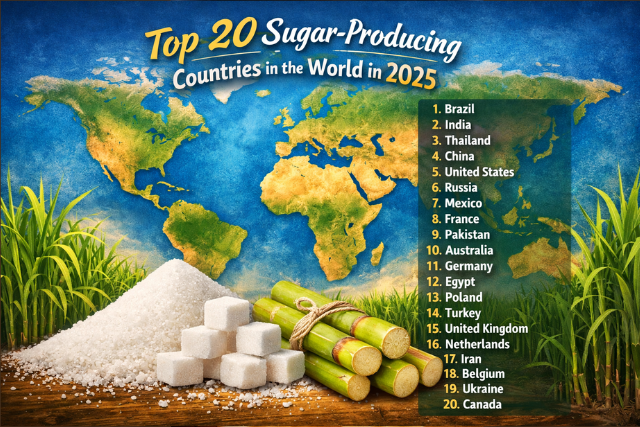
Top Sugar-Producing Countries in the World in 2025
Comprehensive global ranking & insights into the sugar industry
Sugar remains one of the most significant agricultural commodities in the world, underpinning not only the food and beverage sectors but also energy industries (such as ethanol production) and global trade. In 2025, the global sugar landscape continues to be dominated by nations with favorable climates for sugarcane and sugar beet cultivation, strong agricultural infrastructure, and large areas of arable land dedicated to crop production.
Sugar production is led primarily by sugarcane (especially in tropical and subtropical climates) and sugar beet (in temperate zones). Sugarcane accounts for the majority of global output, while sugar beet contributes significantly in Europe and other cooler regions.
Below is the Top 20 list of sugar-producing countries in 2025, reflecting both estimated production volumes and agricultural significance. Sources include recent production estimates, industry analyses, and agricultural projections.
1. Brazil
Brazil remains the world’s largest sugar producer in 2025, thanks to its vast sugarcane fields and ideal tropical climate. The south-central regions (such as São Paulo and Minas Gerais) contribute heavily to its output, enabling both domestic supply and global exports. In addition to sugar, Brazil is a leader in sugarcane-based ethanol, linking alcohol production with agricultural stability.
-
Key strengths: Tropic climate, extensive plantation acreage, ethanol linkages.
-
Primary source crop: Sugarcane.
2. India
India closely follows Brazil and remains one of the top two sugar producers worldwide. Although sugar production can fluctuate with monsoon patterns, India’s large agricultural sector and population-driven domestic demand keep it near the top.
-
Key strengths: Massive workforce, high domestic consumption, government incentives.
-
Primary source crop: Sugarcane.
3. Thailand
Thailand is among the most important sugar producers in Asia and a leading exporter of sugar. Its tropical geography and efficient farming practices have boosted production levels in the 2020s.
-
Key strengths: Strong export infrastructure, consistent yields.
-
Primary source crop: Sugarcane.
4. China
China is a major sugar producer and consumer. Although it sometimes imports to meet demand, its domestic sugarcane and sugar beet production keep it in the world’s top producers.
-
Key strengths: Large arable land and technology adoption.
-
Primary source crops: Sugarcane and sugar beet.
5. United States
The U.S. produces significant amounts of sugar from both sugarcane and sugar beets. It ranks within the top five globally, with production spread across states like Florida, Louisiana (cane), and Minnesota (beet).
-
Key strengths: Diverse sugar sources, advanced agricultural technology.
-
Primary source crops: Sugarcane and sugar beet.
6. Russia
Russia is a leading sugar beet producer (as sugar beet is dominant in temperate climates), contributing significantly to its overall sugar output. Its sugar production is a key part of the European beet sugar sector.
-
Key strengths: Temperate climate suited for sugar beet, large beet acreage.
-
Primary source crop: Sugar beet.
7. Mexico
Mexico is a consistent sugar producer and exporter, with sugarcane production concentrated in states like Veracruz and Jalisco. New policies and tariff strategies aim to strengthen domestic sugar production.
-
Key strengths: Favorable climate, trade access to the U.S. market.
-
Primary source crop: Sugarcane.
8. France
France is one of the largest sugar beet producers in Europe and leads beet sugar production in the European Union. Sugar beet thrives in cooler climates, making France a major manufacturer of refined sugar.
-
Key strengths: Advanced agricultural techniques, strong beet processing sector.
-
Primary source crop: Sugar beet.
9. Pakistan
Pakistan’s sugar production continues to grow, with sugarcane cultivation dominating its rural agricultural output. It ranks among the top producers in Asia.
-
Key strengths: Large farm areas, entrenched sugarcane sector.
-
Primary source crop: Sugarcane.
10. Australia
Australia’s sugar production is significant due to its tropical and subtropical regions (particularly Queensland). The industry exports much of its output to Asian markets.
-
Key strengths: Export focus, efficient mills.
-
Primary source crop: Sugarcane.
11–20: Emerging and Established Producers
Beyond the top 10, sugar production extends into several other countries with substantial agricultural capacity. These nations may use a mix of sugarcane and sugar beet depending on climate and market orientation.
11. Germany
Germany’s sugar output is heavily based on sugar beet, making it one of Europe’s largest sugar producers.
12. Egypt
Egypt’s sugar production includes cane and beet, and the country has expanded its capacity to meet both domestic consumption and export potential.
13. Poland
Poland is a noteworthy sugar beet producer in Europe, contributing significantly to the continent’s sugar supply.
14. Turkey
Turkey’s sugar beet industry places it among the top producers globally. Domestic sugar is essential for both food production and industrial markets.
15. United Kingdom
The UK produces sugar primarily from sugar beet and plays a key role in Europe’s beet sugar sector.
16. Netherlands
The Netherlands is a leading beet sugar producer in Western Europe, known for high per-hectare yields and quality production.
17. Iran
Iran’s agriculture sector includes substantial sugar beet cultivation, placing it among significant producers.
18. Belgium
Belgium adds to the European sugar beet output, contributing to both domestic consumption and export markets.
19. Ukraine
Ukraine produces sugar mainly from sugar beets and remains an important part of the Eastern European sugar landscape.
20. Canada
Canada’s sugar beet production and refined sugar processing give it a place on the list, with growing demand for sugar in North America.
Key Trends in Global Sugar Production (2025)
Sugarcane Leads, Beet Continues to Grow
About 80% of the world’s sugar comes from sugarcane, especially in tropical climates like Brazil, India, Thailand, and Mexico. The remaining ~20% is from sugar beet, especially in temperate regions such as Europe, Russia, and parts of North America.
Climate & Weather Impact
Climatic conditions play a crucial role in annual sugar yields. Dry spells or altered monsoons can reduce output, while favorable rainfall enhances production. For example, Brazil’s sugarcane production fluctuates with seasonal weather patterns.
Ethanol and Bioenergy Dynamics
Countries like Brazil and India link sugar production with bioethanol programs, diverting some sugarcane toward ethanol without affecting long-term industry health. This integration supports energy goals and agricultural stability.
Trade and Export Patterns
Brazil remains the largest sugar exporter, with Thailand and India also significant suppliers to world markets. Export policies, tariffs, and domestic consumption all influence how much sugar reaches global trade channels each year.
The global sugar production landscape in 2025 reflects centuries of agricultural adaptation and innovation. While tropical nations dominate sugarcane production, temperate countries play a vital role through sugar beet cultivation. Together, these diverse producers ensure the continuous availability of sugar for food, beverages, industry, and renewable fuel sectors worldwide.
Whether you’re a food industry professional, investor, economist, or simply curious about global agriculture, understanding where sugar comes from can offer valuable insights into trade, sustainability, and international markets.