What Are Christians? A Complete Guide to Christianity, Its History, Types, and Global Percentages
Christianity is the world’s largest religious tradition, shaping cultures, ethics, laws, art, and education for more than two thousand years. Today, billions of people identify as Christians, yet many are unaware of what unites Christians, how Christianity developed, and why it exists in many forms. This guide explains who Christians are, how Christianity began, how many types of Christians exist, and what percentage each major group represents globally.
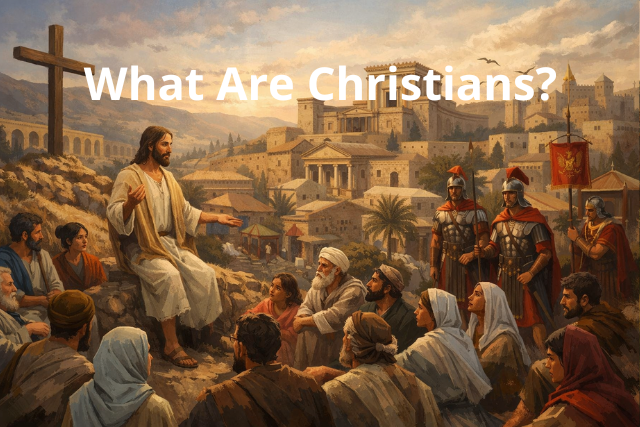
Christianity emerged during the first century of the Common Era within Judea, a region that was under Roman rule at the time. Who Are Christians?
Christians are people who follow the teachings of Jesus Christ, whom they believe to be the Son of God and the Savior of humanity. The core belief of Christianity is that Jesus lived a life of compassion and moral teaching, was crucified, and rose from the dead, offering forgiveness of sins and spiritual renewal to humanity.
Christians believe that:
-
God is the creator of the universe
-
Jesus Christ reveals God’s will and love
-
The Bible is sacred scripture
-
Faith should influence personal behavior and community life
Although beliefs and practices vary, Christians generally share these foundational ideas.
The Origin and Early History of Christianity
1st Century: The Beginning
Christianity emerged during the first century of the Common Era within Judea, a region that was under Roman rule at the time. Jesus of Nazareth taught about love, humility, justice, repentance, and devotion to God. After his death, his followers claimed he rose from the dead and began spreading his message across the Roman Empire.
Early Christians were often persecuted because they refused to worship Roman emperors or pagan gods.
4th Century: Legalization and Expansion
A major turning point occurred when Christianity was legalized under Emperor Constantine in the early 4th century. Churches were built, doctrines were clarified, and Christianity slowly became the dominant religion of the Roman Empire.
By the end of the century, Christianity was no longer a persecuted movement but a powerful global faith.
Middle Ages: Institutional Christianity
During the medieval period, Christianity deeply influenced European society. Churches became centers of education, healthcare, and governance. However, disagreements over authority and doctrine eventually caused divisions within Christianity.
Major Divisions in Christianity
Over time, Christianity split into several major branches due to theological, cultural, and political differences.
How Many Types of Christians Are There?
Globally, Christianity is usually divided into three main branches, with additional independent and regional movements.
1. Catholic Christianity
Catholics belong to the Catholic Church, which is led by the Pope in Rome. Catholicism emphasizes church tradition, sacraments, and a structured hierarchy.
Key features:
-
Centralized leadership
-
Seven sacraments
-
Global missionary presence
-
Strong historical continuity
Estimated share of global Christians:
~50%
Catholic Christianity remains the largest single Christian tradition worldwide
2. Protestant Christianity
Protestants emerged during the 16th-century Reformation, which challenged the authority and practices of the Catholic Church. Protestants emphasize the authority of the Bible and personal faith.
Major Protestant families include:
-
Lutherans
-
Anglicans
-
Baptists
-
Methodists
-
Reformed churches
-
Evangelical movements
Protestantism is diverse, with thousands of denominations that vary in worship style and theology.
Estimated share of global Christians:
~30–38%
Population estimates vary due to differences in classification of independent churches
3. Orthodox Christianity
Orthodox Christians trace their roots to the early Christian churches of Eastern Europe, the Middle East, and parts of Africa. Orthodox Christianity emphasizes ancient traditions, liturgy, and continuity with early Christianity.
Key features:
-
No single central leader
-
Strong liturgical worship
-
Emphasis on spiritual mystery
Estimated share of global Christians:
~10–12%
Orthodox Christianity is especially prominent in Eastern Europe and parts of the Middle East
4. Independent and Indigenous Christian Movements
In recent centuries, many independent Christian churches have emerged, particularly in Africa, Latin America, and Asia. These churches often blend Christian beliefs with local cultural traditions.
Estimated share of global Christians:
~8–10%
These movements are among the fastest-growing Christian expressions worldwide
Global Distribution of Christians (Approximate Percentages)
Based on modern demographic studies, global Christianity can be summarized as follows:
| Christian Group | Approximate Percentage |
|---|---|
| Catholic | ~50% |
| Protestant (including Evangelical) | ~30–38% |
| Orthodox | ~10–12% |
| Independent & Indigenous Churches | ~8–10% |
Percentages vary slightly depending on classification methods and regional reporting
Christianity in the Modern World
Christianity remains the largest religious group globally, with over 2.3 billion adherents, representing approximately 28–29% of the world’s population. However, growth patterns differ by region.
-
Christianity is declining in parts of Europe
-
It is growing rapidly in sub-Saharan Africa
-
Latin America remains largely Christian
-
Asia has smaller but increasing Christian populations
Demographic shifts indicate that Christianity’s global center is moving southward, especially toward Africa
Core Beliefs That Unite Christians
Despite diversity, most Christians agree on:
-
Belief in one God
-
Jesus Christ as Savior
-
Love for neighbor
-
Moral responsibility
-
Hope in eternal life
These shared values explain why Christianity, though diverse, remains a connected global faith.
Christians are followers of Jesus Christ who belong to one of the world’s most historically influential and culturally diverse religious traditions. Christianity began as a small movement in the Middle East and evolved into a global faith with multiple branches, distinct traditions, and billions of followers.
Understanding Christianity requires recognizing both what unites Christians and what distinguishes different groups. In 2025 and beyond, Christianity continues to evolve, adapting to new cultures while maintaining ancient beliefs that have shaped human history for over two millennia.