Who Are Protestant Christians? Beliefs, Countries, Rituals, and Festivals
Protestant Christians form one of the largest and most diverse branches of Christianity in the modern world. Their faith has shaped history, culture, education, and social values across continents. From Europe and the Americas to Africa, Asia, and Oceania, Protestant communities influence religious life in many countries today. This article explains who Protestant Christians are, where they are mainly found, and what rituals and festivals they observe, using clear, original explanations suitable for educational and SEO purposes.
Who Are Protestant Christians?
Protestant Christians are followers of Christianity who belong to churches that emerged from the Protestant Reformation of the 16th century. The Reformation began as a movement calling for reform within Western Christianity and eventually led to the formation of independent Christian traditions separate from the Roman Catholic Church.
At the heart of Protestant Christianity is the belief that faith is grounded primarily in the Bible rather than in church hierarchy or centralized authority. Protestants emphasize a direct relationship between the believer and God, without the need for mediation through a single religious institution.
Over time, Protestant Christianity developed into many denominations, each with its own traditions and styles of worship, while sharing core Christian beliefs such as faith in Jesus Christ, salvation by grace, and the authority of Scripture.
Core Beliefs of Protestant Christianity
While Protestant denominations differ, several beliefs unite them:
-
Authority of the Bible: The Bible is considered the highest source of religious teaching.
-
Faith and Grace: Salvation is understood as a gift from God, received through faith rather than earned by rituals or good works alone.
-
Personal Faith: Individual belief and personal conscience play an important role.
-
Priesthood of All Believers: Every Christian is believed to have direct access to God through prayer and faith.
-
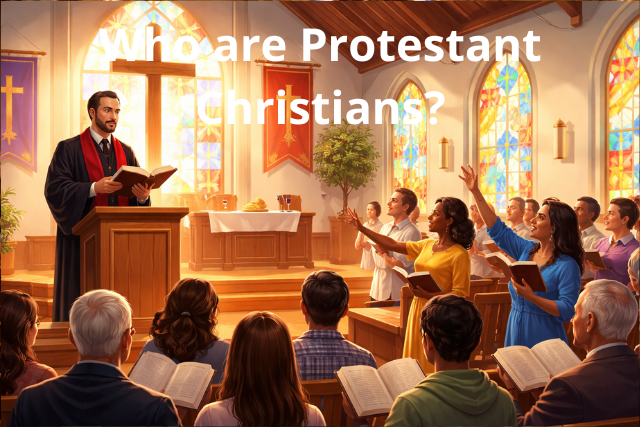
Simplicity in Worship: Compared to older traditions, many Protestant churches focus on preaching, prayer, and congregational singing rather than elaborate ceremonies.
These principles influenced the growth of literacy, education, and social reform in many regions of the world.
Major Protestant Denominations
Protestantism is not a single church but a family of churches. Some of the most well-known Protestant traditions include:
-
Lutheran
-
Anglican / Episcopal
-
Reformed / Presbyterian
-
Methodist
-
Baptist
-
Pentecostal
-
Evangelical and non-denominational churches
Each tradition interprets Christian teaching slightly differently while remaining part of the broader Protestant movement.
In Which Countries Are Protestant Christians Found?
Protestant Christians live in nearly every country in the world, but their population size varies widely. Some nations have Protestant majorities, while others have significant minorities.
Countries with Large Protestant Populations
Below is a list of countries where Protestant Christianity has a strong presence. Percentages are approximate and may vary by source and year.
Europe
-
Sweden – around 60% Protestant
-
Denmark – over 70% Protestant
-
Norway – about 65% Protestant
-
United Kingdom – around 30% Protestant
-
Germany – over 20% Protestant
-
Netherlands – significant Protestant minority
-
Finland – Lutheran majority
North America
-
United States – one of the world’s largest Protestant populations
-
Canada – Protestant churches widely represented
Latin America
-
Brazil – rapidly growing Protestant and Evangelical population
-
Guatemala – strong Protestant influence
-
Chile – expanding Protestant communities
Africa
-
Nigeria – large Protestant population alongside other Christian traditions
-
South Africa – historically strong Protestant presence
-
Kenya – Protestant and Evangelical churches widespread
-
Ghana – major Protestant influence
Asia
-
South Korea – one of Asia’s largest Protestant populations
-
Philippines – Protestant minority alongside Catholic majority
-
China – growing Protestant house churches
Oceania
-
Australia – Protestant heritage remains influential
-
New Zealand – Protestant denominations historically dominant
Protestant Christianity is particularly strong in Northern Europe, North America, sub-Saharan Africa, and parts of East Asia
Protestant Christian Rituals
Protestant rituals are generally simpler and more focused on teaching and community participation. While practices vary by denomination, several rituals are common across Protestant churches.
1. Baptism
Baptism symbolizes commitment to the Christian faith. Some churches baptize infants, while others practice baptism only for those old enough to profess faith personally.
2. Communion (Lord’s Supper)
This practice honors the final shared meal Jesus had with his disciples before his crucifixion. Bread and wine (or grape juice) symbolize remembrance and spiritual connection rather than a physical transformation.
3. Worship Services
Weekly worship usually includes:
-
Bible reading
-
Sermons
-
Prayer
-
Congregational singing or hymns
Music plays an important role, especially in Evangelical and Pentecostal churches.
4. Prayer and Bible Study
Private prayer and group Bible study are central to Protestant spiritual life, reinforcing personal understanding of Scripture.
Protestant Christian Festivals and Holy Days
Protestant festivals are closely tied to the Christian calendar, with emphasis on events related to the life and teachings of Jesus Christ.
Christmas
Easter
Easter is the most significant Christian festival, celebrating the resurrection of Jesus. Many churches hold special sunrise services and emphasize hope and renewal.
Good Friday
Observed before Easter, this day reflects on the crucifixion of Jesus and is marked by solemn services and prayer.
Pentecost
Pentecost commemorates the coming of the Holy Spirit and is often associated with the birth of the Christian church.
Reformation Day
Observed on October 31, especially in Lutheran churches, Reformation Day remembers the historical beginnings of Protestant Christianity and its emphasis on faith and Scripture.
These festivals are widely recognized across Protestant communities, though the style of observance may differ by culture and denomination
Cultural and Social Influence of Protestant Christians
Protestant Christianity has influenced:
-
Education systems
-
Social reform movements
-
Human rights advocacy
-
Community service and charity work
In many countries, Protestant churches operate schools, hospitals, humanitarian organizations, and disaster-relief programs, emphasizing service alongside faith.
Protestant Christianity in the Modern World
Today, Protestant Christianity continues to grow, particularly in Africa, Latin America, and parts of Asia. At the same time, Protestant churches in Europe and North America are adapting to changing societies by engaging with modern social issues and technology-driven forms of worship.
Global Protestantism is characterized by diversity, adaptability, and strong community involvement, making it one of the most dynamic expressions of Christianity worldwide
Protestant Christians represent a broad and vibrant part of global Christianity. Rooted in faith, scripture, and personal belief, Protestantism has shaped nations, cultures, and communities for centuries. Found across every continent, Protestants observe meaningful rituals, celebrate important Christian festivals, and continue to influence the modern world through education, service, and spiritual life.
This diversity and global presence make Protestant Christianity not only a historical movement, but a living and evolving faith practiced by hundreds of millions of people today.