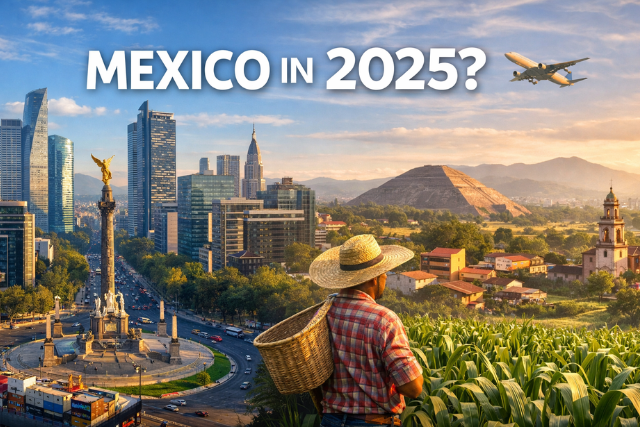
Why is Mexico considered as third -World Country in 2025? A Clear, Modern Explanation
The question “Is Mexico a third-world country in 2025?” appears frequently in online discussions, search engines, and social media debates. The short answer is no, but the longer explanation requires historical context, modern economic definitions, and a realistic look at Mexico’s strengths and challenges.
In 2025, Mexico stands at a complex crossroads: it is neither a poor, underdeveloped nation nor a fully “first-world” economy by modern standards. Instead, Mexico is best described as a developing, upper-middle-income, newly industrialized country with strong global integration and persistent internal inequality.
This article breaks down the facts in a clear, modern, and unbiased way.
Understanding the Term “Third World”
Before labeling any country, it is important to understand what “third world” actually means.
The Original Meaning
The term originated during the Cold War:
-
First World: Western capitalist nations aligned with NATO
-
Second World: Communist bloc countries
-
Third World: Countries not aligned with either side
Under this original definition, many wealthy countries would have been considered “third world” simply because they were neutral.
Why the Term Is Outdated
Today, “third world” is often used informally to describe:
-
Poverty
-
Weak infrastructure
-
Low living standards
However, this usage is technically incorrect and widely rejected by economists, international organizations, and policymakers. Modern analysis uses measurable indicators such as income levels, industrialization, education, healthcare, and human development.
How Countries Are Classified in 2025
Instead of outdated labels, global institutions now rely on standardized metrics:
1. World Bank Income Groups
Countries are classified as:
-
Low income
-
Lower-middle income
-
Upper-middle income
-
High income
Mexico is classified as an upper-middle-income economy.
2. Human Development Index (HDI)
HDI measures:
-
Life expectancy
-
Education
-
Income per capita
Mexico scores in the high human development range, ranking above many developing nations but below most Western European countries.
3. OECD Membership
Mexico is a full member of the Organisation for Economic Co-operation and Development (OECD)—a group that includes the world’s most advanced economies. Membership requires meeting strict economic, institutional, and policy standards.
Mexico’s Economic Position in 2025
A Major Global Economy
Mexico is one of the largest economies in the world, ranking among the top 15 globally by nominal GDP. Its economy is larger than that of many European countries often considered “developed.”
Key economic strengths include:
-
Manufacturing
-
Automotive production
-
Electronics
-
Aerospace
-
Energy
-
Tourism
-
Agriculture
-
Services
Mexico is also deeply integrated into global supply chains, especially with North America.
Trade and Industrial Power
Mexico is:
-
A major exporter of vehicles, machinery, electronics, and consumer goods
-
One of the top trading partners of the United States
-
A key beneficiary of nearshoring, as companies shift production closer to U.S. markets
These characteristics are not typical of a “third-world” economy.
Infrastructure and Urban Development
Modern Cities
Major Mexican cities such as:
-
Mexico City
-
Monterrey
-
Guadalajara
-
Querétaro
Feature:
-
Modern highways
-
International airports
-
Advanced telecommunications
-
High-rise business districts
-
Industrial parks and tech hubs
These cities resemble developed urban centers rather than underdeveloped regions.
Transportation and Connectivity
Mexico has:
-
Extensive road and rail networks
-
Modern ports on both the Pacific and Atlantic coasts
-
Strong digital connectivity in urban areas
While rural infrastructure still lags behind cities, this urban-rural gap exists in many emerging economies.
Living Standards and Quality of Life
Middle-Income Reality
Millions of Mexicans enjoy:
-
Stable employment
-
Access to education
-
Home ownership
-
Consumer goods
-
Healthcare services
However, living standards vary significantly by region.
Poverty and Inequality
Despite progress, Mexico continues to face:
-
Income inequality
-
Regional development gaps
-
Informal employment
These challenges prevent Mexico from being classified as a high-income country, but they do not place it in the category of the world’s poorest nations.
Education and Human Capital
Mexico has made significant investments in:
-
Public education
-
Universities
-
Technical training
The country produces:
-
Engineers
-
Medical professionals
-
IT specialists
-
Skilled industrial workers
Its workforce plays a key role in North American manufacturing and global services.
Healthcare System in 2025
Mexico operates a mixed healthcare system combining:
-
Public healthcare institutions
-
Private hospitals and clinics
Urban areas have access to advanced medical services, while rural regions face shortages. This uneven access reflects a developing system, not a collapsed or non-existent one.
Why Some People Still Call Mexico “Third World”
The misconception often comes from:
-
Visible poverty in certain regions
-
Crime and security concerns
-
Income inequality
-
Comparisons with the U.S. or Western Europe
However, comparing Mexico only to the wealthiest nations ignores its true peer group: emerging economies such as Brazil, Turkey, Malaysia, and Thailand.
The Correct Way to Describe Mexico in 2025
Based on modern standards, Mexico is best described as:
-
A developing country
-
An upper-middle-income economy
-
A newly industrialized nation
-
A key global manufacturing and trade hub
-
An OECD member with strong institutions
It is not a third-world country in any technical or modern sense.
Mexico’s Future Outlook
Looking ahead, Mexico’s prospects include:
-
Continued industrial growth
-
Expansion of nearshoring
-
Rising wages in manufacturing
-
Gradual poverty reduction
-
Ongoing infrastructure investment
Challenges remain, but Mexico’s long-term trajectory points toward greater economic maturity, not decline.
Final Verdict: Is Mexico a 3rd-World Country in 2025?
No. Mexico is not a third-world country in 2025.
That label is outdated, misleading, and inaccurate. Mexico is a complex, rapidly evolving nation that combines modern industry, global trade influence, and middle-income living standards with ongoing social and regional challenges.
Understanding Mexico requires nuance—not stereotypes.