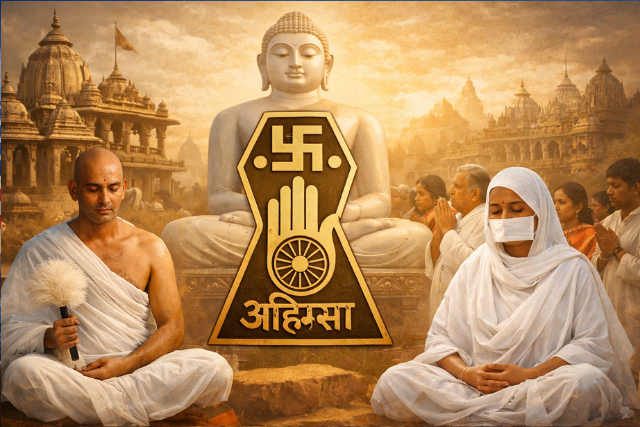
What Is Jainism Religion?
History, Beliefs, and Jain Population by Country in 2025
Jainism is one of the world’s oldest living religions and a profound spiritual tradition that emphasizes non-violence, self-discipline, and liberation of the soul. Though followed by a relatively small global population, Jainism has had an extraordinary influence on philosophy, ethics, ecology, and peaceful living. In 2025, interest in Jainism continues to grow worldwide due to its strong moral principles, environmental values, and message of universal compassion.
This article explains what Jainism is, its core beliefs and practices, its history, and provides a country-wise estimate of Jain population worldwide in 2025.
What Is Jainism?
Jainism is an ancient Indian religion that teaches the path to spiritual freedom through non-violence (ahimsa), truth, non-attachment, and self-control. Followers of Jainism are called Jains, and they believe that every living being possesses a soul that can attain liberation through ethical living and spiritual knowledge.
Unlike many religions, Jainism does not believe in a creator god who governs the universe. Instead, it teaches that the universe is eternal and governed by natural laws, particularly the law of karma.
The ultimate goal of Jainism is moksha—freedom from the cycle of birth, death, and rebirth.
Origins and History of Jainism
Jainism traces its roots back thousands of years in the Indian subcontinent. The tradition recognizes 24 spiritual teachers, known as Tirthankaras, who rediscovered and taught the path to liberation in different cosmic eras.
Lord Mahavira – The 24th Tirthankara
The most recent and historically documented Tirthankara is Lord Mahavira, who lived in the 6th century BCE. He systematized Jain teachings and helped spread them across ancient India.
However, Jains believe that Jainism existed long before Mahavira and is not founded by a single individual.
Core Beliefs of Jainism
1. Ahimsa (Non-Violence)
Ahimsa is the foundation of Jain ethics. It means not harming any living being, whether through action, speech, or thought. This principle influences Jain diet, lifestyle, and daily conduct.
2. Anekantavada (Multiple Viewpoints)
Jainism teaches that truth is complex and can be understood from multiple perspectives. This philosophy promotes tolerance, dialogue, and intellectual humility.
3. Aparigraha (Non-Attachment)
Jains practice detachment from material possessions and desires, believing that attachment leads to suffering and karmic bondage.
4. Karma and Rebirth
Karma in Jainism is viewed as a subtle form of matter that binds to the soul due to actions and intentions. Liberation occurs when all karma is eliminated.
Jain Sects: Digambara and Śvetāmbara
Jainism is mainly divided into two major sects:
Digambara
-
Monks practice extreme renunciation
-
Believe liberation is possible only through complete detachment
-
Traditionally follow stricter ascetic rules
Śvetāmbara
-
Monks wear simple white clothing
-
Believe liberation is possible for both men and women
-
Follow a different set of scriptures
Despite differences, both sects share the same core beliefs and spiritual goals.
Jain Lifestyle and Practices
-
Strict vegetarianism, often vegan
-
Avoidance of root vegetables to prevent harming organisms
-
Meditation and fasting
-
Daily prayers and ethical discipline
-
Charity and social responsibility
Jain monks and nuns follow extremely disciplined lives, while lay Jains integrate spiritual values into modern living.
Jain Population in the World (2025)
In 2025, Jainism remains a small but influential global religion. Estimates vary slightly by source, but most demographic studies agree on a worldwide Jain population of approximately 5 to 6 million people.
The vast majority of Jains live in India, with growing diaspora communities across the world due to migration, education, and business opportunities.
Country-Wise Jain Population in 2025 (Estimated)
1. India 🇮🇳
-
Population: ~4.6–5 million
-
Home to over 85% of the world’s Jains
-
Major states: Maharashtra, Rajasthan, Gujarat, Madhya Pradesh, Karnataka
-
Jainism is officially recognized as a minority religion
2. United States 🇺🇸
-
Population: ~90,000–100,000
-
Strong Jain communities in California, New Jersey, Texas, and New York
-
Numerous Jain temples and cultural centers
3. United Kingdom 🇬🇧
-
Population: ~30,000
-
Major centers in London and Leicester
-
One of the earliest Jain diaspora communities
4. Canada 🇨🇦
-
Population: ~15,000
-
Growing Jain presence in Toronto and Vancouver
5. Kenya 🇰🇪
-
Population: ~10,000
-
Historical Jain merchant communities
-
One of the oldest Jain settlements outside India
6. Belgium 🇧🇪
-
Population: ~5,000
-
Strong involvement in the diamond trade, especially in Antwerp
7. Australia 🇦🇺
-
Population: ~7,000–10,000
-
Rapid growth due to skilled migration
8. United Arab Emirates 🇦🇪
-
Population: ~5,000+
-
Mainly business professionals and expatriates
9. Japan 🇯🇵
-
Population: ~5,000
-
Unique growth through philosophical interest and conversions
10. Other Countries
Smaller Jain communities exist in:
-
Singapore
-
South Africa
-
Tanzania
-
Malaysia
-
Germany
-
France
Why Jainism Is Relevant in 2025
Jain philosophy aligns strongly with modern global concerns:
-
Environmental protection
-
Animal rights
-
Peaceful coexistence
-
Ethical business practices
-
Mental discipline and mindfulness
As sustainability and compassion become global priorities, Jain values are gaining renewed attention worldwide.
Jainism vs Other Religions
Unlike many major religions:
-
Jainism does not promote conversion
-
Does not rely on divine judgment
-
Focuses on self-effort and responsibility
-
Emphasizes ethics over ritual
This makes Jainism a philosophical and ethical way of life, as much as a religion.
Jainism is a timeless spiritual tradition rooted in compassion, discipline, and wisdom. Though followed by a small population in 2025, its influence far exceeds its numbers. With approximately 5–6 million followers worldwide, primarily in India and a growing global diaspora, Jainism continues to inspire peaceful living and ethical consciousness.
In an increasingly complex world, the Jain message of non-violence, respect for life, and self-control remains more relevant than ever.