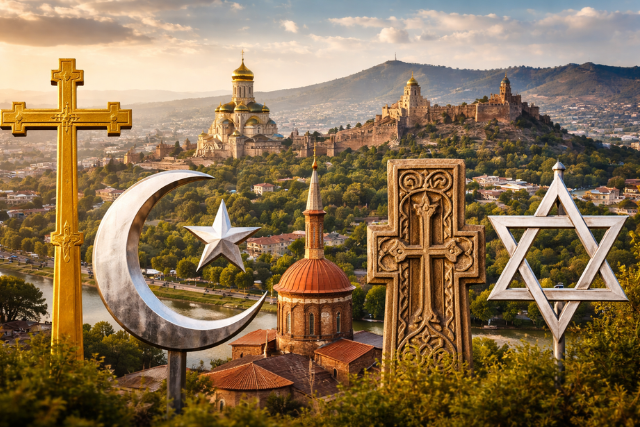
Which religions are in Georgia in 2026?
Georgia, located at the crossroads of Eastern Europe and Western Asia, is one of the world’s oldest Christian nations. Religion in Georgia is deeply woven into national identity, culture, language, and history. In 2025, faith continues to play a powerful role in Georgian society, shaping traditions, holidays, and everyday life.
Although Georgia guarantees freedom of religion and hosts several faith communities, the country remains overwhelmingly Christian, with the Georgian Orthodox Church holding a central place. This article explores which religions are practiced in Georgia in 2025, their estimated percentages, historical roots, regional distribution, and the role religion plays in modern Georgian life.
Overview of Religion in Georgia (2026)
Georgia is considered a multi-religious but Christian-majority country. The religious structure has remained relatively stable over the past decade, with only minor demographic shifts due to migration, urbanization, and generational change.
As of 2025, Georgia does not have an official state religion, but the Georgian Orthodox Church enjoys a special constitutional status, recognizing its historical role in shaping the nation.
Estimated Religious Composition of Georgia in 2026
| Religion | Percentage of Population |
|---|---|
| Georgian Orthodox Christianity | 83–84% |
| Islam | 10–11% |
| Armenian Apostolic Christianity | 2.5–3% |
| Roman Catholicism | 0.5–0.8% |
| Protestant & other Christian groups | <1% |
| Judaism | <0.2% |
| Other religions / No religion | 1–2% |
These figures are derived from the most recent national census data and international religious studies, which remain the accepted baseline for 2025.
Georgian Orthodox Christianity (≈83–84%)
The Dominant Religion in Georgia
Georgian Orthodox Christianity is by far the most widely practiced religion in Georgia. More than four-fifths of the population identify as members of the Georgian Orthodox Church, making it one of the most religiously homogeneous Christian nations in the world.
Georgia adopted Christianity as a state religion in the early 4th century, placing it among the first countries globally to do so. Since then, Orthodox Christianity has shaped Georgian literature, architecture, moral values, and national resistance during foreign invasions.
Role in Society and Politics
Although Georgia is officially a secular state, the Orthodox Church holds significant influence. The Church:
-
Conducts major national ceremonies
-
Shapes public opinion on social issues
-
Plays a role in education and cultural preservation
Church attendance is especially high during major religious holidays, such as Orthodox Christmas, Easter, and Epiphany.
Islam in Georgia (≈10–11%)
Second Largest Religion
Islam is the second most practiced religion in Georgia, accounting for roughly one-tenth of the population in 2025. Muslim communities have lived in Georgia for centuries and are an integral part of the country’s multicultural identity.
Muslim Population Groups
Muslims in Georgia are not a single ethnic group. They include:
-
Azerbaijani Muslims (mostly Shia) in eastern regions
-
Ethnic Georgian Sunni Muslims in Adjara
-
Kist Sunni Muslims in the Pankisi Gorge
Islam has historical roots dating back to the 7th century, with later influence from Ottoman and Persian rule.
Despite being a minority, Muslims in Georgia generally practice their faith freely, although social challenges and regional disparities still exist.
Armenian Apostolic Christianity (≈2.5–3%)
A Historic Christian Minority
The Armenian Apostolic Church represents the third largest religious group in Georgia. Most adherents are ethnic Armenians, particularly in southern regions and urban centers.
This church belongs to the Oriental Orthodox tradition, distinct from Eastern Orthodoxy but equally ancient. Armenian churches and monasteries in Georgia date back many centuries and reflect close historical ties between Georgians and Armenians.
Roman Catholicism (≈0.5–0.8%)
Catholics form a small but visible community in Georgia. They include:
-
Latin Rite Catholics
-
Armenian Catholics
Most Catholic communities are found in southern Georgia and Tbilisi. While numerically small, the Catholic Church operates schools, charities, and cultural institutions.
Protestant and Other Christian Groups (<1%)
Georgia also hosts small communities of:
-
Baptists
-
Pentecostals
-
Seventh-day Adventists
-
Evangelical Christians
Although these groups represent less than 1% of the population, they are legally recognized and active, particularly in urban areas.
Judaism in Georgia (<0.2%)
One of the Oldest Jewish Communities in the World
The Jewish presence in Georgia dates back over 2,500 years. Georgian Jews historically lived peacefully alongside Christian and Muslim neighbors, making Georgia notable for its lack of historical antisemitic violence.
In 2025, the Jewish population is small, concentrated mainly in Tbilisi, but synagogues and cultural organizations remain active.
Other Religions and Non-Religious Population (≈1–2%)
A small portion of Georgia’s population:
-
Practices other faiths (Baháʼí, Yazidi, Buddhist, Hindu)
-
Identifies as atheist, agnostic, or non-religious
While secularism is more common among younger Georgians in cities, religion still plays a strong cultural role even among those who are not deeply observant.
Regional Distribution of Religions in Georgia
Religion in Georgia often varies by region:
-
Eastern & Central Georgia: Predominantly Orthodox Christian
-
Adjara: Significant Sunni Muslim population
-
Kvemo Kartli: High concentration of Azerbaijani Shia Muslims
-
Southern Georgia: Armenian Apostolic communities
-
Tbilisi: Most religiously diverse city
This geographic diversity reflects Georgia’s long history as a cultural crossroads.
Religious Freedom and Law in Georgia
Georgia’s constitution guarantees:
-
Freedom of belief
-
Equality of religions before the law
-
Separation of religion and state
However, the Georgian Orthodox Church has a unique legal agreement with the state recognizing its historic role. Other religions are free to register, own property, and operate institutions.
International reports describe Georgia as generally tolerant, though minority groups occasionally report social or bureaucratic challenges.
Religion in Georgia: Trends Toward 2030
Looking ahead, experts expect:
-
Orthodox Christianity to remain dominant
-
Slow growth of secular identification in urban youth
-
Stable Muslim population
-
Continued peaceful coexistence among faiths
Migration, globalization, and digital culture may influence how younger generations practice religion, but faith is likely to remain central to Georgian identity.
In 2025, Georgia remains a deeply religious nation, with Georgian Orthodox Christianity practiced by over 80% of the population. Islam stands as the second largest religion, followed by Armenian Apostolic Christianity and smaller faith communities.
Despite its strong Orthodox identity, Georgia continues to function as a multi-religious society, shaped by centuries of coexistence. Religion in Georgia is not just a matter of belief—it is history, culture, and national memory combined.