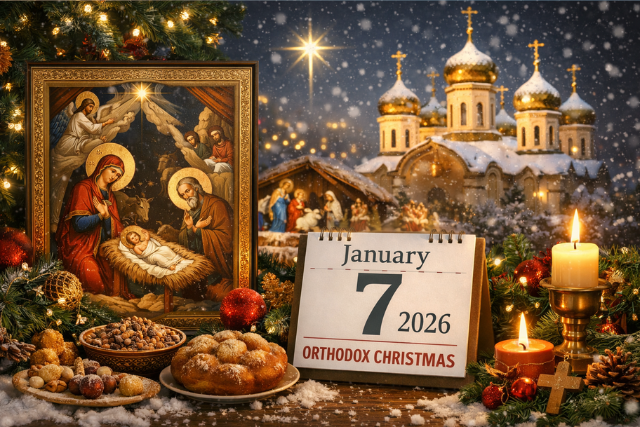
When does Orthodox Christians celebrates christmas in 2026?
Orthodox Christmas is one of the most spiritually rich and historically rooted celebrations in Christianity. Every year, millions of believers across Eastern Europe, the Caucasus, the Middle East, Africa, and diaspora communities worldwide observe the Nativity of Jesus Christ on a date that often surprises Western Christians. Instead of December 25, Orthodox Christmas is commonly celebrated in early January.
So, when is Orthodox Christmas in 2026, who are Orthodox Christians, and why do they celebrate Christmas differently from other Christians? This in-depth, SEO-optimized guide answers all these questions in a clear, original, and easy-to-understand way.
When Is Orthodox Christmas in 2026?
Orthodox Christmas in 2026 is celebrated on Wednesday, January 7, 2026.
This date corresponds to December 25 on the Julian calendar, which is still used by many Orthodox churches for liturgical purposes. While the celebration honors the same biblical event—the birth of Jesus Christ—the difference lies not in belief, but in calendar tradition.
What Is Orthodox Christmas?
Orthodox Christmas, also called the Feast of the Nativity, commemorates the birth of Jesus Christ in Bethlehem. For Orthodox Christians, this feast is not merely a holiday but a deeply spiritual event centered on prayer, fasting, humility, and joy.
Unlike the highly commercialized Christmas often seen in the West, Orthodox Christmas places stronger emphasis on:
-
Spiritual preparation
-
Church services
-
Family unity
-
Ancient traditions preserved over centuries
The celebration is part of a broader liturgical cycle that includes fasting before Christmas and continued observances afterward.
Who Are Orthodox Christians?
Understanding Orthodox Christianity
Orthodox Christians belong to one of the oldest branches of Christianity, tracing their faith directly back to the early apostles. Orthodox Christianity developed primarily in the eastern part of the Roman Empire and maintains traditions that have remained largely unchanged for nearly two thousand years.
There are three main branches of Christianity:
-
Roman Catholicism
-
Protestantism
-
Orthodox Christianity
Orthodox Christianity itself includes several self-governing (autocephalous) churches that share the same core beliefs and sacraments.
Major Orthodox Churches Around the World
Some of the most well-known Orthodox churches include:
-
Eastern Orthodox Church
-
Greek Orthodox Church
-
Russian Orthodox Church
-
Serbian Orthodox Church
-
Georgian Orthodox Church
-
Ukrainian Orthodox Church
-
Ethiopian Orthodox Church
-
Coptic Orthodox Church
Despite cultural and linguistic differences, all Orthodox Christians share the same theology and celebrate the Nativity with deep reverence.
What is the reason Orthodox believers observe the celebration of Christ’s birth on January 7 instead of December 25?
The difference in Christmas dates comes down to calendars, not doctrine.
The Julian Calendar vs. the Gregorian Calendar
-
The Julian calendar was introduced in ancient Rome and used throughout the Christian world for centuries.
-
In the 16th century, the Gregorian calendar was introduced to correct inaccuracies in the Julian system.
-
Over time, a 13-day difference developed between the two calendars.
Most Western Christian churches adopted the Gregorian calendar, which places Christmas on December 25. However, many Orthodox churches continue to follow the Julian calendar for religious feasts. As a result, December 25 (Julian) falls on January 7 (Gregorian).
Important Clarification
Orthodox Christians are not celebrating late. From their liturgical perspective, they are celebrating Christmas exactly on December 25, just according to a different calendar system.
Do every Orthodox Christian community observe Christmas on January 7, or do some follow a different date?
No. This is a common misconception.
Churches That Celebrate on January 7
Many Orthodox churches still follow the Julian calendar, including:
-
Russian Orthodox Church
-
Serbian Orthodox Church
-
Georgian Orthodox Church
-
Jerusalem Patriarchate
-
Some Ukrainian and Balkan Orthodox communities
These churches celebrate Christmas on January 7.
Churches That Celebrate on December 25
Other Orthodox churches use the Revised Julian calendar, which currently aligns with the Gregorian calendar. These include:
-
Greek Orthodox Church
-
Romanian Orthodox Church
-
Bulgarian Orthodox Church
-
Orthodox Church of Cyprus
They celebrate Christmas on December 25, like Western Christians, while still remaining fully Orthodox in faith.
How Orthodox Christians Prepare for Christmas
The Nativity Fast
Orthodox Christmas is preceded by a 40-day fasting period, often called the Nativity Fast or Advent Fast. It typically begins in mid-November.
During this time, believers:
-
Avoid meat and dairy (with some variations)
-
Increase prayer and spiritual reflection
-
Practice charity and self-discipline
The fast is not about restriction alone—it is about preparing the heart and soul for the birth of Christ.
Orthodox Christmas Eve Traditions
Christmas Eve, observed on January 6 by Julian-calendar churches, is one of the most meaningful days of the season.
Common traditions include:
-
Attending long church services
-
Abstaining from food until the evening star becomes visible in the sky
-
Reading passages from the Gospels
-
Sharing a simple, symbolic meal
In many cultures, the evening meal includes twelve dishes, representing the twelve apostles.
How Orthodox Christmas Is Celebrated
Church Services
Orthodox Christmas is marked by:
-
Night vigils
-
Divine Liturgy
-
Choral hymns dating back centuries
-
Candlelit prayers
These services are often long and solemn, emphasizing the mystery and humility of Christ’s birth.
Family and Cultural Traditions
After church, families gather to:
-
Share festive meals
-
Exchange greetings rather than lavish gifts
-
Visit relatives and neighbors
-
Sing traditional Christmas hymns
In Orthodox cultures, the emphasis is more on community and faith than on commercial celebration.
The Spiritual Meaning of Orthodox Christmas
Orthodox theology views Christmas not just as a joyful event, but as a cosmic moment—God entering human history.
Key spiritual themes include:
-
Humility: Christ born in a manger
-
Light: Jesus as the light of the world
-
Renewal: A new beginning for humanity
-
Peace: Reconciliation between God and humankind
These themes are reflected in prayers, hymns, and icons displayed in Orthodox churches and homes.
Orthodox Christmas vs. Western Christmas: Key Differences
| Aspect | Orthodox Christmas | Western Christmas |
|---|---|---|
| Calendar | Julian (or Revised Julian) | Gregorian |
| Common Date | January 7 | December 25 |
| Preparation | 40-day fast | Advent season |
| Focus | Worship and tradition | Celebration and gifts |
| Atmosphere | Solemn and spiritual | Festive and commercial |
Despite these differences, the message is the same: celebrating the birth of Jesus Christ.
Why Orthodox Traditions Remain Unchanged
Orthodox Christianity places strong value on continuity and tradition. Many practices observed today are the same as those followed by early Christians centuries ago.
For Orthodox believers, preserving ancient traditions is a way of:
-
Maintaining theological accuracy
-
Honoring the early Church
-
Protecting spiritual heritage
This is why calendar differences are respected rather than changed for convenience.
Orthodox Christmas in the Modern World
In today’s globalized society, Orthodox Christmas is increasingly recognized and respected worldwide. Many countries officially observe January 7 as a public holiday, and international communities are becoming more aware of Orthodox traditions.
Social media and global communication have also helped educate people about why Orthodox Christians celebrate Christmas differently—turning confusion into understanding.
Conclusion
Orthodox Christmas in 2026 is celebrated on Wednesday, January 7, honoring the birth of Jesus Christ according to ancient Christian tradition. The difference in date is not about belief, but about calendar history and a commitment to preserving sacred customs.
Orthodox Christians represent one of the oldest continuous Christian traditions in the world. Their celebration of Christmas reflects deep spirituality, humility, and devotion—values that transcend calendars and cultures.
Whether observed on December 25 or January 7, Christmas remains a universal message of hope, peace, and renewal for Christians everywhere.
When is Orthodox Christmas in 2026?
Orthodox Christmas is one of the most important religious celebrations for millions of Christians around the world. While many people are familiar with Christmas being observed on December 25, Orthodox Christians in many countries celebrate the birth of Jesus Christ on a different date. This difference often leads to confusion and curiosity, especially in years like 2026 when global calendars, public holidays, and religious observances overlap in interesting ways.
This in-depth guide explains when Orthodox Christmas falls in 2026, who Orthodox Christians are, and why their Christmas date differs from that of other Christian traditions.
When Is Orthodox Christmas in 2026?
In 2026, Orthodox Christmas will be celebrated on Wednesday, January 7.
This date applies to Orthodox churches that continue to follow the Julian calendar for religious observances. Although January 7 appears to be a different day, Orthodox Christians are still celebrating December 25 according to their own liturgical calendar. The difference arises because the Julian calendar currently lags 13 days behind the modern Gregorian calendar used in most of the world.
It is important to note that not all Orthodox Christians celebrate Christmas on January 7. Some Orthodox churches observe Christmas on December 25, aligning with Western Christian traditions. The reason for this difference lies in which calendar a particular church follows, a topic explored in detail later in this article.
Who Are Orthodox Christians?
Orthodox Christians belong to one of the oldest continuous Christian traditions in the world. Orthodox Christianity traces its origins directly to the early Christian Church, maintaining doctrines, worship styles, and spiritual practices that date back nearly two thousand years.
Core Beliefs of Orthodox Christianity
Orthodox Christians share foundational Christian beliefs, including:
-
Faith in Jesus Christ as the Son of God
-
Acceptance of the Holy Trinity (Father, Son, and Holy Spirit)
-
Reliance on the Bible and Sacred Tradition
-
Emphasis on liturgy, fasting, prayer, and sacraments
What distinguishes Orthodox Christianity is not a different understanding of Christ’s birth, but rather a unique theological emphasis on continuity, tradition, and historical faithfulness.
Major Orthodox Churches
Some of the largest Orthodox churches include:
-
Eastern Orthodox Church
-
Greek Orthodox Church
-
Russian Orthodox Church
-
Serbian Orthodox Church
-
Ukrainian Orthodox Church
-
Romanian Orthodox Church
Together, Orthodox Christians represent hundreds of millions of believers worldwide, particularly across Eastern Europe, the Balkans, the Caucasus, the Middle East, and parts of Africa and North America.
What Does Christmas Mean to Orthodox Christians?
For Orthodox Christians, Christmas is known as the Feast of the Nativity of Our Lord Jesus Christ. It commemorates the incarnation of Jesus—God becoming human for the salvation of humanity.
Spiritually, Christmas is not simply a festive day but the culmination of a long period of preparation, prayer, and fasting.
The Nativity Fast
Before Christmas, Orthodox Christians observe the Nativity Fast, a 40-day period of spiritual discipline that usually begins in mid-November. During this time:
-
Believers practice fasting from certain foods
-
Extra time is devoted to prayer and reflection
-
Emphasis is placed on humility, charity, and repentance
This preparation highlights the belief that Christmas is a sacred mystery, not merely a cultural celebration.
Why Do Orthodox Christians Celebrate Christmas on January 7?
The primary reason Orthodox Christians celebrate Christmas on January 7 in 2026 is calendar difference, not theological disagreement.
The Julian Calendar Explained
The Julian calendar was introduced in 46 BCE and was widely used throughout the Christian world for centuries. However, it slightly miscalculates the solar year. Over time, this small error accumulated, causing calendar dates to drift away from astronomical events.
By the 16th century, the discrepancy had grown significant enough that a reform was introduced.
The Gregorian Calendar Reform
In 1582, the Gregorian calendar was established to correct these inaccuracies. Most Western Christian churches adopted it, including the Roman Catholic and later Protestant traditions.
However, many Orthodox churches chose not to adopt the Gregorian calendar for religious observances. Their reasons included:
-
Desire to preserve ancient liturgical continuity
-
Concerns about changing established feast calculations
-
Theological links between calendar dates and other religious observances, such as Easter
As a result, Christmas remained on December 25 of the Julian calendar, which currently corresponds to January 7 on the Gregorian calendar.
Why Isn’t Orthodox Christmas Always on January 7?
Although January 7 is the most widely recognized date, Orthodox Christmas is not universally celebrated on that day.
Churches Using the Revised Julian Calendar
In 1923, a Revised Julian calendar was introduced. This calendar aligns with the Gregorian calendar for fixed feast days like Christmas—at least until the year 2800.
Orthodox churches that follow this revised system celebrate Christmas on December 25, the same date as Western Christians. These include:
-
Greek Orthodox Church
-
Romanian Orthodox Church
-
Bulgarian Orthodox Church (in many regions)
Meanwhile, churches such as the Russian, Serbian, and Georgian Orthodox Churches continue using the traditional Julian calendar, maintaining the January 7 observance.
Is Orthodox Christmas Less Important Than December 25 Christmas?
Absolutely not. Orthodox Christmas carries the same spiritual weight and theological meaning as Christmas celebrated on December 25.
The difference lies solely in calendar calculation, not in belief, devotion, or reverence. In fact, Orthodox Christmas services are often longer, more solemn, and deeply symbolic, emphasizing:
-
Ancient hymns and chants
-
Icon veneration
-
Midnight or early-morning liturgies
In many Orthodox cultures, Christmas is followed by extended celebrations, family gatherings, and traditional meals that reflect centuries-old customs.
Orthodox Christmas Traditions Around the World
While the theological core is the same, Orthodox Christmas traditions vary by region.
Common Elements
-
Attending a long church liturgy on January 6–7
-
Lighting candles and incense
-
Breaking the Nativity Fast with a festive meal
-
Reading Gospel passages about Christ’s birth
Cultural Expressions
In countries following the Julian calendar, such as Russia, Serbia, and Ukraine, Christmas is often preceded by quiet reflection and followed by joyful community celebrations. In some regions, Christmas is considered even more sacred than New Year’s Day, with gift-giving reserved for later festivities.
Will the Date of Orthodox Christmas Ever Change?
For churches using the Julian calendar, Christmas will continue to fall on January 7 until the year 2100. After that, the calendar difference will increase to 14 days, shifting Orthodox Christmas to January 8, unless calendar reforms are adopted.
Whether more Orthodox churches will transition to a unified calendar remains a topic of discussion, but tradition and continuity remain strong guiding principles.
Orthodox Christmas vs. Western Christmas: A Simple Comparison
| Aspect | Orthodox Christmas | Western Christmas |
|---|---|---|
| Date in 2026 | January 7 | December 25 |
| Calendar Used | Julian or Revised Julian | Gregorian |
| Length of Preparation | 40-day Nativity Fast | Advent (varies) |
| Focus | Spiritual preparation, liturgy | Worship and celebration |
| Beliefs | Birth of Jesus Christ | Birth of Jesus Christ |
Orthodox Christmas in 2026 falls on January 7, a date rooted in centuries of religious tradition rather than difference in belief. Orthodox Christians celebrate the same sacred event—the birth of Jesus Christ—but do so according to a calendar system preserved for its historical and spiritual significance.
Understanding why Orthodox Christians celebrate Christmas on a different date offers insight into the depth of Christian history, the diversity within global Christianity, and the enduring power of tradition in shaping religious life. Whether observed on December 25 or January 7, Christmas remains a universal message of hope, faith, and renewal for Christians around the world.