Greek Easter 2026:
Greek Easter—more formally known as Greek Orthodox Easter—is the most sacred and emotionally powerful celebration in Greek religious and cultural life. In 2026, this ancient festival once again brings together faith, history, family, and tradition, not only in Greece but across many countries where Eastern Orthodox Christianity is practiced. This guide explains what Greek Easter is, when it takes place in 2026, which countries observe it, and how Easter is celebrated, in clear, original, and SEO-optimized detail.
What Is Greek Easter?
Greek Easter is the celebration of the Resurrection of Jesus Christ according to the traditions of the Greek Orthodox Church, part of Eastern Orthodox Christianity. While the spiritual meaning is shared with Western Christianity, Greek Easter follows a different liturgical calendar and includes rituals that have remained largely unchanged for centuries.
Unlike Western Easter, which is often shaped by springtime imagery and secular customs, Greek Easter places strong emphasis on fasting, repentance, community worship, and symbolic rituals that unfold over several weeks. It is not just a single Sunday but the climax of a long spiritual journey known as Great Lent, followed by Holy Week.
For Greeks, Easter is considered more important than Christmas. It represents victory over death, renewal of life, and the reaffirmation of faith. Even people who are not regular churchgoers often participate deeply in Easter customs, making it both a religious and national cultural event.
When Is Greek Easter in 2026?
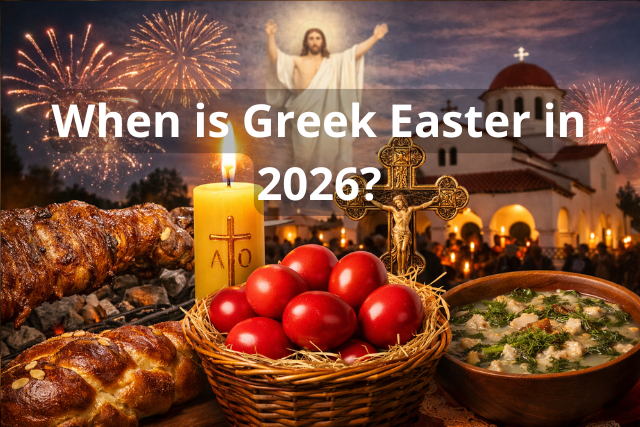
Greek Easter in 2026 will be celebrated on Sunday, April 12, 2026 .
The date differs from Western Easter because the Greek Orthodox Church calculates Easter using the Julian calendar and specific ecclesiastical rules established in early Christianity. These rules include:
-
Easter must fall after the spring equinox
-
It must occur after Jewish Passover
-
Due to calendar differences, Greek Easter often falls one or more weeks later than Catholic and Protestant Easter. In 2026, Western Easter is observed on April 5, while Greek Easter follows one week later on April 12 .
Why the Date of Greek Easter Changes Every Year?
Greek Easter does not fall on a fixed calendar date, as its timing shifts from year to year. This variability is rooted in astronomy and ancient church decisions rather than modern calendars.
The Eastern Orthodox Church continues to base Easter calculations on the Julian calendar, which currently lags 13 days behind the Gregorian calendar used in most of the world. In addition, Orthodox tradition insists that Easter must never be celebrated before Passover, further influencing the final date .
As a result, Greek Easter can fall anywhere between early April and early May in the modern calendar.
Which Countries Celebrate Greek Easter?
Although called “Greek” Easter, the celebration extends far beyond Greece. It is observed in all countries where Eastern Orthodox Christianity is the dominant or a significant faith tradition.
Countries Where Greek Easter Is Widely Celebrated
-
Greece – The heart of Greek Orthodox tradition
-
Cyprus – Closely linked to Greek religious customs
-
Russia
-
Ukraine
-
Romania
-
Bulgaria
-
Serbia
-
Georgia
-
North Macedonia
-
Montenegro
-
Belarus
Countries with Significant Orthodox Communities
-
Egypt (Coptic Orthodox Christians)
-
Ethiopia and Eritrea (Oriental Orthodox traditions)
-
Lebanon and Syria
-
United States, Canada, Australia, Germany, and the United Kingdom (Greek and Orthodox diaspora communities)
In many of these countries, Easter is a public holiday or accompanied by nationwide traditions, even among non-Orthodox populations.
How Do Greeks Prepare for Easter?
Great Lent: The 40-Day Fast
Preparation for Greek Easter begins with Great Lent, a 40-day period of fasting, prayer, and spiritual reflection. During this time, observant Christians avoid:
-
Meat
-
Dairy products
-
Eggs
-
Often fish and olive oil on certain days
The purpose is not only dietary discipline but spiritual purification—encouraging humility, generosity, and self-control.
Holy Week: The Emotional Core of Easter
The week leading up to Easter Sunday, known as Holy Week, is marked by daily church services and deeply symbolic rituals.
-
Palm Sunday commemorates Christ’s entry into Jerusalem
-
Holy Thursday recalls the Last Supper
-
Good Friday mourns the Crucifixion and is the most solemn day of the year
On Good Friday, church bells fall silent, shops close early, and many people fast completely.
Good Friday Traditions in Greece
Good Friday is observed as a solemn time dedicated to remembrance, sorrow, and deep contemplation. One of the most moving traditions is the Epitaphios procession, where a flower-decorated bier symbolizing Christ’s tomb is carried through the streets.
People follow the procession holding candles, while hymns of lamentation are sung. In many towns and villages, multiple parishes converge in a single square, creating a powerful communal expression of grief and faith.
Holy Saturday and the Midnight Resurrection Service
The Resurrection Ceremony
The most iconic moment of Greek Easter occurs just before midnight on Holy Saturday. The churches become crowded with people standing quietly, each carrying a candle that has not yet been lit. At exactly midnight, the priest announces the Resurrection with the proclamation of joy, and the Holy Flame is passed from candle to candle.
The night sky fills with light, church bells ring loudly, and fireworks illuminate cities and villages across Greece.
People greet one another with:
“Christos Anesti” (Christ is risen)
“Alithos Anesti” (Truly He is risen)
This moment marks the spiritual climax of the entire Easter season.
Easter Sunday: Celebration and Feast
After weeks of fasting, Easter Sunday is a day of joy, abundance, and togetherness.
Traditional Easter Foods
-
Roasted lamb or goat cooked on a spit
-
Magiritsa is a customary soup traditionally enjoyed once the late-night church service has concluded.
-
Tsoureki, a sweet braided bread
-
Families and friends gather for long meals that often last all day, accompanied by music, dancing, and laughter.
The Red Egg Tradition
One popular custom is egg tapping, where participants gently knock red eggs against each other. The person whose egg remains uncracked is believed to have good luck for the year.
How Greek Easter Is Celebrated Outside Greece
In Greek communities abroad, Easter is just as significant. Greek Orthodox churches in cities like New York, Toronto, Melbourne, and London hold midnight Resurrection services nearly identical to those in Greece.
Many families adapt traditions to local customs but preserve key elements such as fasting, candlelight services, and Easter feasts. These celebrations help maintain cultural identity among second- and third-generation Greek immigrants.
Cultural Importance of Greek Easter
Greek Easter is more than a religious observance—it is a cornerstone of Greek identity. Schools close, travel peaks, and entire villages come alive as families return to their ancestral homes.
For many Greeks, Easter represents:
-
Renewal after hardship
-
Unity of family and community
-
Continuity of ancient tradition in modern life
Even in an increasingly secular world, Greek Easter remains deeply embedded in everyday culture.
Greek Easter 2026 at a Glance
-
Date: Sunday, April 12, 2026
-
Faith: Greek Orthodox Christianity
-
Main Focus: Resurrection of Jesus Christ
-
Key Rituals: Fasting, Good Friday processions, midnight candle service
-
Main Celebration Day: Easter Sunday feast
Greek Easter in 2026 is not simply a date on the calendar—it is a profound spiritual and cultural experience that connects millions of people across generations and continents. Whether celebrated in a small Greek village, a bustling European capital, or a diaspora church abroad, the essence remains the same: hope, renewal, and shared faith.
For anyone seeking to understand Greek culture, Orthodox Christianity, or the deeper meaning of Easter beyond commercial traditions, Greek Easter offers one of the most authentic and moving celebrations in the world.