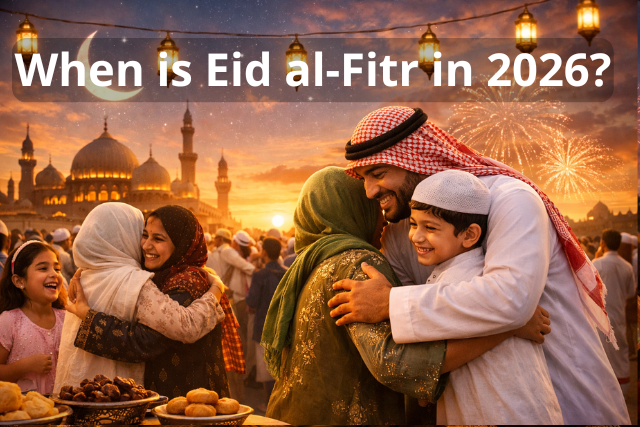
When is Eid al-Fitr celebrated in the Islamic calendar in 2026?
Eid al-Fitr is one of the most joyful and meaningful festivals in the Islamic calendar. It marks the conclusion of Ramadan, a month dedicated to fasting, prayer, patience, and spiritual reflection. For Muslims around the world, Eid al-Fitr is not only a religious event but also a cultural celebration that brings families, friends, and entire communities together.
This guide explains when Eid al-Fitr will be observed in 2026, which countries celebrate it, and how traditions vary across different regions, while maintaining a clear, accurate, and reader-friendly approach.
When Is Eid al-Fitr in 2026?
Eid al-Fitr in 2026 is expected to fall on Friday, March 20, although in some countries it may be observed on Saturday, March 21, depending on the local sighting of the crescent moon .
Why the Date Can Differ by Country
The Islamic calendar is lunar, meaning each month begins with the sighting of a new moon. Ramadan lasts either 29 or 30 days, and Eid al-Fitr begins on the first day of Shawwal, the tenth month of the Islamic year.
Because moon visibility can vary by geography and weather conditions, different countries may announce Eid on different days. Some nations rely strictly on local moon sightings, while others follow astronomical calculations or announcements from major religious authorities.
Expected Dates at a Glance
-
Likely Eid al-Fitr date: Friday, March 20, 2026
-
Possible alternative date: Saturday, March 21, 2026
-
Reason for variation: Crescent moon sighting and regional religious rulings
What Does Eid al-Fitr Mean?
The phrase “Eid al-Fitr” translates to “Festival of Breaking the Fast.” It celebrates the successful completion of Ramadan and symbolizes gratitude, renewal, and unity.
Eid al-Fitr emphasizes:
-
Thankfulness to God
-
Charity and compassion
-
Forgiveness and reconciliation
-
Family and community bonds
Before Eid prayers, Muslims are required to give Zakat al-Fitr, a charitable donation meant to support those in need so everyone can participate in the celebrations.
Which Countries Celebrate Eid al-Fitr?
Eid al-Fitr is observed in more than 80 countries and by Muslim communities worldwide. While traditions differ, the spiritual meaning remains the same.
Middle East
Eid al-Fitr is a public holiday across the Middle East, often lasting several days.
Countries include:
-
Kuwait
-
Oman
-
Bahrain
-
Jordan
-
Iraq
-
Yemen
In many of these nations, government offices, schools, and businesses close, and large communal prayers are held in mosques and open grounds.
South Asia
South Asia is home to one of the world’s largest Muslim populations, making Eid al-Fitr a major event.
Countries include:
-
Sri Lanka
-
Maldives
Festivities often last multiple days, with homes decorated, special meals prepared, and children receiving gifts or money known as Eidi.
Southeast Asia
Eid al-Fitr is deeply woven into cultural identity in Southeast Asia.
Countries include:
-
Malaysia
-
Brunei
-
Singapore
In Indonesia and Malaysia, Eid is commonly known as Lebaran or Hari Raya Aidilfitri and is marked by mass travel as families return to their hometowns.
Africa
Eid al-Fitr is widely celebrated across North, West, East, and parts of Southern Africa.
Countries include:
-
Egypt
-
Morocco
-
Algeria
-
Tunisia
-
Nigeria
-
Senegal
-
Sudan
-
Ethiopia
-
Kenya
Celebrations often combine Islamic traditions with local customs, music, and cuisine.
Europe
Although Muslims are a minority in most European countries, Eid al-Fitr is widely observed by Muslim communities.
Countries with notable celebrations include:
-
United Kingdom
-
France
-
Germany
-
Italy
-
Spain
-
Netherlands
-
Sweden
In some cities, public Eid prayers are held in large venues, parks, or convention centers.
Americas and Oceania
Eid al-Fitr is celebrated by Muslim communities across the Western Hemisphere.
Countries include:
-
United States
-
Canada
-
Brazil
-
Argentina
-
Australia
-
New Zealand
While Eid may not be a public holiday, workplaces and schools often grant leave or accommodations for observant Muslims.
How Is Eid al-Fitr Celebrated Around the World?
Although the core religious elements are shared globally, Eid al-Fitr customs reflect local cultures, cuisines, and traditions.
1. Eid Prayers
Eid begins with a special congregational prayer held shortly after sunrise. Muslims wear clean or new clothing and gather at mosques or large outdoor spaces.
The prayer is followed by a sermon that highlights gratitude, unity, and social responsibility.
2. Charity and Giving
Before the Eid prayer, Muslims give Zakat al-Fitr, ensuring that people in need can celebrate without hardship.
Beyond obligatory charity, many families also donate food, clothing, or money throughout Eid.
3. Family Visits and Reconciliation
Eid al-Fitr offers an opportunity for families and friends to come together, renew relationships, and strengthen personal bonds. Families visit elders, relatives, and neighbors, often starting with seeking forgiveness and restoring relationships.
In many cultures, greeting phrases equivalent to “Blessed Eid” or “Happy Eid” are exchanged.
4. Traditional Clothing
Across the world, Eid is an occasion to wear traditional or festive attire:
-
Middle East: Thobes, abayas, and embroidered garments
-
South Asia: Shalwar kameez, kurtas, sarees
-
Africa: Colorful robes and locally woven fabrics
-
Southeast Asia: Baju Kurung and Baju Melayu
5. Special Eid Foods
Food plays a central role in Eid celebrations.
Popular Dishes by Region
-
Middle East: Maamoul, lamb dishes, rice with spices
-
South Asia: Sheer khurma, biryani, kebabs
-
Southeast Asia: Ketupat, rendang, sweet coconut desserts
-
Africa: Couscous, stews, fried pastries
Meals are often shared with guests throughout the day.
6. Gifts and “Eidi” for Children
Children receive money, sweets, toys, or clothing. This tradition, often called Eidi, adds excitement and joy to the celebration and encourages generosity.
7. Community Events and Festivals
In many countries, Eid includes:
-
Community feasts
-
Cultural performances
-
Charity drives
-
Public celebrations in parks or halls
These events strengthen social bonds and create a festive atmosphere.
Public Holidays and Time Off
In many Muslim-majority countries, Eid al-Fitr is a multi-day public holiday, sometimes extending up to a week. In non-Muslim countries, Muslims often take personal leave or are granted religious accommodations.
Why Eid al-Fitr Matters Globally
Eid al-Fitr represents more than the end of fasting. It is a reminder of:
-
Self-discipline and patience
-
Compassion for the less fortunate
-
Unity across cultures and borders
Despite differences in language, customs, and geography, Muslims worldwide share the same spiritual joy during Eid.
Eid al-Fitr in 2026 is expected to be observed around March 20, with slight regional variations due to moon sighting. It is celebrated in countries across the Middle East, Asia, Africa, Europe, and the Americas, each adding its own cultural flavor while preserving the festival’s spiritual essence.
Whether marked by grand public prayers or quiet family gatherings, Eid al-Fitr remains a powerful symbol of gratitude, generosity, and global connection.