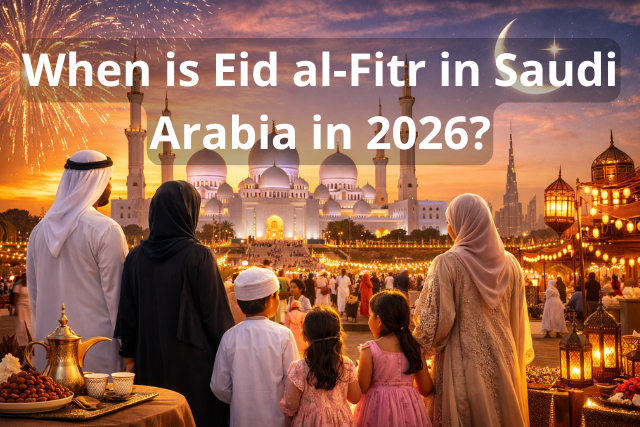
When is Eid al-Fitr in Saudi Arabia in 2026? Dates, Traditions, and Celebrations
Eid al-Fitr is one of the most important religious occasions in Saudi Arabia, marking the joyful conclusion of the holy month of Ramadan. In 2026, millions of people across the Kingdom will once again come together to celebrate faith, gratitude, family, and generosity. Because Saudi Arabia plays a central role in the Islamic world, the announcement of Eid al-Fitr there is closely watched by Muslims worldwide.
This comprehensive guide explains when Eid al-Fitr will be observed in Saudi Arabia in 2026, how the date is determined, and how the festival is traditionally celebrated across the Kingdom, from spiritual rituals to social customs.
When is Eid al-Fitr in Saudi Arabia in 2026?
In Saudi Arabia, Eid al-Fitr in 2026 is expected to fall on Friday, 20 March 2026, subject to official moon sighting by the Saudi Supreme Court .
Key Date Details
-
Expected Gregorian date: Friday, 20 March 2026
-
Islamic date: 1 Shawwal 1447 AH
-
Holiday status: National public holiday
-
Moon sighting: Evening of Thursday, 19 March 2026 (tentative)
As with all Islamic holidays, the final confirmation depends on the physical sighting of the crescent moon. Saudi Arabia relies on authorized moon-sighting committees, and their announcement is considered definitive within the Kingdom and often influences other Muslim countries.
Why the Eid Date Changes Every Year
Eid al-Fitr follows the Hijri (Islamic lunar) calendar, which is approximately 10–11 days shorter than the Gregorian calendar. Because of this, Eid shifts earlier each year when observed on the solar calendar.
Saudi Arabia does not rely solely on astronomical calculations. Instead, actual moon sighting remains the deciding factor. If the crescent moon is visible at sunset on the 29th day of Ramadan, Eid is declared for the next day. If not, Ramadan completes 30 days, and Eid moves one day later.
How Long Is the Eid al-Fitr Holiday in Saudi Arabia?
In Saudi Arabia, Eid al-Fitr is more than a single day of celebration. The government usually grants several consecutive days off, particularly for public-sector employees.
For Eid al-Fitr 2026, the holiday period is expected to last three to four days, allowing families time to travel, gather, and celebrate together . Private-sector holiday lengths may vary, but most businesses adjust working hours during this period.
The Spiritual Meaning of Eid al-Fitr
Eid al-Fitr translates to “the Festival of Breaking the Fast.” It represents spiritual renewal after a month of fasting, prayer, and self-discipline during Ramadan.
The occasion emphasizes:
-
Gratitude to Allah for strength and guidance
-
Forgiveness and reconciliation
-
Compassion toward the less fortunate
-
Community unity and shared joy
In Saudi Arabia, where Islamic tradition deeply shapes daily life, Eid al-Fitr holds profound religious and cultural importance.
How Eid al-Fitr Is Celebrated in Saudi Arabia
1. Moon Sighting Announcement and Public Joy
The celebration officially begins when Saudi authorities announce the successful sighting of the Shawwal crescent moon. This declaration is broadcast nationwide, prompting excitement across cities and villages.
Homes are finalized with decorations, food preparations begin, and families confirm travel plans to be together for the holiday.
2. Eid Prayer (Salat al-Eid)
The morning of Eid starts early. After sunrise, men, women, and children gather at:
-
Large mosques
-
Open prayer grounds (musallas)
-
Neighborhood mosques
The Eid prayer consists of two units (rak‘ahs) and includes a sermon emphasizing unity, thankfulness, and kindness. Attendance is strongly encouraged, and many Saudis consider it the spiritual heart of the celebration.
3. Zakat al-Fitr: Charity Before Celebration
Before the Eid prayer, Muslims in Saudi Arabia must give Zakat al-Fitr, a mandatory charitable donation intended to support those in need.
In Saudi Arabia:
-
Donations are often distributed through official charities
-
Many people contribute food staples or monetary equivalents
-
The goal is to ensure that everyone can celebrate Eid with dignity
This act reinforces social responsibility and compassion, which are core values of the holiday.
4. Wearing New and Traditional Clothing
On Eid morning, Saudis dress in their finest attire:
-
Men typically wear clean or new thobes
-
Women wear elegant abayas or festive dresses
-
Children often receive brand-new outfits
Traditional perfumes such as oud and musk are commonly used, adding to the festive atmosphere.
5. Family Gatherings and Visiting Relatives
Family plays a central role in Eid al-Fitr celebrations in Saudi Arabia. After prayers, people visit:
-
Parents and grandparents
-
Extended relatives
-
Neighbors and close friends
Greetings such as “Eid Mubarak” are exchanged, accompanied by warm embraces and well-wishes for health and prosperity.
6. Eid Feasts and Traditional Foods
Food is a major highlight of Eid al-Fitr. After a month of fasting, families prepare generous meals that often include:
-
Rice dishes with lamb or chicken
-
Dates and traditional sweets
-
Arabic coffee (Gahwa) and tea
-
Desserts prepared especially for Eid
Meals are shared over long gatherings that strengthen family bonds and hospitality traditions.
7. Gifts, Eidiya, and Children’s Celebrations
Children eagerly anticipate Eidiya, a traditional gift of money given by parents and elders. In Saudi Arabia, this custom is widely practiced and often accompanied by:
-
Toys and sweets
-
Family outings
-
Visits to entertainment centers and parks
Shopping malls, amusement venues, and cultural attractions typically host special Eid events for families.
8. Community Events and Public Festivities
Across major cities such as Riyadh, Jeddah, and Dammam, Eid brings a lively public atmosphere:
-
Fireworks displays
-
Cultural performances
-
Extended shopping hours
-
Hotel and resort celebrations
These activities contribute to a sense of national festivity while respecting religious values.
Eid al-Fitr Travel and Tourism in Saudi Arabia
Eid al-Fitr is one of the busiest travel periods in the Kingdom. Many residents:
-
Travel domestically to visit family
-
Book resorts along the Red Sea
-
Enjoy holiday packages in major cities
Authorities often implement special traffic and safety measures to accommodate increased movement during the holiday period.
Work, Business, and Daily Life During Eid
During Eid al-Fitr:
-
Government offices close
-
Banks and institutions operate on limited schedules
-
Retail and hospitality sectors remain active
Working hours are typically reduced, allowing people to balance celebration and professional responsibilities.
Why Eid al-Fitr in Saudi Arabia Is Unique
Eid al-Fitr in Saudi Arabia carries special significance because:
-
The Kingdom is home to Islam’s two holiest cities, Makkah and Madinah
-
Religious traditions are deeply integrated into public life
-
The official moon sighting influences Eid observance worldwide
The blend of spiritual devotion, cultural heritage, and national unity makes Eid in Saudi Arabia especially meaningful.
Eid al-Fitr in Saudi Arabia in 2026 is expected on Friday, 20 March, marking a joyous conclusion to Ramadan and a time of reflection, generosity, and togetherness .
From early morning prayers to festive meals and heartfelt family reunions, Eid al-Fitr in Saudi Arabia reflects the values of faith, compassion, and community. Whether experienced in a bustling city or a quiet village, the celebration remains a powerful reminder of shared belief and human connection.