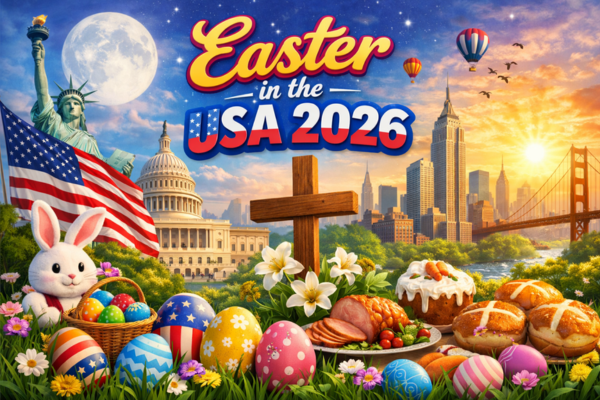
When is American Easter in 2026?
How Americans Celebrate Easter
Easter is one of the most meaningful and widely observed holidays in the United States. It blends deep religious significance with cultural traditions, family gatherings, seasonal symbolism, and community events. In 2026, Easter will once again bring together millions of Americans for worship, reflection, celebration, and joyful springtime activities.
This detailed guide explains when Easter falls in the USA in 2026, why the date changes every year, and how Easter is celebrated across the country, from church services to egg hunts and festive meals.
When Is Easter in the USA in 2026?
In the United States, Easter Sunday in 2026 will be celebrated on April 5 .
Easter is always observed on a Sunday, but unlike fixed-date holidays, its timing changes each year. This is because Easter follows a traditional calculation based on both the solar and lunar calendars rather than the standard Gregorian calendar alone.
Why Easter’s Date Changes Every Year
Easter is determined using a centuries-old formula:
-
The observance takes place on the Sunday that follows the appearance of the full moon
-
That full moon must occur on or after the spring equinox (around March 21)
Because lunar cycles do not align perfectly with calendar months, Easter can fall anywhere between late March and late April. In 2026, this calculation places Easter in early April, making it a mid-spring celebration for most of the country.
Is Easter officially recognized as a public holiday in the United States?
Easter Sunday is not a federal public holiday in the USA. However, its cultural importance is so strong that many institutions adjust their schedules.
-
Most schools and universities are closed for spring break around Easter
-
Many businesses shorten hours or close on Easter Sunday
-
Some states recognize Good Friday, the Friday before Easter, as a state holiday
Church attendance on Easter Sunday is among the highest of the year, even for Americans who do not attend services regularly.
The Religious Meaning of Easter in American Christianity
At its core, Easter commemorates the resurrection of Jesus Christ, which is the foundation of Christian faith. According to Christian belief, Jesus rose from the dead three days after his crucifixion, demonstrating victory over death and offering hope of salvation.
In the United States, Easter is observed by:
-
Roman Catholics
-
Protestant denominations
-
Evangelical Christians
-
Orthodox Christians (on a different date in most years)
Holy Week Observances
Easter celebrations are preceded by Holy Week, which includes:
-
Palm Sunday – marking Jesus’ entry into Jerusalem
-
Maundy Thursday – remembering the Last Supper
-
Good Friday – honoring the crucifixion
-
Holy Saturday – a day of waiting and reflection
These days are especially important in American churches, many of which hold special evening services, reenactments, and prayer vigils.
How Americans Celebrate Easter
Easter celebrations in the USA vary by region, family tradition, and religious background. While church services remain central, many secular customs are equally popular.
1. Easter Church Services
Church services are the heart of Easter for many Americans. These services often feature:
-
Sunrise services held outdoors or at dawn
-
Choir performances and special hymns
-
Floral decorations, especially white lilies
-
Messages focused on renewal, hope, and faith
Sunrise services are particularly symbolic, representing the discovery of the empty tomb at dawn.
2. Easter Egg Hunts
One of the most beloved Easter traditions in the USA is the Easter egg hunt, especially for children.
-
Plastic eggs filled with candy or toys are hidden in yards, parks, or churches
-
Some communities organize large public egg hunts with thousands of eggs
-
Eggs may also contain small notes, prizes, or money
This tradition symbolizes new life and joy, aligning perfectly with Easter’s springtime themes.
3. Decorating and Dyeing Easter Eggs
Many families gather before Easter to dye hard-boiled eggs in bright colors.
-
Eggs are colored using food dye, natural ingredients, or decorative kits
-
Patterns may include stripes, marbling, or glitter designs
-
Children often personalize eggs with names or drawings
Eggs represent renewal and rebirth, making them a powerful Easter symbol across cultures.
4. The Easter Bunny Tradition
The Easter Bunny is a playful figure associated with delivering eggs and treats to children.
-
Children often wake up to Easter baskets left overnight
-
Baskets typically include candy, chocolate, toys, and decorated eggs
-
Some families treat the Easter Bunny similarly to Santa Claus
Although the Easter Bunny is not a religious symbol, it has become deeply embedded in American Easter culture.
Traditional Easter Foods in the USA
Food plays a central role in Easter celebrations across the United States, with meals often shared among extended family.
Popular Easter Dishes
Common Easter foods include:
-
Baked or roasted ham
-
Roast lamb (especially in religious households)
-
Deviled eggs
-
Scalloped or mashed potatoes
-
Fresh spring vegetables
Meals tend to be hearty but seasonal, reflecting the transition from winter to spring.
Easter Desserts
Desserts are an essential part of Easter gatherings, with favorites such as:
-
Carrot cake with cream cheese frosting
-
Hot cross buns
-
Fruit tarts and pies
-
Chocolate eggs and bunny-shaped candies
Many desserts incorporate bright colors and light flavors that match the spring season.
Easter Family Gatherings and Social Traditions
For many Americans, Easter is also about reconnecting with loved ones.
-
Families host brunches or afternoon dinners
-
Relatives travel to spend the weekend together
-
Grandparents often organize activities for children
Easter gatherings are typically more relaxed than winter holidays, with an emphasis on warmth, daylight, and outdoor activities.
Community and Public Easter Events
Across the USA, cities and towns organize Easter-themed events that bring communities together.
Examples Include:
-
Parades featuring spring decorations
-
Charity drives and food donations
-
Church-sponsored festivals
-
Outdoor concerts and picnics
Some well-known Easter events attract visitors from across the country, blending tourism with tradition.
Easter and Spring Break in the USA
Easter often aligns closely with spring break, making it a popular time for travel.
-
Families plan vacations around Easter weekend
-
Tourist destinations see increased visitors
-
Theme parks and resorts host Easter events
This overlap reinforces Easter’s role as both a religious and seasonal milestone in American life.
Easter Symbols Commonly Seen in the USA
Several symbols dominate Easter celebrations across the country:
-
Eggs – new beginnings and life
-
Lambs – innocence and sacrifice
-
Lilies – purity and resurrection
-
Crosses – faith and redemption
These symbols appear in decorations, artwork, greeting cards, and church displays throughout the Easter season.
Easter Monday in the United States
Unlike many countries, Easter Monday is not widely observed in the USA.
-
Most schools and workplaces reopen
-
Some private schools and churches remain closed
-
Easter celebrations typically conclude on Sunday
Despite this, the Easter season continues in churches for several weeks.
The Meaning of Easter in Modern American Society
While Easter remains deeply religious for many, it has also evolved into a broader cultural celebration.
For some Americans, Easter represents:
-
A moment of spiritual renewal
-
A family-centered spring holiday
-
A break from routine and winter stress
-
A time of gratitude and reflection
This blend of sacred and secular elements allows Easter to remain relevant across generations and backgrounds.
Easter in the USA 2026
-
Easter Sunday in the USA in 2026 falls on April 5
-
The date changes yearly due to lunar calendar calculations
-
Americans celebrate Easter through church services, family meals, egg hunts, and community events
-
Traditions combine religious faith with cultural and seasonal customs
Easter in the United States is more than a single day—it is a meaningful season that brings together faith, family, and the joy of spring.