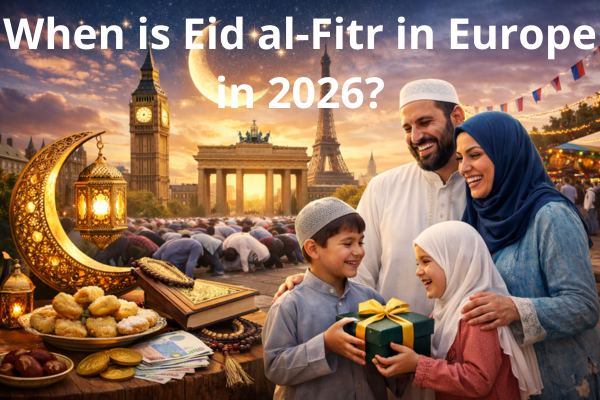
When is Eid al-Fitr in Europe 2026?
How Muslims Celebrate Across European Countries
Eid al-Fitr is one of the most important religious celebrations for Muslims worldwide, marking the joyful conclusion of Ramadan, the month of fasting, prayer, and spiritual reflection. In Europe, Eid al-Fitr is celebrated by millions of Muslims living across diverse cultural, linguistic, and national backgrounds. While the essence of Eid remains the same everywhere, its expression in Europe reflects a rich blend of Islamic tradition and European social life.
This guide explores when Eid al-Fitr will be observed in Europe in 2026 and offers a detailed look at how Eid al-Fitr is celebrated across European countries, from major cities to smaller communities.
When Is Eid al-Fitr in Europe in 2026?
Eid al-Fitr follows the Islamic lunar calendar and begins on the first day of Shawwal, immediately after Ramadan ends. Because the lunar calendar is about 10–11 days shorter than the Gregorian calendar, the date of Eid shifts earlier each year.
Expected Date for Eid al-Fitr in Europe (2026)
Based on astronomical calculations and crescent moon visibility forecasts, Eid al-Fitr in Europe in 2026 is expected to fall on Friday, March 20, with celebrations beginning on the evening of Thursday, March 19, depending on local moon sighting decisions .
It is important to note that:
-
Some European Muslim organizations follow local moon sightings
-
Others rely on global sightings or astronomical calculations
-
As a result, a few communities may observe Eid on Saturday, March 21, 2026
Despite minor variations, the majority of European countries are expected to celebrate Eid on or around March 20, 2026.
Why the Eid Date Can Differ Across Europe
Europe is home to Muslims from many traditions, including South Asian, Arab, African, Balkan, and Turkish backgrounds. Different Islamic authorities follow different methods for confirming the start of Shawwal:
-
Local moon sighting (common in parts of the UK and South Asia-influenced communities)
-
Global moon sighting (accepting sightings from other regions)
-
Astronomical calculation (used by several European councils)
Because of these approaches, it is not unusual for Eid to be celebrated on two different days within the same country, especially in large multicultural cities.
Is Eid al-Fitr a Public Holiday in Europe?
Eid al-Fitr is not a public holiday in most European countries, but there are exceptions and accommodations.
Countries with Official or Partial Recognition
-
Kosovo – Public holiday
-
Bosnia and Herzegovina – Recognized for Muslims
-
Albania – Official public holiday
-
North Macedonia – Observed by Muslim communities
Other European Countries
In countries such as the United Kingdom, France, Germany, Italy, Spain, and the Netherlands, Eid is not a national public holiday. However:
-
Schools may grant excused absences
-
Employers may allow personal or religious leave
-
Some local councils acknowledge Eid events publicly
How Eid al-Fitr Is Celebrated in Europe
Although traditions vary by country and culture, several core elements define Eid celebrations across Europe.
Eid Morning Prayers
The day of Eid begins with Salat al-Eid, a special congregational prayer performed shortly after sunrise.
Where Prayers Take Place
-
Mosques and Islamic centers
-
Community halls
-
Public parks and stadiums (in large cities)
-
Temporary prayer grounds arranged by councils
In cities such as London, Paris, Berlin, and Madrid, thousands of worshippers gather, creating one of the largest Muslim public events of the year.
Wearing New or Best Clothes
Across Europe, Muslims traditionally wear:
-
New clothing
-
Traditional outfits from their cultural heritage
-
Modest, festive attire reflecting Eid’s joyful nature
Children often receive special outfits, making Eid particularly exciting for younger family members.
Zakat al-Fitr: Charity Before Eid Prayer
Before attending the Eid prayer, Muslims give Zakat al-Fitr, a mandatory charity meant to ensure that everyone, including those in need, can celebrate Eid with dignity.
In Europe, Zakat al-Fitr is commonly donated:
-
Through mosques
-
Via registered charities
-
Online platforms supporting local families or refugees
This charitable act reinforces social responsibility and community solidarity.
Family Gatherings and Home Celebrations
After prayers, families return home to:
-
Share festive meals
-
Exchange hugs and greetings
-
Say “Eid Mubarak” to loved ones
In Europe, where extended families may live in different cities or countries, Eid often becomes a key moment for reunions.
Traditional and European-Influenced Foods
Eid cuisine in Europe reflects both Islamic heritage and European influences.
Common Eid Foods
-
Sweet pastries and desserts
-
Rice dishes, roasted meats, and stews
-
Cakes, chocolates, and cookies popular in Europe
In multicultural households, it is common to see Middle Eastern sweets alongside European desserts, creating a unique Eid table.
Visiting Friends, Neighbors, and Community Events
Hospitality is central to Eid celebrations. Many Muslims in Europe:
-
Visit relatives and friends throughout the day
-
Invite neighbors, including non-Muslims
-
Attend community Eid festivals organized by mosques or local councils
These events often include:
-
Cultural performances
-
Food stalls
-
Children’s activities
-
Charity fundraisers
Eid Gifts and Children’s Traditions
Children receive special attention during Eid, including:
-
Small amounts of money
-
Toys and gifts
-
Treats and sweets
In European cities, Eid fairs and play areas have become increasingly popular, reflecting the growing visibility of Muslim life.
Eid al-Fitr in Major European Countries
United Kingdom
Large public prayers, charity drives, family feasts, and growing recognition by schools and employers.
France
Eid prayers in mosques and large venues, strong emphasis on family meals and charitable giving.
Germany
Community-organized prayers, cultural diversity reflected in food and clothing traditions.
Italy and Spain
Mosque-centered celebrations, growing public awareness, and multicultural Eid gatherings.
Scandinavia
Smaller but close-knit celebrations, often held indoors due to weather conditions.
The Cultural Importance of Eid in Europe
Eid al-Fitr plays a vital role in:
-
Strengthening Muslim identity
-
Encouraging interfaith understanding
-
Showcasing Europe’s cultural diversity
In recent years, many European cities have begun acknowledging Eid through public messages, lighting displays, and community partnerships.
Eid al-Fitr in Europe in 2026 is expected to be celebrated on or around Friday, March 20, marking the joyful end of Ramadan. While not a public holiday in most European countries, Eid remains one of the most significant religious and cultural events for millions of Muslims across the continent.
Through prayer, charity, family gatherings, and community celebrations, Eid al-Fitr in Europe beautifully blends Islamic tradition with European multicultural life—making it a powerful symbol of unity, gratitude, and shared humanity.