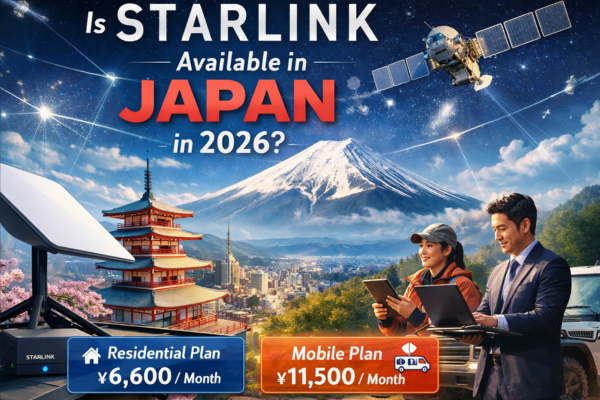
Starlink available in Japan in 2026 – Pricing and Plans
In 2026, Starlink — SpaceX’s global satellite internet service — is available in Japan and continues to expand its footprint. From rural areas with limited connectivity to emergency communication solutions, the service plays an increasingly important role across the archipelago.
1. What Is Starlink? A Quick Overview
Starlink is a satellite internet system developed by SpaceX, the aerospace company founded by Elon Musk. It uses a constellation of low Earth orbit (LEO) satellites to beam broadband internet directly to ground terminals. Unlike traditional internet that relies on cables and fiber optics, Starlink delivers connectivity via satellites, which makes it especially valuable in remote or underserved areas.
Starlink is designed to offer:
-
High-speed internet in areas without fiber or cable
-
Low latency connections compared with older satellite systems
-
Portable connectivity options
-
Emergency backup communication where other networks fail
Thanks to frequent satellite launches, Starlink has grown rapidly and now covers most of the globe — including Japan.
2. Starlink in Japan: Coverage Status in 2026
Yes — Starlink is officially available in Japan in 2026. Japanese customers can access the service through authorized resellers and directly via Starlink accounts.
2.1 Authorized Resellers in Japan
A key development is that Internet Initiative Japan (IIJ) — a major Japanese ISP — became an authorized Starlink reseller as of December 1, 2025. This means corporate and specialized users in Japan can get Starlink service with comprehensive support, including hardware installation and customized network setup.
With this authorization:
-
Japanese companies and organizations can subscribe to Starlink internet
-
IIJ provides assistance with installation and configuration
-
Local support and integration services are available
2.2 Satellite Connectivity Services
Apart from standard home or business service, Japan also sees Starlink satellite services integrated with carrier offerings. For example:
-
KDDI and Okinawa Cellular launched “au Starlink Direct”, a satellite-to-cellphone service allowing direct connection to Starlink satellites for basic messaging and emergency alerts without traditional network coverage.
This integration shows how satellite connectivity is becoming part of mainstream communication options in Japan.
2.3 Specialized Use Cases
Starlink isn’t limited to homes and offices:
-
Maritime and transportation services are exploring or using Starlink for connectivity on ships and ferries.
-
Disaster communications are being supported by satellite connectivity where terrestrial networks could fail.
These use cases indicate that Starlink’s role in Japan goes beyond typical internet access, adding resilience and utility in critical scenarios.
3. Pricing of Starlink in Japan (2026)
Starlink pricing varies based on the type of plan and how the service is used. In Japan, pricing includes hardware costs (the satellite “dish” and router) and monthly subscription fees.
Pricing is usually quoted in Japanese yen (¥).
3.1 Starlink Hardware Costs
To use Starlink, you need a Starlink hardware kit, which includes:
-
The satellite dish (also known as “the terminal”)
-
A router
-
Necessary cables and mounting accessories
Typical hardware costs in Japan (2026) are approximately:
-
Starlink Standard Kit: around ¥34,800 – ¥89,600 depending on seller and model.
Retailers in Japan — including online stores and some physical retailers — offer these kits. Keep in mind that prices fluctuate with supply and promotions, so it’s wise to check current listings before buying.
3.2 Monthly Subscription Plans
Once the hardware is set up, users pay a monthly subscription for internet access. Japan offers multiple plan types, depending on use case:
A. Residential Plans
These plans are meant for homes, apartments, or offices:
| Plan | Monthly Fee (Approx.) | Notes |
|---|---|---|
| Residential Lite | about ¥4,600 | Unlimited data, basic priority |
| Residential Standard | about ¥6,600 | Unlimited data, higher priority |
The Standard plan is typically recommended for regular household and office use where streaming, video conferencing, and gaming are common. Residential Lite is suitable for more casual use with lower priority during congestion.
B. Mobile “Roam” Plans
Roam plans support open mobility — perfect for travelers, nomads, or remote jobs requiring broadband on the go:
| Plan | Monthly Fee (Approx.) | Data / Notes |
|---|---|---|
| Roam 10GB | ¥1,500 | 10GB allowance |
| Roam 50GB | ¥6,500 | 50GB allowance |
| Roam Unlimited | ¥11,500 | Unlimited use within Japan |
These plans allow the Starlink dish to be moved between locations as long as the service remains within the same region.
C. Global or Premium Plans
Premium business and global roaming plans are available but are priced much higher, often designed for:
-
International businesses
-
Journalists in remote zones
-
Emergency services with global reach
Example: Global Unlimited Roam can cost around ¥60,000 per month — significantly more but offering broad regional coverage.
4. Factors Affecting Starlink Cost in Japan
Starlink’s pricing in Japan is affected by several factors:
4.1 Exchange Rates and Import Costs
Because hardware is imported technology, fluctuations in yen conversion and import duties can alter retail pricing.
4.2 Regulatory Fees
Satellite services often require regulatory compliance and licensing. In some contexts, local taxes or communication fees may apply.
4.3 Optional Accessories
Mounts, ethernet adapters, and professional installation services — especially for rooftops or challenging installations — can increase total costs.
4.4 Different Hardware Models
Starlink periodically updates its hardware. Mini or portable terminals might be cheaper upfront but limited in function compared with full kits.
5. How to Get Starlink in Japan (Step-by-Step)
If you’re in Japan and want to set up Starlink, here’s a clear step-by-step approach:
Step 1: Check Availability and Plans
Visit Starlink’s official site or authorized reseller pages to confirm current availability and plan options in your address. Though Starlink covers all of Japan technically, specific plans might vary by region or provider.
Step 2: Purchase Hardware
You can:
-
Order directly from Starlink’s online store
-
Buy through retail partners
-
Purchase via authorized resellers like IIJ
Step 3: Install the Dish
Starlink is designed for DIY setup in many cases:
-
Mount the dish where it has a clear view of the sky
-
Connect the router and power
-
Use the Starlink app for activation and alignment
If you prefer, professional installation helps ensure optimal setup.
Step 4: Activate Service
Follow instructions in the Starlink app or reseller portal to activate the service and select your desired plan — Residential, Roam, etc.
Step 5: Enjoy Connectivity
Starlink connects in minutes and delivers broadband suitable for streaming, gaming, work, and more — especially in areas where fiber internet is limited.
6. Starlink Usage Scenarios in Japan
Starlink is useful in many situations:
6.1 Rural and Remote Areas
Japan has mountainous regions and islands where fiber isn’t practical. Starlink fills this gap.
6.2 Emergency Backups
Satellite internet provides resilience during disasters like earthquakes where terrestrial networks may fail.
6.3 Mobile and Outdoor Use
Travelers, campers, and professionals who require connectivity off the grid benefit from mobile plans.
6.4 Business Continuity
Companies in logistics, agriculture, or remote operations can use Starlink as a backup or primary connection source.
7. Pros and Cons of Using Starlink in Japan
Pros
✔ Reliable broadband where fiber is unavailable
✔ Flexible plans (home, travel, business)
✔ Growing ecosystem with local support
✔ Satellite backup for critical communication
Cons
✖ Higher monthly cost than many urban fiber plans
✖ Requires hardware investment upfront
✖ Performance may vary with weather or obstructed skies
8. Is Starlink Worth It in Japan?
Whether Starlink is worth it depends on your needs:
-
Urban users with fiber: Traditional fiber may be cheaper and faster in cities.
-
Rural residents: Starlink may be one of the best options for broadband.
-
Emergency preparedness: Valuable as a backup communications method.
-
Mobile professionals: Great for unpredictable travel and remote work.
In essence, Starlink shines where traditional infrastructure is weak or nonexistent.
9. Final Thoughts: Starlink in Japan 2026
Starlink is available in Japan in 2026 with multiple service options and pricing plans. Through resellers like IIJ and integration with local carriers like KDDI, the service continues to expand and diversify. Monthly costs vary by plan, while hardware prices have become more accessible compared to the earliest days of rollout. As satellite network coverage improves globally, Japan sits firmly on the map as a market where Starlink is both functional and relevant for many internet users.
If you’re in Japan and considering Starlink, think about:
-
Your primary use case (home, travel, business)
-
Budget for hardware and monthly fees
-
Whether traditional broadband meets your needs
With that in mind, Starlink presents a compelling alternative or supplement to Japan’s existing internet infrastructure.