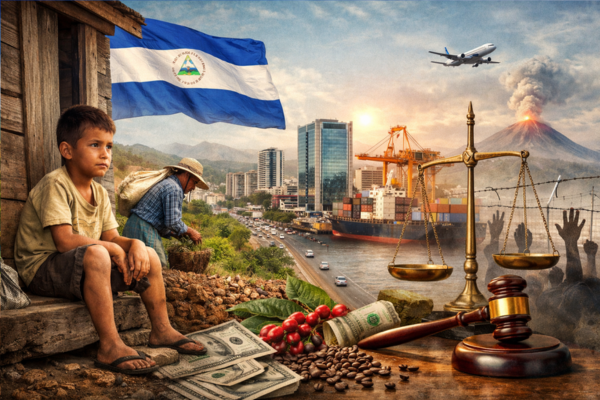
Why is Nicaragua considered a third-world country?
Comprehensive Analysis & Current Economic Status
When people hear the term “third‑world country,” many assume it refers to a place that is poor, underdeveloped, or struggling compared to the rest of the world. But what does this label really mean today — and does it apply to Nicaragua in 2026? To answer that, we have to explore more precise modern classifications of development, economic data, quality of life indicators, and global comparisons.
What Does “Third‑World Country” Really Mean?
The term third world was originally coined during the Cold War to describe countries that were neither aligned with the Western capitalist bloc (the first world) nor the Soviet communist bloc (the second world). It did not specifically mean “poor” or “underdeveloped” at first. Over time, however, the phrase became widely used to describe less developed, low‑income countries with limited industrialization, weak infrastructure, and lower living standards.
Today, this term is mostly outdated in economics and policy circles. Instead of first, second, and third world, global organizations like the World Bank and the United Nations classify countries based on measured criteria like income, development indices, and human capital. This provides a clearer view of where countries truly stand in the international arena.
Nicaragua’s Modern Economic Classification (2026)
1. Income Group — Lower Middle Income
According to the World Bank classification, countries are grouped based on GNI per capita (Gross National Income per person) using the Atlas method:
-
Low income: $1,135 or less
-
Lower middle income: $1,136 – $4,495
-
Upper middle income: $4,496 – $13,935
-
High income: $13,935 or more
In 2026, Nicaragua is officially classified as a lower‑middle‑income country. This means its average income per person is above the very poorest countries but below the level seen in more economically advanced nations.
What this tells us:
Although Nicaragua is not as rich as developed countries in Europe, North America, or East Asia, it no longer falls into the “extreme poverty” group even by international standards. Economically, it is progressing beyond the lowest tier, which was often equated with the outdated idea of “third world.”
2. GDP & Economic Activity
As of the mid‑2020s, Nicaragua’s economy is relatively small in global terms, but growing. The country’s estimated GDP ranges around $13‑20+ billion USD, with modest yearly expansion driven by agriculture, manufacturing, tourism, and remittances.
Even though Nicaragua’s economic output per person is lower than most developed nations, its growth trends suggest ongoing development rather than stagnation.
3. Human Development Index (HDI) Improvements
The Human Development Index (HDI) — created by the United Nations — measures life expectancy, education, and income to give a broader view of a country’s standard of living.
-
In 2022, Nicaragua’s HDI was around 0.669
-
In 2023, it improved to roughly 0.706.
This places Nicaragua solidly in the medium human development category. For comparison, some highly developed countries score above 0.85, while the least developed countries often score below 0.55.
What this means:
These HDI improvements show Nicaragua making progress in healthcare, education, and overall living standards. It’s not at the very bottom of global development, but still behind wealthier nations.
So, Is Nicaragua a Third‑World Country in 2026?
Short Answer:
No — by modern classifications, Nicaragua is not considered a “third‑world country.”
That term, in its original political meaning, no longer applies. Even in its outdated development sense, Nicaragua is beyond the lowest income tier and shows measurable progress.
Longer Explanation:
-
The term “third world” is outdated.
It’s no longer used by institutions like the World Bank, UNDP, IMF, or OECD when discussing development. The World Bank, for instance, categorizes countries by income groups rather than world blocs. -
Economically, Nicaragua is developing, not stagnant.
Its growth rate has been positive, and sectors like agriculture, tourism, and services contribute meaningfully to its GDP. Growth is forecasted to continue, even if modestly, through 2025 and 2026. -
Development indicators like HDI show progress.
A rising HDI score means improvements in education, life expectancy, and income, which are crucial measures of human well‑being — beyond just income figures. -
Political and social challenges remain.
While economic data points to progress, Nicaragua also faces criticisms regarding political freedoms, rule of law, and human rights. Some international bodies and foreign governments have expressed concern about certain government policies affecting labor rights and civic space.These issues can influence investment, migration, and long‑term development prospects — but they don’t automatically make the country “third world” in the modern sense of development.
How Nicaragua Compares Regionally
In Central America, development varies widely:
-
Costa Rica and Panama typically have higher incomes and stronger development indicators.
-
El Salvador, Guatemala, and Honduras share some economic challenges similar to Nicaragua.
-
Haiti remains one of the poorest countries in the region in many measures.
Nicaragua lies somewhere in the middle‑to‑lower range of regional development, but not at the bottom. Its classification as lower‑middle‑income puts it ahead of the lowest‑income countries in both the Caribbean and Africa.
Key Areas of Progress & Persistent Challenges
Strengths
Economic Growth: Nicaragua has sustained moderate expansion in recent years.
Farming and Trade: Products such as coffee, livestock, seafood, and textile goods play a major role in the nation’s economic output.
Remittances: A substantial portion of economic activity comes from money sent home by Nicaraguans living abroad, which supports domestic consumption.
Human Development Improvements: HDI gains reflect advances in key social areas.
Challenges
Income Inequality: A developing economy still grapples with unequal distribution of wealth.
Government and Legal Framework: Shifts in political leadership and issues surrounding civil liberties may influence both economic investment and the protection of human rights.
Infrastructure Gaps: Many rural areas lack the same access to services found in developed countries.
Climate Vulnerability: Hurricanes and climate risks affect food security and development planning.
Nicaragua’s Development Status in 2026
| Category | Status (2026) |
|---|---|
| World Bank Income Level | Lower Middle Income |
| Human Development Index | Medium Development |
| “Third World” Label | Not accurate or meaningful today |
In conclusion, Nicaragua in 2026 is best described as a developing country with moderate income growth and improving human development indicators. While challenges persist, calling it a third‑world country is both outdated and misleading in modern global development language.
Instead, it’s more precise to say Nicaragua is a lower middle‑income, developing nation working toward greater economic stability and human progress.