Countries with the Highest Female Population in the world 2026
In 2026, understanding global gender distribution remains important for policymakers, researchers, businesses, and anyone curious about world demographics. While the global population is close to 8 billion people, the distribution between men and women varies significantly by country due to factors like life expectancy, migration, war, economic opportunity, and health outcomes.
In this article, we explore which countries have the highest proportions of female residents in 2026, why these imbalances exist, and what they mean for societies around the world.
How Is Female Population Defined?
When we talk about a country’s female population, we usually mean:
-
The proportion of females within the total population—for instance, a demographic split where women represent 53% and men make up the remaining 47%.
-
Women-to-men ratio — the count of females for every 100 males in a population.
Both measures reflect underlying demographic dynamics. A higher share of women doesn’t always mean more women in total — it often reflects lower male survival rates or migration patterns that change the balance between genders.
Global Gender Balance — Quick Facts
Before diving into specific countries, here are a few global trends that help explain gender imbalances:
-
Birth sex ratios naturally favor males slightly (about 105 boys are born for every 100 girls).
-
Life expectancy tends to be higher for women in most countries, especially at older ages.
-
Migration can shift gender balances — for example, if many men migrate for work, more women remain at home.
-
Health and lifestyle factors (such as smoking, alcohol use, workplace risks) often affect male mortality rates more.
These forces shape the gender makeup of populations everywhere. Though global average differences are generally small, some countries show remarkably high female proportions compared to others.
🇪🇺 Top Countries Where Women Make Up the Largest Share of the Population in 2026
Many of the countries with the highest female population percentages are located in Eastern Europe and parts of Asia. These regions combine older populations with higher male mortality and historical migration trends.
1. Moldova — ~54 % Female Population
Moldova often stands out globally for its strong female majority, as women represent close to 54% of the country’s entire population.
Why is this the case?
-
Migration: Large numbers of working-age men leave to find jobs abroad.
-
Life expectancy: Women tend to live longer than men, especially in older age groups.
-
Demographic history: Historical factors, including war and economic shifts, influence the gender balance.
While Moldova’s numbers reflect a high percentage of women, it’s also facing challenges such as lower female labor participation and social inequality in some sectors.
2. Latvia — ~53.7 % Female Population
In Latvia, around 53.7 % of people are women — one of the highest female proportions globally.
Key reasons:
-
Lower male life expectancy linked to health and lifestyle factors.
-
Historical migration patterns, including emigration after joining the European Union.
-
An aging population, where older age groups are predominantly female.
Because older women outnumber older men by a significant margin, the national gender balance tilts toward females.
3. Armenia — ~53.6 % Female Population
Armenia’s female share of around 53.6 % comes from a combination of male emigration for work abroad and higher male mortality rates in certain age groups.
Women in Armenia are often more likely to remain in communities as men migrate, which affects the overall population ratio.
4. Russia — ~53.6 % Female Population
Russia consistently appears near the top of gender imbalance lists with roughly 53.6 % women of the population.
Why Russia?
-
Historically high male mortality due to lifestyle and health factors.
-
A large elderly population where women live longer than men.
-
Societal patterns related to differences in life expectancy between genders.
5. Ukraine — ~53.5 % Female Population
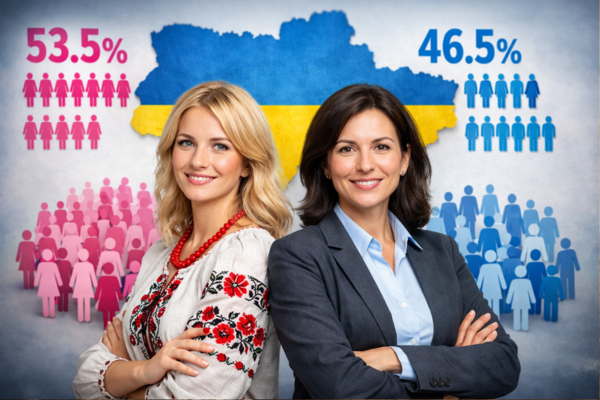
In Ukraine, women account for about 53.5% of the total population, ranking the country among the world’s leaders in female population share.
Factors influencing this include:
-
Higher female longevity
-
Historical and recent migration patterns
-
Societal impacts of conflict and economy
Ukraine’s numeric female majority also reflects that there are approximately 2.7 million more women than men in the population.
Other Countries with Higher Female Shares
Women constitute roughly 53.5% of Ukraine’s total population, making it one of the countries with the strongest female presence worldwide:
-
Georgia (~53.4 %)
-
Belarus (~53.4 %)
-
Lithuania (~52.85 %)
-
Tonga (~52.6 %)
-
Serbia (~52.5 %)
These percentages reflect long-term demographic trends where women live longer and male populations may be affected by health, migration, and economic factors.
Non-European Examples with High Female Ratios
While many European countries lead in female proportion, some non-European nations also show notable gender imbalances:
🇩🇯 Djibouti
Certain reports suggest that Djibouti has one of the highest female-to-male ratios in the world — with an estimated 1.2 women for every man, partly due to male overseas labor migration.
In this case, the female majority is more about the male outflow — men leaving the country for work — than about absolute numbers of women.
🇭🇰 Hong Kong
Hong Kong also appears in lists of high female-to-male ratios, with around 1.16 women for every man, a trend influenced by immigration patterns and aging demographics.
Important Note on Absolute vs. Relative Numbers
It’s important to clarify the difference between:
-
Absolute female population – the total number of women in a country.
-
Relative female proportion (%) – how many women there are compared to men or total population.
For example:
-
China has hundreds of millions of women, but because its total population is so large, it often doesn’t top lists by proportion alone.
-
Small countries with fewer total people can have higher female percentages because of migration or age structure.
So a country may have a higher ratio of women even if its absolute number of women is much lower than large countries like India, China, or the United States.
Why Do Some Countries Have More Women?
Several factors help explain why some countries have higher female populations:
1. Difference in Life Expectancy
Women tend to live longer than men in most countries due to:
-
Biological advantages
-
Lower risk behavior in later life
-
Differences in how diseases affect genders
This longevity boosts the proportion of women, especially in older age brackets.
2. Migration Patterns
In countries where many men migrate for work, the women-to-men ratio increases:
-
Men travel internationally for employment.
-
Women remain in the home country.
-
The population count then shows more women per total residents.
3. War and Conflict
Prolonged conflicts can disproportionately affect male populations, either through casualties or military service, which can increase the female share of the surviving population.
4. Health and Lifestyle Factors
In regions where men face higher rates of risky behavior — such as smoking, alcohol use, or hazardous employment — male mortality can rise relative to women, shifting national gender balance.
What These Imbalances Mean
A high female population share can have real effects on society, such as:
-
Labor market dynamics
-
Health care needs
-
Elderly care priorities
-
Consumer markets
-
Marriage and family structures
Understanding gender composition helps governments make informed decisions in areas like retirement planning, education policy, and social services.
What About the Largest Absolute Numbers of Women?
If we measure by sheer number of women, countries with large populations — like China, India, the United States, Indonesia, and Brazil — likely have the most women simply because they have the largest total populations. However, those countries may not have the highest female percentage compared with the gender-balanced or female-skewed populations in Eastern Europe or specific smaller nations.
Top Countries by Female Population Share (2026)
| Rank | Country / Region | Approx. Female % |
|---|---|---|
| 1 | Moldova | ~54 % |
| 2 | Latvia | ~53.7 % |
| 3 | Armenia | ~53.6 % |
| 4 | Russia | ~53.6 % |
| 5 | Ukraine | ~53.5 % |
| … | Georgia, Belarus, Lithuania, Tonga, Serbia | ~52.5 %–53.4 % |
(Exact numbers vary by data source and year of reporting, and projections to 2026 may shift slightly.)
By 2026, several countries continue to show notably high female population shares, often driven by deeply rooted social and demographic trends rather than sudden changes. Understanding these patterns helps us see beyond averages to the human and structural forces shaping global populations.
Whether you’re a student, researcher, content creator, or just curious about demographics, this overview offers a clear picture of where and why women make up large proportions of national populations today.