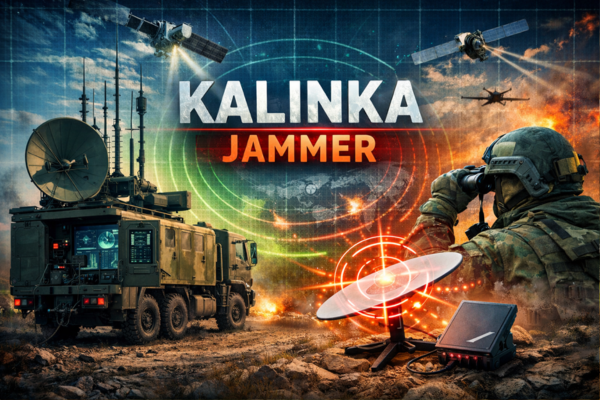
What Is the Kalinka Jammer?
The term “Kalinka jammer” refers to a Russian-developed electronic warfare system associated with detection and disruption of satellite communication signals, including those used by Starlink and other high-speed networks. While some outlets describe it as a jammer, it’s more accurately a monitoring and targeting system paired with capabilities that can interfere with satellite-based communications.
In simple terms:
-
Kalinka is a counter-communication technology meant to locate, identify, and disrupt signal sources such as Starlink terminals or other satellite communication equipment.
-
It’s sometimes called a jammer because it can interfere with signals, but its main function appears to be detection and electronic warfare targeting, not just broadcasting interference across broad frequencies.
The Kalinka system has been described in some sources as capable of uncovering the location and signal source of satellite communication devices within a certain radius — claimed in reports to be up to around 15 km under certain conditions — and then potentially allowing forces to counteract or jam those signals.
This removes the mystery from the term “jammer” — it’s part of a suite of systems that can be used to interfere with communications, but Kalinka itself is fundamentally an advanced detection system that enables electronic warfare against specific communication terminals.
Why Is the Kalinka System Important?
In decades past, satellite communications were mostly slow, expensive, and limited. But with modern constellations like Starlink (operated by SpaceX), satellite internet has become fast, resilient, and widely used — especially in areas where terrestrial networks fail or have been damaged.
In conflict zones such as Ukraine, Starlink provided reliable, encrypted communications and real-time connectivity even when ground infrastructure was destroyed. This made it strategically valuable to military forces relying on drones, navigation, or secure data transfer.
Kalinka emerged in this context — as part of an effort by some nations’ military research entities to counteract the tactical advantage satellite networks provide to opposing forces. This is why you may see Kalinka described as a “Starlink killer” system in some reports: not because it flies into space or destroys satellites physically, but because it represents a capability to disrupt those networks’ ground endpoints.
Who Invented the Kalinka Jammer?
Unlike consumer technology, war-grade systems like Kalinka usually aren’t invented by a single individual and then released with a public patent. Instead, development is typically undertaken by government defense organizations or military research institutions.
In the case of Kalinka:
-
The system is publicly connected with Russia’s Center for Unmanned Systems and Technologies (CBST) — a state-linked research and development center focused on high-tech defense projects.
-
Although specific inventors aren’t named (as is common for classified or restricted military technology), the leadership and technical teams within CBST are credited in official and expert discussions as responsible for designing and building the system.
So while there is no single person widely known as “the inventor of Kalinka,” the organizational origin lies within Russia’s military-industrial complex, particularly CBST’s research division.
When Was the Kalinka Jammer Developed?
Kalinka is a recent technology — one that emerged in the mid-2020s amid ongoing developments in electronic warfare and real-world needs for advanced jamming and detection capabilities.
From available reporting:
-
Russian military officials and defense analysts publicly discussed Kalinka in 2024 and 2025 as a new monitoring and counter-satellite communication technology.
-
Most sources indicate that the system was under development after the 2022 full-scale invasion of Ukraine, as conflict conditions revealed the strategic importance of satellite communications and the necessity of counter-measures against them.
In other words, Kalinka did not exist as a known system before the early 2020s. Its development timeline aligns with fast-moving military needs and the rise of low-orbit satellite constellations like Starlink.
How Does Kalinka Work? (Simplified Explanation)
While exact technical details are not publicly available due to national security concerns, expert sources and defense analysis provide a broad picture:
1. Signal Detection
Kalinka scans the environment for specific radio and satellite communication signatures, such as those emitted by Starlink terminals or UAV communication nodes.
2. Signal Localization
Once a target signal is detected, Kalinka uses direction-finding technology to determine where the transmission is coming from within its operational range (often reported up to ~15 km).
3. Jamming or Disruption
After identifying the source, operators could potentially use other systems — or integrated capabilities within Kalinka — to disrupt or interfere with the communication signal, making the terminal temporarily unusable.
4. Integration with Other Platforms
Some reports suggest Kalinka can be mounted on multiple platforms including ground vehicles, boats, or aircraft, increasing its mobility and tactical use in dynamic environments.
Together, these aspects create a system that is more than just a jammer — it’s an electronic warfare sensor and counter-communication platform.
Kalinka vs. Traditional Jammers
When most people hear “jammer,” they think of a device that simply floods an area with noise to block all signals, like cheap cell phone jammers that might block cellphone reception in a small room.
Kalinka is very different because it is:
-
Targeted: It focuses on specific signal sources rather than flooding an entire frequency range.
-
Detective: It first identifies and locates the target before disrupting it, which is more subtle and effective in military use.
-
Integrated: It can work with other systems to track, disrupt, or even counterattack threats like drones using satellite communications.
This makes it far more sophisticated than consumer jammers, and more aligned with modern electronic warfare doctrine.
Real-World Use & Global Impact
Although Russia is the primary developer and reported user, recent news indicates that elements of Kalinka or related technologies may have been:
-
Used in Iran to disrupt Starlink-based internet access during protests, according to multiple outlets.
-
Tested in actual conflict zones where satellite communication plays a critical role.
This suggests that Kalinka — or derivatives based on its design — is already influencing global electronic warfare strategies beyond Russian military forces.
Security, Ethics & Controversies
The development and deployment of systems like Kalinka raise several important questions:
Security Concerns
-
Satellite networks like Starlink have become essential for civilian communications, especially during disasters or infrastructure failures.
-
Systems that interfere with these networks could affect civilians unintentionally if used near populated areas.
Ethical Debates
-
Electronic warfare blurs the line between military and civilian operations because communications platforms like satellite internet serve both soldiers and everyday users.
-
Decisions about jamming or signal interference must balance tactical military objectives with civilian needs.
International Law
-
There is ongoing discussion among experts and international bodies about how to regulate the use of electronic warfare technologies under existing treaties and norms of armed conflict.
These debates matter because Kalinka isn’t just a piece of equipment — it symbolizes the evolving complexity of modern warfare and information dominance.
Final Summary: Key Facts You Should Know
| Topic | Explanation |
|---|---|
| What is Kalinka? | A Russian electronic warfare system designed to detect and interfere with satellite communications, sometimes referred to as a jammer. |
| Who invented it? | Developed by Russia’s Center for Unmanned Systems and Technologies (CBST) — not a single public inventor. |
| When did it appear? | During the early-to-mid 2020s as part of counter-communications development following the Ukraine conflict. |
| How does it work? | It detects, locates, and enables disruption of communication signals rather than indiscriminate jamming. |
| Why is it significant? | It represents a shift in how modern conflicts target satellite communications and signal networks. |
The Kalinka jammer isn’t a consumer device or a household gadget — it’s a military-grade electronic warfare system born out of modern battlefield needs. Its development reflects how communication technologies like satellite internet now play a vital role in both civilian and military operations, and how nations are responding with increasingly advanced detection and disruption technologies.
Understanding Kalinka means understanding the intersection of warfare, satellite communications, and modern defense strategy — a field that will only grow more important as technologies continue to evolve.