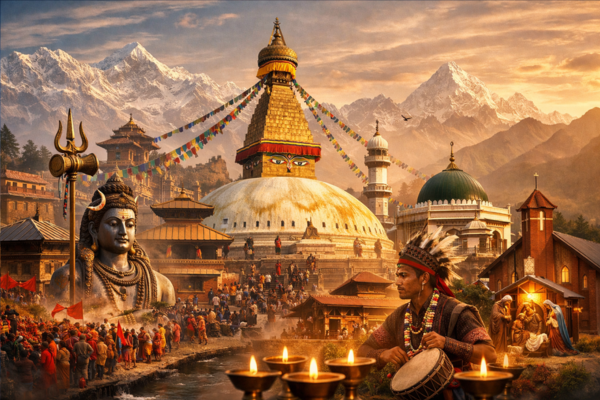
The Religions in Nepal in 2026
Nepal is one of the most culturally rich and spiritually diverse countries in the world. Nestled in the Himalayas, it is a land where ancient traditions, beliefs, and rituals still thrive alongside modern life. Religion plays a central role in shaping Nepal’s cultural identity, community life, festivals, and values. As of 2026, Nepal remains home to a variety of religions that reflect its long history of tolerance, coexistence, and spiritual pluralism.
In this comprehensive guide, we explore the major religions in Nepal, their beliefs, traditions, influence, and significance in 2026. Whether you’re a researcher, traveler, student, or simply curious, this article gives a deep and engaging understanding of Nepal’s religious landscape.
1. Hinduism – The Dominant Faith of Nepal
Hinduism remains the faith followed by the largest share of Nepal’s population, reflecting both its cultural depth and widespread influence across the country, and the topic itself invites thoughtful and nuanced understanding. It deeply influences everyday life, customs, rituals, and social structures across the country.
Core Beliefs
Hinduism in Nepal shares many common beliefs with Hindu practices in India and other South Asian countries. Key beliefs include:
-
Belief in many gods and goddesses, with major deities like Brahma, Vishnu, and Shiva.
-
The belief centers on the cycle of rebirth, where a person’s choices and actions in the present shape their experiences and destiny in lives to come.
-
Sacred texts, such as the Vedas, Upanishads, Ramayana, and Mahabharata.
Cultural Influence
Hinduism has shaped Nepal’s festivals, temple architecture, music, and traditional art. Some major Hindu festivals widely celebrated in Nepal include:
-
Dashain, one of the longest and most important festivals.
-
Tihar, known as the festival of lights.
-
Holi, the festival of colors celebrated with joy.
Community Life
Many towns and villages in Nepal center community gatherings around Hindu temples and religious events. These spaces act not only as places of worship but also as focal points for social and cultural exchange.
2. Buddhism – Ancient and Everlasting
Buddhism has a profound presence in Nepal, which is widely recognized as the birthplace of Gautama Buddha in Lumbini.
Beliefs and Traditions
Buddhism in Nepal includes both Theravada and Mahayana traditions, along with Vajrayana practices. Common beliefs focus on:
-
The Four Noble Truths.
-
The Eightfold Path toward liberation from suffering.
-
Meditation and mindfulness practice.
Buddhist Sites and Heritage
Nepal hosts many sacred Buddhist sites, monasteries, and temples. Some of these include:
-
Lumbini, the birthplace of Buddha and a UNESCO World Heritage site.
-
Swayambhunath Stupa in Kathmandu.
-
Boudhanath Stupa, another major pilgrimage site.
Cultural Integration
Buddhist festivals like Buddha Jayanti (the birth anniversary of Buddha) are celebrated with prayer gatherings, processions, and community feasts. Buddhist art and architecture influence Nepali culture, especially in the Kathmandu Valley.
3. Islam – A Growing Minority
Islam is one of the minority religions in Nepal, with followers living mainly in the Terai plains along the southern border.
Beliefs
Islam in Nepal reflects global Islamic beliefs:
-
Belief in one God (Allah).
-
Following the teachings of the Prophet Muhammad.
-
Observance of the Five Pillars of Islam, including prayer (Salah), fasting (Ramadan), charity (Zakat), and pilgrimage (Hajj).
Community and Culture
Nepali Muslims participate in both religious and national festivals. They maintain mosques (known locally as masjids) where community prayers and gatherings take place.
Festivals like Eid al-Fitr and Eid al-Adha bring families and neighborhoods together to celebrate with special prayers and communal meals.
4. Kirat Religion – Indigenous Spiritual Heritage
The Kirat religion is an indigenous faith practiced by the Kirati people, mainly in eastern Nepal.
Beliefs and Practices
Kirat followers worship nature spirits and ancestral deities. Their belief system focuses on:
-
Reverence for nature and natural forces.
-
Respect for ancestors and community elders.
-
Rituals tied to agriculture and seasonal change.
Festivals
Sakela and Chasok Tangnam are two important Kirat festivals:
-
Sakela marks planting and harvesting seasons.
-
Chasok Tangnam is celebrated after the rice harvest with feasts, music, and dances.
Kirat traditions are unique to Nepal and reflect ancient cultural roots that continue to thrive in rural areas.
5. Christianity – A Small but Noticeable Presence
Christianity in Nepal represents a minority religion but has shown steady growth through the decades.
Beliefs
Christians in Nepal follow the teachings of Jesus Christ and gather in churches or prayer groups. The faith includes various denominations such as:
-
Protestant churches.
-
Catholic communities.
Community Life and Outreach
Christian communities organize worship services, charity programs, and educational activities. Their presence adds to the diversity of religious expression in the country. Christians observe global Christian holidays like Christmas and Easter, often combining traditional Christian practices with local customs.
6. Other Religions and Belief Systems
Aside from the major religions listed above, Nepal also includes small communities and traditional belief systems such as:
Animism and Spirit Worship
In some rural and indigenous communities, belief in nature spirits, local deities, and ancestral spirits remains alive. These beliefs are often woven into local customs and daily life despite not being formally organized religions.
Bahá’í Faith
A very small community of followers of the Bahá’í Faith exists in Nepal. They focus on principles of unity, peace, and collective spiritual development.
Sikhism
There are small Sikh communities who practice Sikh traditions and gather at local gurdwaras. Though a tiny minority, they contribute to Nepal’s pluralistic religious identity.
7. Religious Coexistence: A Defining Feature of Nepal
One of the most remarkable features of Nepal’s religious landscape is the peaceful coexistence and harmony among different religious communities.
Mutual Respect and Shared Traditions
-
Many Hindu festivals are attended by people of other religions.
-
Buddhist and Hindu symbols often appear together in temples and shrines.
-
Local festivals sometimes blend practices from multiple faiths.
Secular Constitution
Nepal’s constitution guarantees freedom of religion, allowing people to practice, share, and celebrate their beliefs without fear. This legal foundation supports religious diversity and harmony.
8. How Religion Shapes Life in Nepal
Religion influences many aspects of life in Nepal, including:
Daily Routine and Rituals
From morning prayers to household rituals, religious practices are common in family life.
Festivals and National Holidays
National calendars in Nepal include major religious festivals as public holidays.
Architecture and Cultural Heritage
Temples, stupas, shrines, and monasteries are important landmarks and represent centuries of religious history.
Tourism and Spiritual Travel
Many tourists visit Nepal specifically to explore its religious sites. Places like Lumbini, Swayambhunath, and Pashupatinath attract spiritual seekers, historians, and cultural explorers from all over the world.
9. Trends in Religion in Nepal (2026)
As of 2026, some key trends in Nepal’s religious landscape include:
Growing Urban Diversity
Urban areas like Kathmandu and Pokhara show increasing religious diversity as people from various regions settle in cities for education, work, and opportunity.
Youth Engagement and Digital Faith Communities
Young Nepalese increasingly connect with religious teachings through social media, online communities, and digital platforms. This modernization of faith practices helps religions adapt while preserving core values.
Preservation of Indigenous Faiths
There is renewed interest in learning about and protecting indigenous belief systems like the Kirat religion and animistic traditions. Cultural organizations, researchers, and local communities actively record stories, rituals, music, and art.
10. Why Understanding Nepal’s Religions Matters
If you are studying culture, planning travel, or interested in world religions, Nepal offers a unique look into:
-
How ancient beliefs stay alive in a modern world.
-
How different faiths celebrate life, death, and community.
-
How traditions help societies remain rooted and resilient.
This small Himalayan nation packs a rich spiritual journey for anyone willing to explore it.