Rare Annular Solar Eclipse in 2026: Where It Will Be Visible and Which Countries Will See It
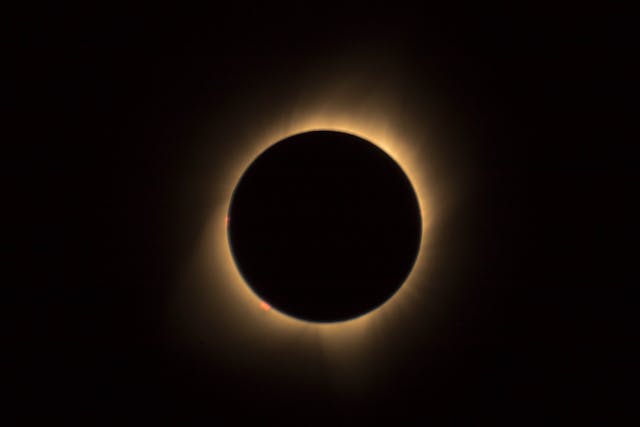
A rare astronomical event is set to take place on February 17, 2026 — an annular solar eclipse, often called a “ring of fire” eclipse due to the dramatic glowing ring that forms when the Moon covers the Sun’s center but leaves the outer edges shining. Unlike a total eclipse, where the Sun is entirely obscured, an annular eclipse creates a striking fiery ring pattern that inspires photographers, skywatchers, and scientists alike.
This eclipse will be the first significant solar eclipse of 2026 and one of the most unique celestial events of the year due to its remote viewing regions and dramatic visual effect. While such phenomena occur roughly every year somewhere on Earth, this particular eclipse is special because its path of visibility will cross some of the most isolated and least inhabited parts of the planet — starting in Antarctica and extending outward in unusual directions.
In this comprehensive guide, you’ll learn where the annular phase will be visible, which countries and territories will see a partial eclipse, how the path moves across Earth, and what to know if you hope to experience this rare solar event.
What Is an Annular Solar Eclipse?
Before we dive into where the eclipse will be visible, let’s first understand what makes an annular solar eclipse special.
When the Moon passes between the Earth and the Sun, it casts a shadow on Earth that can partially or fully cover the Sun. In the case of an annular eclipse, the Moon is at a point in its orbit where it appears slightly smaller than the Sun. As a result:
-
It blocks the center of the Sun, but
-
It does not cover the entire solar disc, leaving a bright ring — the “ring of fire” — around the Moon.
This effect occurs because the Moon’s orbit isn’t a perfect circle — sometimes it’s closer to Earth (perigee) and sometimes farther away (apogee). On February 17, 2026, the Moon will be closer to apogee, meaning it looks smaller in the sky and results in the annular rather than total eclipse effect.
Where Will the Annular Solar Eclipse Be Visible?
The path of annularity — where the “ring of fire” effect is visible — is extremely narrow and crosses mostly remote and uninhabited regions. According to astronomical predictions, this narrow corridor:
Antarctica — The Only Place for the Full “Ring of Fire”
The full annular phase of the eclipse will be visible only over Antarctica. This includes areas along the southern parts of the continent’s ice fields and research stations located within the path’s central corridor.
Why Antarctica?
-
The eclipse path hugs the southernmost latitudes of Earth.
-
Very few human settlements lie within this path.
-
Some research stations — including French-Italian and Russian stations — will see the eclipse’s maximum effect.
Because Antarctica is generally uninhabited by the general public and mainly home to scientific research stations, the number of people who can witness the full “ring of fire” in person will be limited.
Partial Eclipse: Countries and Regions That Will See It
Although the dramatic ring effect is confined to Antarctica, a much wider area across Earth will experience a partial solar eclipse — where the Moon covers part of the Sun and creates a distinctive “bitten” appearance in the sky.
Here are some of the regions and countries where a partial view of the eclipse will be visible on February 17, 2026:
1. Antarctica (Full Annularity Zone)
-
The annular eclipse will first become visible as the Moon’s shadow sweeps across Antarctica.
-
Several research stations may experience up to 96% coverage of the Sun’s disc and see the complete ring effect.
2. Argentina (Southern Tip)
-
Southern Argentina, especially near the tip, will experience a partial eclipse, where a significant portion of the Sun will be covered by the Moon’s shadow.
-
Although the full ring won’t be visible, skywatchers there may witness the Sun visually bite into a crescent shape during the peak.
3. Chile (Southern Regions)
-
Like Argentina, southern Chile will see a pronounced partial eclipse.
-
This makes it one of the few populated areas in South America where people can experience the eclipse visually without traveling to extremely remote polar regions.
4. South Africa
Several cities and provinces in South Africa will experience a measurable partial solar eclipse. These include:
-
Cape Town
-
Johannesburg
-
Durban
-
Pretoria
Residents and visitors in these areas will see the Moon cover a portion of the Sun’s disc, resulting in noticeable darkening and a striking sky effect.
5. Lesotho
The mountainous kingdom of Lesotho, surrounded by South Africa, will be part of the partial eclipse zone as well. The eclipse will obscure a portion of the Sun, producing a partial bite-like appearance.
6. Botswana
In Botswana, observers will see a partial eclipse, particularly in the late afternoon as the Moon moves across part of the Sun.
7. Eswatini
This small kingdom in southern Africa will also experience a partial eclipse — another rare chance for people in populated areas to glimpse this celestial event.
Other Regions in Partial Eclipse Zone
Beyond these countries, the partial eclipse will extend even further. Portions of the:
-
Indian Ocean islands (like Mauritius and Réunion),
-
Mozambique and Madagascar in southeastern Africa,
-
Harare and southern Zimbabwe, and
-
nearby oceanic regions
will also see a partial solar eclipse, though the coverage percentage will vary widely depending on exact location and local weather at the time.
Timeline: When the Eclipse Happens
Although exact local times vary by location, here’s a general timeline of how the eclipse will unfold on February 17, 2026:
-
Partial Eclipse Begins: Early in the morning over Antarctica and spreading outward.
-
Maximum Eclipse: Around midday UTC, when the annular phase is at its peak in Antarctica.
-
Partial Eclipse Ends: Later in the afternoon as the Moon’s shadow retreats.
Because this event occurs across different time zones, viewers in the southern hemisphere will see the eclipse stages at different times throughout the day.
Why This Eclipse Is So Special
Here’s what makes the February 17, 2026 eclipse stand out:
Rare Path Over Antarctica
Most solar eclipses are visible from populated continents or oceans. This one’s path sweeps directly across Antarctica, making it one of the rarest vantage points for a “ring of fire.”
The “Ring of Fire”
While annular eclipses are not unheard of, seeing a near-perfect glowing ring requires precise cosmic alignment — and Antarctica’s position in the southern hemisphere makes it one of the few places where this happens.
Broad Partial Visibility
Although only a few regions will see the full annularity, the partial eclipse will stretch across multiple continents — meaning that people in South Africa, southern South America, and various African islands can still enjoy a dramatic partial solar event.
How to Safely Observe the Eclipse
Whether you’re in a partial visibility zone or planning a trip to a scientific station in Antarctica, safety should be your top priority:
Always Use Solar Eclipse Glasses
Never look directly at the Sun without proper solar viewing glasses rated to ISO 12312-2 standards. Ordinary sunglasses — no matter how dark — are NOT safe.
Try Indirect Viewing
Techniques like pinhole projectors or eclipse-safe filters on binoculars and cameras can let you observe and record the eclipse without direct eye exposure.
The February 17, 2026 annular solar eclipse is an extraordinary cosmic event that will create a dazzling “ring of fire” above Antarctica and a partial solar spectacle across several southern hemisphere countries. While its rare and remote path limits direct viewing for most of the world, more accessible partial views will be available in parts of South Africa, southern Argentina and Chile, Botswana, Eswatini, Lesotho, and Indian Ocean island nations.
Whether you’re an avid astronomer, a travel enthusiast chasing celestial events, or just a curious skywatcher, this eclipse offers a once-in-a-lifetime opportunity to witness the dynamic interplay of the Earth, Moon, and Sun. Mark your calendars, prepare your eclipse glasses, and keep an eye on the skies this February!