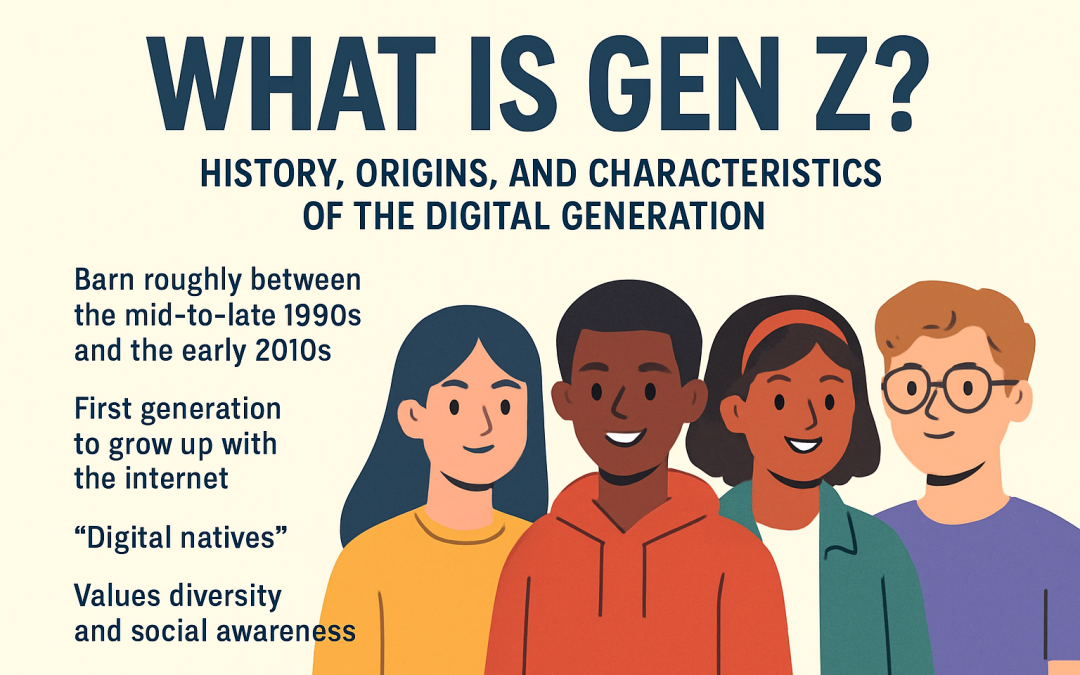
Population of Generation Z (Gen Z) in the World in 2026
Generation Z — often called Gen Z — refers to the group of people born roughly between 1997 and 2012. These are the young people who grew up with digital technologies like the internet, smartphones and social platforms from a very early age. By 2026, Gen Z includes teens, young adults, and emerging professionals aged approximately 14 to 29.
In 2026, Gen Z represents one of the largest generational cohorts in human history. While it’s difficult to calculate a perfectly exact total — because different organizations use slightly different birth year ranges — the most widely cited demographic data estimates that Gen Z numbers around 2.4–2.6 billion people worldwide in 2026. This means roughly 30 % of the global population are part of this generation.
From a global perspective, Gen Z is not only numerically large — it is socially and economically significant. Its members are shaping trends in education, work, technology, politics, and culture across continents. They are the largest generation ever to enter adulthood, and their influence will only grow over the next decade.
Understanding a Generation: What Defines Gen Z?
To understand Gen Z’s population size, it helps to know what makes a generation in the first place.
A generation is a group of people born during a shared time period and shaped by common historical, technological, and cultural experiences. For Gen Z:
-
Start year: around 1997
-
End year: around 2012
-
Age in 2026: approximately 14–29 years old
This age range includes late teens just entering higher education and young adults becoming part of the global workforce. Because Gen Z spans more than a decade of births, its total population is massive.
Worldwide demographic trends also contribute: high birth rates in parts of Southeast Asia, Africa, and South Asia push overall Gen Z numbers higher compared to older generations in nations with low birth rates.
How Many People Are in Gen Z Worldwide (2026)?
While precise figures vary slightly between sources, most demographic analysts agree that as of 2026:
-
Global Gen Z population estimate: 2.4–2.6 billion people
-
Percent of world population: roughly 30 %
To put this in context:
-
The world’s total population is expected to be just over 8 billion in 2026.
-
Gen Z, therefore, forms nearly one third of all people on Earth.
This makes Gen Z one of the largest generational groups ever recorded. Only two other generations — Millennials (born roughly 1981–1996) and Generation Alpha (born 2013–2025) — approach similar sizes.
Why the Gen Z Population Is So Large
Several demographic and social factors help explain Gen Z’s size:
1. High Youth Birth Rates in Developing Regions
Countries in South Asia and Sub-Saharan Africa historically have higher fertility rates, meaning more children were born between 1997 and 2012 compared with older age groups. As a result, large numbers of Gen Z-age individuals are concentrated in these regions.
2. Improved Child Survival
Global health improvements have reduced child mortality over the past few decades. More children born in the late 1990s and early 2000s survived into adolescence and adulthood, increasing the size of Gen Z relative to earlier generations.
3. Broad Generational Definition
Because Gen Z spans a long range of birth years (about 15 years), its age bracket naturally includes a larger number of people.
Combined, these factors help explain why Gen Z accounts for such a large share of the world’s population.
List of Countries by Generation Z Population in 2026
Creating an exact ranked list of every country’s Gen Z population isn’t straightforward because most governments don’t publish age groups by generational definitions. However, based on demographic projections and national census data, here is a reliable estimation of the top countries where Gen Z numbers are largest in 2026:
Note: The population figures below are estimates based on demographic trends, not exact counts from any single official source.
Top 15 Countries for Gen Z Population in 2026
| Rank | Country | Approx. Gen Z Population (millions) | Notes |
|---|---|---|---|
| 1. India | ~370 M | India has the largest Gen Z population of any country. | |
| 2. China | ~245 M | China’s Gen Z remains huge despite a slowing birth rate. | |
| 3. Indonesia | ~68–70 M | Indonesia’s youthful demographic keeps Gen Z high. | |
| 4. United States | ~66–75 M | The US has one of the largest individual Gen Z populations worldwide. | |
| 5. Pakistan | ~60–65 M | Pakistan’s birth rate and youth bulge contribute. | |
| 6. Nigeria | ~50–60 M | Africa’s largest economy has a high share of youth. Estimate only | |
| 7. Brazil | ~45–50 M | Large young population across South America. Estimate only | |
| 8. Bangladesh | ~40–45 M | High population growth in recent decades. Estimate only | |
| 9. Mexico | ~35–40 M | Strong youth cohort across Latin America. Estimate only | |
| 10. Russia | ~30–35 M | Mid-range Gen Z share in Eastern Europe. Estimate only | |
| 11. Philippines | ~30–35 M | Young population and high fertility. Estimate only | |
| 12. Egypt | ~28–32 M | A large portion of the population is under 30. Estimate only | |
| 13. Ethiopia | ~25–30 M | Rapid population growth in East Africa. Estimate only | |
| 14. Iran | ~24–28 M | A balanced but youthful age structure. Estimate only | |
| 15. Turkey | ~22–26 M | Strong youth base in Eurasia. Estimate only |
What this list means: These estimates show that South Asia (India, Pakistan, Bangladesh) and Asian countries (China, Indonesia, Philippines) dominate Gen Z numbers. Africa (Nigeria, Ethiopia, Egypt) is also prominent due to a younger population structure.
How Gen Z Population Shapes the World in 2026
Now that we understand how many Gen Z individuals exist, it’s important to see why this matters:
1. Economic Impact
Gen Z forms a large share of the workforce in many countries. In developed nations, they are entering entry-level roles and influencing labor markets. Across developing regions, they will continue to shape future economic demand as they become consumers, entrepreneurs, and innovators.
2. Cultural Influence
From music and fashion to social activism and entertainment, Gen Z trends often spread globally. TikTok, streaming culture, online gaming, and digital art movements are heavily influenced by Gen Z tastes and creators.
3. Political Power
In many regions — particularly in Africa, Asia, and Latin America — young people are increasingly active in politics. Youth-led movements and protests have emerged in several countries, reflecting Gen Z’s growing role in civic life.
4. Technology Adoption
As “digital natives,” Gen Z people have grown up with technology integrated into everyday life. They are faster to adopt new digital tools, platforms, and innovations than previous generations.
5. Social Trends
Gen Z often leads trends in education priorities, work–life balance, environmental concerns, and social justice issues. These preferences are reshaping how companies and governments engage with young citizens.
-
Global Gen Z population: Roughly around 2.4–2.6 billion people — nearly one-third of the world.
-
Largest Gen Z populations: India, China, Indonesia, the United States, Pakistan.
-
Impact: Gen Z is economically and culturally influential, shaping technology, politics, work, and global trends.
Understanding Gen Z’s size and geographic distribution is essential for businesses, policymakers, educators, and communities aiming to plan for the future. As this generation continues to enter adulthood, its footprint on global society will only expand.