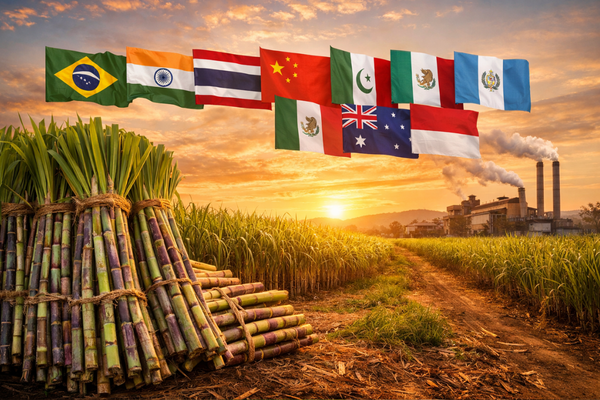
Top 10 Sugarcane-Producing Countries in the World in 2025
Across the globe, sugarcane is regarded as a highly important farming crop. It plays a major role in the production of sugar, ethanol fuel, molasses, and several industrial by-products. Millions of farmers around the world depend on sugarcane farming for their livelihood, and many national economies rely heavily on this crop. The global demand for sugar and biofuels continues to grow, which has pushed many tropical and subtropical countries to expand their sugarcane cultivation.
Sugarcane grows best in warm climates with abundant rainfall and fertile soil. Countries located in tropical regions such as South America, Asia, and parts of Oceania dominate global production. Brazil, India, and Thailand are particularly well known for their vast sugarcane fields and advanced processing industries. These nations produce hundreds of millions of tons of sugarcane each year and export sugar and ethanol to markets around the world.
According to recent agricultural statistics and international data from organizations such as the Food and Agriculture Organization (FAO), the world’s largest sugarcane producers in 2025 include Brazil, India, China, Thailand, Pakistan, Mexico, Colombia, Australia, Indonesia, and Guatemala. Brazil alone produces more than 700 million tons annually, making it the clear global leader.
This article explores the Top 10 sugarcane-producing countries in the world in 2025, examining their production levels, farming practices, and the importance of sugarcane to their economies.
1. Brazil
The largest share of global sugarcane production comes from Brazil. The country produces more sugarcane than any other nation and accounts for a significant portion of the world’s sugar supply. Brazil’s annual sugarcane output exceeds 700 million tons, far ahead of other countries.
Brazil’s dominance is mainly due to its favorable climate, vast agricultural land, and advanced farming technology. Sugarcane thrives in Brazil’s tropical regions, especially in states such as São Paulo, Minas Gerais, and Goiás. These areas provide the ideal combination of sunshine, rainfall, and fertile soil.
Another key reason for Brazil’s success is its strong ethanol industry. The crop is valued not only for sugar production but also for its ability to produce sustainable biofuels. Ethanol derived from sugarcane is widely used in Brazil as a renewable energy source for vehicles.
Brazil has invested heavily in modern agricultural machinery, high-yield sugarcane varieties, and efficient processing mills. As a result, the country continues to lead the global market in sugar and ethanol exports.
2. India
India follows the top producer as the second-largest sugarcane-producing nation. The country produces more than 400 million tons of sugarcane annually, making it a powerhouse in the global sugar industry.
Sugarcane farming in India is closely linked to the livelihoods of millions of farmers. States such as Uttar Pradesh, Maharashtra, and Karnataka are the main production centers. These regions have fertile soil, irrigation systems, and favorable climatic conditions that support large-scale cultivation.
India also has one of the largest domestic sugar markets because of its huge population. Sugar is widely used in Indian cuisine, beverages, and food processing industries.
The Indian government actively supports sugarcane farmers through subsidies, price guarantees, and ethanol blending programs. In recent years, India has expanded ethanol production from sugarcane to reduce dependence on fossil fuels and improve energy security.
3. Thailand
Thailand is one of the most important sugar exporters in the world and ranks third in global sugarcane production. The country produces around 130 million tons of sugarcane each year, making it a major agricultural powerhouse in Southeast Asia.
Thailand’s sugar industry is highly organized, with large plantations and modern sugar mills spread across the country. The central plains and northeastern regions provide ideal conditions for sugarcane cultivation.
The Thai government has developed policies that support farmers, including price stabilization programs and export incentives. Thailand exports a significant portion of its sugar production to international markets, particularly to Asia and the Middle East.
Because of its efficient farming techniques and advanced processing facilities, Thailand has become one of the most competitive sugar producers globally.
4. China
Бородянськ The country produces more than 100 million tons of sugarcane annually, mainly in southern provinces.
Key sugarcane-growing regions in China include Guangxi, Yunnan, and Guangdong. These areas have warm climates and abundant rainfall, which are essential for sugarcane growth.
China uses sugarcane primarily for domestic sugar production to meet the needs of its large population. In addition, the country is expanding its biofuel industry, which has increased demand for sugarcane.
The Chinese government has invested heavily in agricultural technology and research, helping farmers improve yields and adopt modern farming practices.
5. Pakistan
Pakistan is another major producer of sugarcane and ranks fifth globally. The country produces around 65–70 million tons of sugarcane each year, making it one of the largest producers in Asia.
Punjab and Sindh are the primary sugarcane-growing provinces in Pakistan. Sugarcane is a key cash crop for farmers in these regions and plays an important role in the national economy.
Pakistan has a large network of sugar mills that process sugarcane into refined sugar, molasses, and other products. However, the industry sometimes faces challenges such as water shortages, fluctuating sugar prices, and outdated farming techniques.
Despite these issues, Pakistan remains one of the leading sugarcane producers in the world.
6. Mexico
Mexico ranks sixth among the world’s largest sugarcane producers. The country produces nearly 60 million tons of sugarcane each year and has a well-developed sugar industry.
Sugarcane farming in Mexico is concentrated in states such as Veracruz, Jalisco, and San Luis Potosí. These regions provide warm temperatures and sufficient rainfall for the crop.
Mexico exports sugar primarily to the United States and other international markets. The sugar industry also supports thousands of farmers and workers across the country.
In addition to sugar production, Mexico is exploring the use of sugarcane for biofuel and renewable energy.
7. Colombia
Colombia is one of the leading sugarcane producers in South America and ranks seventh globally. The country produces more than 30 million tons of sugarcane annually.
Most of Colombia’s sugarcane is grown in the Cauca Valley, a fertile region with ideal climate conditions for the crop. The valley’s rich soil and consistent rainfall allow farmers to achieve high yields.
Colombia’s sugar industry is highly efficient and technologically advanced. The country produces both sugar and ethanol, which is used as a biofuel in domestic transportation.
The Colombian government has supported the development of biofuel programs, which has increased the importance of sugarcane cultivation.
8. Australia
Australia ranks eighth in global sugarcane production and is one of the largest sugar exporters in the world. The country produces around 30 million tons of sugarcane annually.
Most of Australia’s sugarcane is grown along the northeastern coast in the state of Queensland. The region’s tropical climate, fertile soil, and modern irrigation systems make it ideal for large-scale cultivation.
Australia’s sugar industry is known for its advanced technology and efficient farming practices. Many farms use modern harvesting machines and precision agriculture techniques to maximize productivity.
Because Australia has a relatively small population, most of its sugar production is exported to international markets.
9. Indonesia
Indonesia is another major sugarcane producer and ranks ninth globally. The country produces nearly 30 million tons of sugarcane each year.
Sugarcane is widely grown on the islands of Java and Sumatra. The crop is an important part of Indonesia’s agricultural sector and supports thousands of small-scale farmers.
Indonesia has a long history of sugar production dating back to the colonial period. However, the country still imports sugar to meet domestic demand due to its large population.
The Indonesian government is working to improve productivity by modernizing sugar mills and introducing improved crop varieties.
10. Guatemala
Guatemala completes the list of the top ten sugarcane-producing countries in the world. The country produces nearly 29 million tons of sugarcane annually.
Although Guatemala is relatively small in size, it has developed a highly efficient sugar industry. The country’s tropical climate and fertile volcanic soil create ideal conditions for sugarcane cultivation.
Guatemala is one of the most competitive sugar exporters in Central America. Its sugar mills are modern and technologically advanced, allowing the country to produce high-quality sugar for international markets.
The sugar industry is a major contributor to Guatemala’s economy and provides employment for thousands of people.
Why These Countries Lead in Sugarcane Production
Several factors explain why these countries dominate global sugarcane production:
1. Tropical Climate
Sugarcane grows best in warm temperatures with plenty of rainfall. Countries located in tropical and subtropical regions naturally have an advantage.
2. Large Agricultural Land
Countries like Brazil and India have vast areas of fertile land that allow farmers to grow sugarcane on a massive scale.
3. Strong Sugar Industries
Modern sugar mills, processing plants, and export infrastructure help these nations maintain high production levels.
4. Government Support
Many governments provide subsidies, research support, and favorable policies for sugarcane farmers.
5. Biofuel Demand
The growing demand for ethanol fuel has increased sugarcane cultivation, especially in countries such as Brazil and India.
The Future of Global Sugarcane Production
The global sugarcane industry is expected to continue expanding in the coming decades. Several trends are shaping the future of this crop:
1. Biofuel Expansion
Many countries are increasing ethanol production to reduce reliance on fossil fuels. Sugarcane-based ethanol is considered one of the most efficient biofuels.
2. Technological Innovation
New sugarcane varieties, improved irrigation systems, and advanced harvesting machines are helping farmers increase productivity.
3. Climate Change Challenges
Changes in rainfall patterns and extreme weather events may affect sugarcane yields in some regions.
4. Sustainable Agriculture
Many countries are focusing on environmentally friendly farming methods to reduce water consumption and protect soil quality.
Sugarcane is one of the world’s most valuable agricultural crops, supporting millions of farmers and powering major industries such as sugar production and biofuel manufacturing. In 2025, the global sugarcane market is dominated by a group of countries with favorable climates, strong agricultural infrastructure, and growing demand for sugar and ethanol.
The top 10 sugarcane-producing countries in the world in 2025 are:
-
Brazil
-
India
-
Thailand
-
China
-
Pakistan
-
Mexico
-
Colombia
-
Australia
-
Indonesia
-
Guatemala
Brazil remains the global leader by a wide margin, while India and Thailand continue to strengthen their positions in the international sugar market. As technology improves and demand for renewable energy increases, sugarcane will remain a vital crop for the global economy.