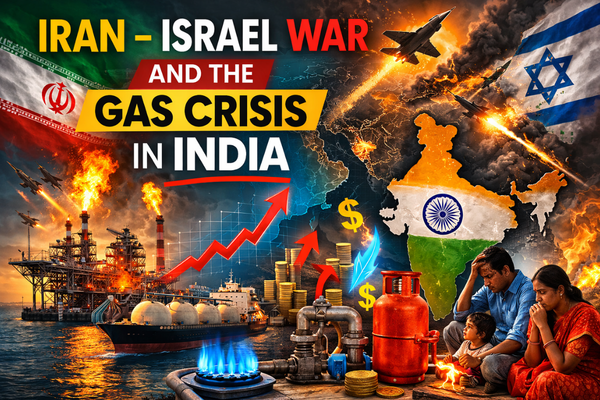
Iran–Israel War: What Is the Gas Crisis in India?
The conflict between Iran and Israel has not only reshaped geopolitical dynamics in the Middle East but has also triggered serious economic consequences around the world. One of the most significant ripple effects is the emerging gas crisis in India, a country that heavily depends on imported energy resources from the Gulf region.
India is one of the fastest-growing economies in the world, and its industries, transportation, agriculture, and households rely heavily on imported oil, liquefied natural gas (LNG), and liquefied petroleum gas (LPG). When geopolitical tensions disrupt energy supply routes in the Middle East, India becomes highly vulnerable. The recent escalation of hostilities between Iran and Israel has created disruptions in shipping routes, energy infrastructure, and global fuel markets, ultimately affecting gas availability and prices in India.
Understanding the Iran–Israel War
The Iran–Israel conflict is one of the most complex geopolitical rivalries in the modern world. For decades, both countries have been involved in indirect confrontations, cyber warfare, and proxy conflicts in the Middle East. However, the situation escalated significantly in recent years, leading to direct military confrontations and attacks on energy infrastructure.
The escalation intensified when Israeli forces launched strikes on Iranian military and nuclear facilities, prompting retaliation from Iran through missile and drone attacks. These confrontations soon expanded beyond direct military targets and began affecting critical economic infrastructure such as oil refineries, ports, and energy transport routes.
One of the most important consequences of the conflict has been the disruption of global energy transportation through the Strait of Hormuz, a narrow maritime passage connecting the Persian Gulf with the Arabian Sea. This waterway is one of the most important oil and gas transit routes in the world.
Approximately 20% of the world’s oil and significant volumes of natural gas pass through the Strait of Hormuz, making it a strategic chokepoint for global energy supply. When the conflict intensified, shipping traffic in the strait dropped dramatically after vessels faced attacks and security threats.
As a result, energy prices surged globally, and many countries dependent on Middle Eastern fuel imports began experiencing shortages and rising costs.
The Global Energy Impact of the Conflict
The Iran–Israel war has shaken global energy markets in several ways. First, it has disrupted production and export operations in several Gulf countries. Missile strikes and military activities have forced some oil and gas facilities to shut down temporarily or reduce output.
Second, shipping companies and tanker operators have become reluctant to transport fuel through dangerous conflict zones. With many vessels avoiding the Strait of Hormuz, the global supply of oil and gas has been reduced.
Third, insurance costs for oil tankers have increased dramatically. When transport becomes expensive and risky, companies reduce shipments, further tightening supply in global markets.
These disruptions have pushed global oil prices above $100 per barrel, the highest levels seen in several years.
Natural gas prices have also surged sharply, particularly in Asia, where many countries rely on imported LNG. Spot LNG prices climbed significantly after major exporters faced operational disruptions due to the conflict.
Because of these global energy shocks, countries dependent on Middle Eastern fuel imports—such as India, Japan, South Korea, and China—are facing increased energy insecurity.
Why India Is Vulnerable to the Energy Crisis
India ranks among the world’s biggest importers of energy resources. The country’s rapid industrial growth and large population require enormous amounts of fuel for electricity generation, manufacturing, transportation, and cooking.
India imports about 90% of its crude oil and a significant share of its natural gas from foreign suppliers, particularly from the Middle East.
This heavy reliance makes India extremely sensitive to disruptions in global energy supply. When the Iran–Israel conflict affected Gulf shipping routes and LNG production facilities, India began experiencing tightening gas supplies.
Much of India’s imported LNG normally arrives from Qatar and other Gulf nations. However, the conflict disrupted shipments and forced some suppliers to declare force majeure due to shipping constraints and security concerns.
As a result, Indian energy companies have been forced to ration gas supplies to industries and search for alternative sources such as Oman and other LNG exporters.
The Strait of Hormuz and India’s Energy Security
The Strait of Hormuz plays a crucial role in India’s energy supply chain. A large portion of India’s oil and gas imports travels through this narrow maritime route.
When tensions escalated in the region and shipping traffic dropped significantly, global energy markets immediately felt the impact. The crisis has been described by analysts as one of the largest disruptions to energy supply since the oil crises of the 1970s.
For India, the risk is particularly serious because a substantial share of its crude oil and LNG imports passes through this route. Even temporary blockages or security threats can delay shipments and increase fuel prices.
The Indian government has therefore been closely monitoring the situation and considering measures to secure energy supplies, including strategic reserves and alternative import routes.
The Emerging Gas Crisis in India
The gas crisis in India is primarily the result of reduced LNG supply and rising international prices caused by the Iran–Israel conflict.
India consumes around 195 million standard cubic meters of natural gas per day, and roughly half of that demand is met through imports. When LNG shipments from the Middle East were disrupted, industries and gas distributors faced immediate shortages.
Gas companies have had to prioritize certain sectors such as power generation, fertilizer production, and residential cooking gas. Industries that rely heavily on natural gas have already begun experiencing supply cuts.
Many manufacturing plants and petrochemical facilities are now operating at reduced capacity because of limited gas availability.
These developments have created widespread concern about energy security and economic stability in the country.
Rising LPG and Cooking Gas Prices
Another visible impact of the crisis is the increase in LPG prices in India. LPG is widely used as cooking fuel in millions of Indian households.
Due to the global rise in fuel prices, Indian oil companies have increased the price of LPG cylinders. For example, the price of a standard 14.2-kg LPG cylinder rose significantly as international energy prices climbed during the conflict.
Since India imports about two-thirds of its LPG consumption and most of it comes from Middle Eastern suppliers, any disruption in the region directly affects domestic prices and availability.
Higher LPG prices are particularly difficult for lower-income households, which depend heavily on subsidized cooking gas.
Impact on Indian Industries
The gas crisis is also affecting several key industries in India. Natural gas is an essential fuel and raw material for many sectors, including:
-
Fertilizer production
-
Petrochemicals
-
Steel manufacturing
-
Power generation
-
Transportation fuels (CNG)
When LNG supply decreases, gas distribution companies must ration supply among different sectors. In many cases, industries receive less gas so that households and essential services can continue operating.
As a result, factories and industrial plants may reduce production, leading to lower economic output and possible job losses.
Impact on Small Businesses and Daily Life
The energy crisis is not only affecting large industries; it is also impacting small businesses and everyday life in India.
Restaurants, hotels, and street vendors depend on commercial LPG cylinders for cooking food. With gas supplies tightening and prices increasing, many businesses are struggling to operate normally.
In some regions, shortages have forced hotels and event venues to scale down operations or switch to alternative fuels such as diesel or wood.
For street food vendors and small restaurant owners, the gas shortage can mean reduced income or even temporary closure of their businesses.
Government Measures to Manage the Crisis
The Indian government has taken several steps to manage the gas crisis caused by the Iran–Israel war.
First, authorities have prioritized gas supply for essential sectors such as households, fertilizer production, and electricity generation. Non-essential industries may face temporary supply cuts to ensure that critical sectors continue functioning.
Second, India is purchasing additional LNG shipments from alternative suppliers such as Oman and other countries outside the conflict zone.
Third, the government is exploring strategic reserves and emergency fuel stockpiles to stabilize the market. India also participates in international efforts to release emergency oil reserves to control global energy prices.
These measures aim to prevent a severe shortage while the geopolitical situation remains uncertain.
Long-Term Energy Strategy for India
The current crisis highlights the importance of energy diversification for India. Over-reliance on a single region for fuel imports can create major vulnerabilities when geopolitical tensions escalate.
To reduce future risks, India has been working on several long-term strategies, including:
-
Increasing domestic natural gas production
-
Expanding renewable energy sources such as solar and wind
-
Building larger strategic oil and gas reserves
-
Diversifying LNG import sources across multiple countries
-
Investing in hydrogen and green energy technologies
These steps are intended to make India’s energy system more resilient and less vulnerable to geopolitical conflicts.
Global Economic Consequences
The Iran–Israel war has not only affected India but has also triggered a broader global energy crisis. Rising oil and gas prices increase transportation costs, electricity prices, and manufacturing expenses worldwide.
Higher energy costs can also lead to inflation, slowing economic growth in many countries. Some analysts warn that prolonged disruption in Middle Eastern energy supply could push the global economy toward recession.
The situation demonstrates how closely interconnected global energy markets are. A conflict in one region can quickly impact economies thousands of kilometers away.
The Iran–Israel war has created a serious energy shock that is affecting countries across the world. By disrupting critical shipping routes such as the Strait of Hormuz and damaging energy infrastructure, the conflict has triggered sharp increases in oil and gas prices.
For India, the consequences are particularly severe because the country relies heavily on imported fuel from the Middle East. Reduced LNG shipments, rising LPG prices, and supply shortages have contributed to an emerging gas crisis affecting industries, households, and small businesses.
While the Indian government is taking steps to manage the situation through emergency reserves, alternative imports, and supply prioritization, the crisis highlights the urgent need for long-term energy diversification.
If geopolitical tensions continue in the Middle East, energy security will remain one of the most important challenges for India and the global economy.