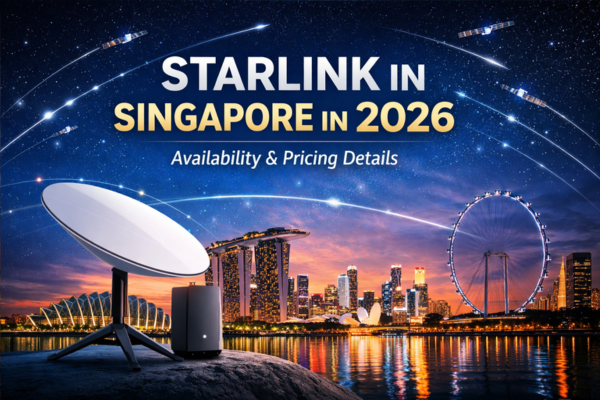
Starlink Availability in Singapore in 2026
Starlink — the satellite internet service developed by SpaceX — has transformed global connectivity by offering high-speed internet via a constellation of low Earth orbit (LEO) satellites. Initially targeting underserved rural and remote regions, Starlink’s presence has rapidly expanded to cover dozens of countries worldwide. But for Singapore — a highly developed urban nation known for its excellent internet infrastructure — many people still wonder: Is Starlink available there in 2026? And if so, what are the prices?
What Is Starlink?
Before diving into availability and pricing, it helps to understand what Starlink actually is.
Starlink is a satellite broadband internet service operated by SpaceX, the aerospace company founded by Elon Musk. Unlike traditional satellite internet services that operate from geostationary orbit (about 36,000 km above Earth), Starlink satellites orbit much closer — typically around 550 km — which reduces latency and improves performance. This proximity enables download speeds often comparable to terrestrial broadband services.
By the end of 2025, Starlink had already deployed thousands of satellites and connected millions of users globally, with rapid expansion continuing into 2026 across more regions and markets.
Is Starlink Available in Singapore in 2026?
Yes — Starlink is available in Singapore in 2026, though with some important conditions unique to this market.
According to recent telecom industry updates, Starlink is legally approved and operational in Singapore as of 2026. Singapore’s regulatory authority, the Infocomm Media Development Authority (IMDA), has given SpaceX permission to offer Starlink services.
However, unlike many other countries where Starlink provides residential and business services for individual homes and offices, availability in Singapore has special requirements:
-
Business Plans and Enterprise Use: Starlink is widely available in the business segment. Enterprises, startups, industrial users, maritime operators (like ships and remote offshore facilities), and organizations can subscribe to Starlink business plans.
-
Residential Plans: There’s mixed availability for residential customers. Some sources suggest that Starlink residential services are technically legal and available with restrictions. Others report that Starlink’s official residential rollout is limited and may still depend on regulatory compliance, review, and licensing.
In other words, Starlink is operative in Singapore, but not yet as widely adopted by residential customers as in some other regions. Many people use Starlink through business licenses, maritime packages, or specialized commercial offerings. There’s also evidence that Singapore was previously on a waitlist for residential rollout, meaning that full consumer availability may not be as straightforward as in countries like the US, Canada, or parts of Europe.
That said, by 2026 Starlink can be used in Singapore — either directly via business provisioning or through available packages compliant with IMDA licensing.
Why Singapore’s Market Is Different
Singapore’s internet landscape is already among the fastest and most robust in the world. Local fiber broadband, 5G, and fixed wireless networks provide extremely high speeds with excellent reliability. Because of this, the demand for Starlink’s satellite internet as a primary household internet solution is not as high as in areas with weaker infrastructure.
Instead, Starlink fills key niche roles:
-
• Business continuity & resilience: In sectors where internet downtime is costly or dangerous, having an alternative satellite connection like Starlink provides backup redundancy during fiber outages or cable disruptions.
-
• Maritime connectivity: Singapore’s status as a global maritime hub makes Starlink valuable for ships entering or leaving port, and for fleets that require consistent global coverage beyond terrestrial networks.
-
• Remote locations: Even in Singapore, certain industrial or strategic installations benefit from satellite backup due to limited accessibility or regulatory requirements.
In other words, Starlink in Singapore is available — but its primary users right now tend to be businesses and maritime operators, rather than everyday home users.
Starlink Pricing in Singapore (2026)
Now for the key question on everyone’s mind: How much does Starlink cost in Singapore?
Pricing for Starlink services in Singapore can vary significantly depending on the use case, plan type, and regulatory fees.
1. Business Plans
Business users in Singapore typically pay for a comprehensive satellite internet package that includes high-speed access and priority allocation. According to recent telecom sources:
-
Business Plan Monthly Subscription: The monthly cost varies by plan and speed tier. Typical rates are determined on a case-by-case basis but are generally above standard residential rates due to priority service and higher throughput.
-
Annual IMDA Terminal License Fee: Singapore’s telecom regulator requires a licensing fee of around SGD 50 per terminal per year for Starlink equipment operating in the country.
-
Equipment Costs: Businesses pay a one-time hardware cost for the satellite dish, router, and installation gear — usually several hundred to over a thousand Singapore dollars depending on configuration and supplier.
Because Starlink business plans often include higher performance and priority access (especially in crowded network conditions), they’re priced above residential options.
2. Residential Plans (Where Available)
In markets where Starlink residential service is available (not necessarily specific only to Singapore), typical pricing as of recent updates has been:
-
Monthly Fee: Around SGD 110 per month for standard residential broadband service, with unlimited data.
-
Equipment Cost: Initial hardware (dish, router, and mounting gear) is typically a one-time purchase that ranges from about SGD 900 to SGD 1,000+, depending on supplier, import costs, and configuration.
-
Installation: Some users can self-install, whereas businesses may use professional installation services that add to the total cost.
Importantly, because Singapore’s internet market is mature, promotional discounts or bundling may differ, and availability of these residential plans may depend on regulatory approvals and local partnerships.
3. Comparison With Other Regions
By global standards, Starlink’s base monthly fee (around SGD 110) is similar to or slightly higher than what many consumers pay elsewhere, especially when compared to countries with lower average broadband costs. The upfront hardware cost in Singapore also reflects import and distribution costs in the region.
What You Get With Starlink in Singapore
Whether you opt for a business package or a residential plan, the key features of Starlink service typically include:
• High-Speed Internet
Starlink delivers internet speeds that often exceed traditional satellite services, with typical real-world download speeds ranging from 50 Mbps up to 150 Mbps or more depending on network conditions.
• Lower Latency
Thanks to its low Earth orbit design, Starlink often achieves latencies considerably lower than conventional satellite internet — sometimes reaching under 40 ms, which is suitable for gaming, video conferencing, and streaming.
• Unlimited Data
Starlink’s plans generally do not enforce hard data caps, meaning subscribers can use as much data as they need without paying overage fees, although fair use policies may apply.
• Easy Setup
Starlink kits are designed to be user-friendly, with self-installation options that require just a clear view of the sky and basic assembly.
Pros and Cons of Starlink in Singapore
Here’s a quick overview of the advantages and limitations of using Starlink in Singapore:
Pros
-
Global Coverage: Works even in remote locations where local networks may not reach.
-
Reliable Backup Internet: Great for business continuity or critical infrastructure support.
-
Unlimited Data: No hard caps on usage.
-
Competitive Speeds: Capable of matching or exceeding some fiber connections in real time.
Cons
-
Higher Costs: Satellite broadband typically costs more than local fiber broadband in Singapore.
-
Restricted Residential Availability: Consumer deployment is more limited compared to other countries.
-
Regulatory Licensing: Requires annual licensing from IMDA for each terminal.
How to Get Starlink in Singapore
If you’re interested in using Starlink in Singapore in 2026:
-
Visit the Starlink Singapore Website: Check the official Starlink SG portal for availability and specific plan offerings.
-
Contact Local Resellers or Partners: Local telecom partners or satellite integrators often handle compliance, licensing, and setup.
-
Apply for IMDA Licensing (If Required): For business uses, ensure you complete the necessary regulatory steps with IMDA.
-
Install and Activate: Once you have your Starlink kit and subscription, set it up by following the included instructions to connect your dish to the sky.
In 2026, Starlink is available in Singapore, but the nature of its availability differs from typical consumer broadband markets. While business customers and enterprise users have clear access under regulatory compliance, residential use may still be evolving and contingent on specific licensing and service conditions.
Prices in Singapore are generally in line with or slightly above global standards — around SGD 110 monthly for residential plans (where available) and customized business pricing depending on performance and support features. Equipment costs remain a significant upfront investment.
Ultimately, Starlink offers a compelling alternative or backup to existing high-speed services, particularly for businesses, maritime operations, or users needing resilient connectivity. If you’re considering Starlink in Singapore, weigh the benefits against costs and infrastructure needs to determine if it’s the right fit.