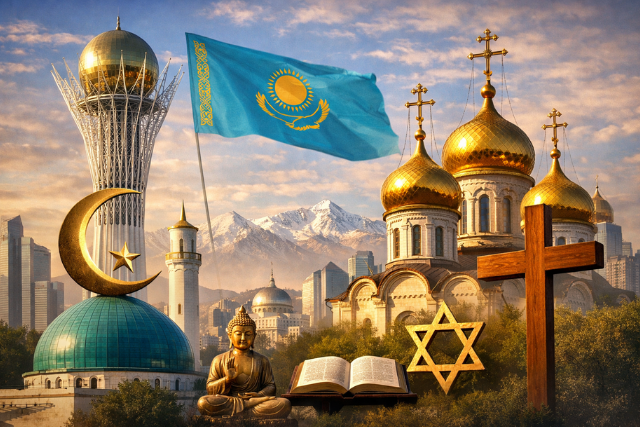
Which Religion Is Practiced in Kazakhstan in 2025:
Beliefs, Faiths, and Religious Demographics
Kazakhstan is one of Central Asia’s most culturally diverse and religiously plural nations. Located at the crossroads of Europe and Asia, the country has developed a unique spiritual identity shaped by nomadic traditions, Islamic heritage, Christian influence, and decades of Soviet secularism. In 2025, religion in Kazakhstan continues to reflect this complex historical journey, combining deep-rooted faith with modern constitutional secularism.
This article provides a detailed, up-to-date overview of which religions are practiced in Kazakhstan in 2025, along with estimated percentages, historical background, regional patterns, and the role of religion in everyday life.
Is There an Official Religion in Kazakhstan?
Kazakhstan does not have an official state religion. The country is constitutionally secular, meaning religion and government are legally separate. Citizens are free to practice any faith or none at all, provided religious activities comply with national laws.
Although the state is secular, religion plays an important cultural and social role, particularly Islam and Christianity, which together account for the vast majority of religious believers in the country.
Overview of Religious Composition in Kazakhstan (2025)
Based on the latest national census data and demographic trends, the religious landscape of Kazakhstan in 2025 can be summarized as follows:
Estimated Religious Percentages in Kazakhstan (2025)
-
Islam: ~69–71%
-
Christianity: ~17–18%
-
Other religions: ~1–2%
-
Atheists / No religion: ~2–3%
-
Undeclared / Prefer not to answer: ~9–11%
These figures reflect long-term stability rather than sudden change, as Kazakhstan’s religious composition has remained relatively consistent over the past decade.
Islam in Kazakhstan
Share of Population
Islam is the largest and most influential religion in Kazakhstan in 2025, practiced by roughly seven out of ten citizens.
Type of Islam Practiced
Most Muslim believers in Kazakhstan follow Sunni Islam, specifically the Hanafi school of jurisprudence, known for its comparatively flexible and pragmatic interpretations. This form of Islam has historically aligned well with Central Asian customs and nomadic traditions.
Smaller Muslim minorities include:
-
Shia Muslims
-
Ahmadiyya Muslims
These groups represent a very small fraction of the Muslim population.
Cultural Role of Islam
For many Kazakhs, Islam is as much a cultural identity as a religious practice. While mosque attendance varies, Islamic values influence:
-
Family traditions
-
Life-cycle rituals (births, weddings, funerals)
-
Major holidays such as Eid al-Fitr and Eid al-Adha
Southern and western regions of Kazakhstan tend to have higher levels of Islamic observance than northern areas.
Christianity in Kazakhstan
Share of Population
Christianity is the second-largest religion in Kazakhstan, accounting for approximately 17–18% of the population in 2025.
Major Christian Denominations
The dominant Christian tradition is Eastern Orthodox Christianity, mainly associated with ethnic Russians, Ukrainians, and Belarusians living in Kazakhstan.
Other Christian groups include:
-
Roman Catholics
-
Protestants (Baptists, Lutherans, Pentecostals, Presbyterians)
-
Seventh-day Adventists
-
Mennonites
Together, these smaller denominations form a diverse but relatively modest Christian presence.
Geographic Distribution
Christian communities are more concentrated in:
-
Northern Kazakhstan
-
Eastern regions
-
Major cities such as Astana and Almaty
This pattern reflects historical migration during the Russian Empire and Soviet eras.
Other Religions Practiced in Kazakhstan
Although Kazakhstan is dominated by Islam and Christianity, several minor religions are also practiced.
Buddhism
Buddhism is followed by a very small number of people, mainly among ethnic minorities and urban spiritual communities.
Judaism
Judaism has a long but numerically small presence, with synagogues operating in major cities. Jewish communities are historically rooted in Soviet-era migration.
Hinduism and Other Faiths
Hinduism, Baháʼí Faith, and other belief systems exist primarily through expatriate communities and account for well under 1% of the population combined.
Altogether, non-Islamic and non-Christian religions make up roughly 1–2% of Kazakhstan’s population in 2025.
Atheism and Non-Religious Population
A notable portion of Kazakhstan’s population identifies as:
-
Atheist
-
Non-religious
-
Spiritual but not affiliated
In 2025, this group represents approximately 2–3% of the population. Additionally, a significant share of citizens choose not to declare any religious affiliation, reflecting the lasting influence of Soviet secularism and personal privacy preferences.
Regional Differences in Religious Practice
Religion in Kazakhstan is not evenly distributed across the country.
Southern Regions
-
Stronger Islamic traditions
-
Higher mosque attendance
-
More religious festivals observed publicly
Northern and Eastern Regions
-
Higher concentration of Christians
-
Greater religious diversity
-
More secular lifestyles in urban centers
Urban areas generally show lower levels of active religious practice than rural regions, regardless of faith.
Religion and Ethnicity in Kazakhstan
Religion in Kazakhstan is closely linked to ethnic identity:
-
Ethnic Kazakhs: Predominantly Muslim
-
Ethnic Russians: Mostly Orthodox Christian
-
Ukrainians and Belarusians: Largely Christian
-
Uzbeks and Uyghurs: Primarily Muslim
-
Germans: Often Protestant or Catholic
This relationship between ethnicity and religion has helped preserve religious harmony, as communities often practice their faith within well-defined cultural frameworks.
Government Policy on Religion
Kazakhstan promotes interfaith dialogue while maintaining strict oversight of religious organizations.
Key characteristics of state policy include:
-
Mandatory registration of religious groups
-
Regulation of missionary activity
-
Monitoring of extremist ideologies
The government officially supports moderate, traditional religious expressions and positions itself as a mediator between faith communities rather than a promoter of any single religion.
Interfaith Relations and Religious Harmony
One of Kazakhstan’s defining features is its emphasis on religious coexistence. The country regularly hosts international forums on interfaith dialogue and promotes peaceful relations among religious groups.
Despite occasional legal and administrative tensions, large-scale religious conflict is rare, and everyday interaction between believers of different faiths is generally cooperative.
How Religion Is Changing in Kazakhstan
While the overall religious composition remains stable, several trends are shaping the future:
-
Gradual revival of Islamic identity among younger Kazakhs
-
Continued secular outlook among urban youth
-
Increased interest in spirituality without formal affiliation
-
Stable but slowly declining Christian population due to demographic change
These trends suggest that Kazakhstan in the coming decades will remain religiously diverse but socially secular.
Religion in Kazakhstan in 2025
In 2025, Kazakhstan stands as a multi-religious, secular nation where faith remains an important cultural force without dominating public life.
Key Takeaways
-
Islam is practiced by around 70% of the population
-
Christianity accounts for roughly 17–18%
-
Other religions make up 1–2%
-
Atheists and non-religious citizens represent 2–3%
-
A significant share prefers not to declare any religion
Kazakhstan’s approach to religion—balancing tradition, tolerance, and modern governance—continues to define its national identity and social stability in 2025