What is Respiratory Syncytial Virus (RSV) in Japan — December 2025?
This article explains the RSV situation across Japan in December 2025, combining surveillance data, recent research on changing seasonality, clinical impacts, and practical guidance for families and health professionals. Near the top you’ll find a compact numbered list of the most important facts and immediate actions to take.
Top 10 things to know about RSV in Japan (December 2025)
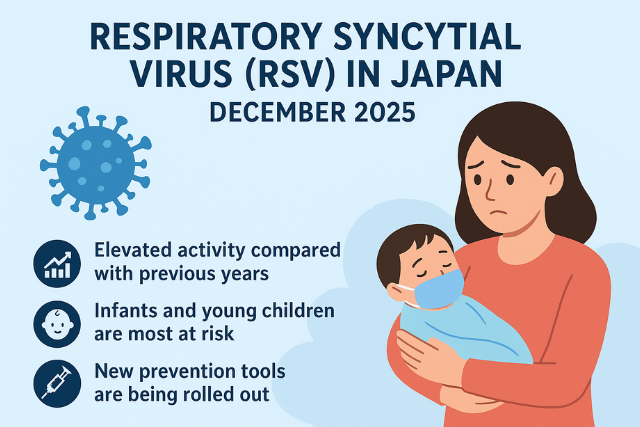
1. RSV activity in Japan is elevated in late 2025 compared with some previous years. Weekly surveillance data collected by public health authorities show increased detection of RSV in autumn–early winter 2025.
2. Seasonality shifted in recent years. Japan’s RSV seasonality moved from a classic mid-winter peak to earlier autumn peaks after 2016; researchers link this to changing human mixing patterns, climate, and immunity gaps.
3. Infants and young children remain the highest-risk group. Most severe RSV disease and hospitalizations occur in infants under 6–12 months and children with underlying conditions.
4. RSV surveillance and reporting improved in 2024–2025. Revisions to Japan’s infectious disease reporting framework (category changes) and enhanced sentinel surveillance improved national tracking.
5. New prevention tools are being rolled out globally and adopted in markets including Japan. Maternal vaccines and long-acting monoclonal antibodies for infants have changed prevention strategies and increased demand for RSV products in Japan.
6. Hospital pressure peaks during RSV surges. Pediatric wards and emergency services typically see higher admissions for bronchiolitis and acute lower respiratory infections during RSV waves.
7. Environmental factors matter. Studies from Japan indicate that temperature, humidity and diurnal temperature range influence RSV transmission patterns.
8. Diagnosis is quicker but treatment remains mainly supportive. Point-of-care antigen and PCR testing are widely used; antiviral therapy for RSV is limited, so supportive care (oxygen, hydration) is central.
9. Public awareness and parental concern rose in 2025. Social attention and calls for expanded preventive access increased as new products became available and as parents shared hospitalisation stories.
10. Outlook depends on vaccine uptake and seasonal drivers. Broader use of maternal vaccines and infant antibodies can reduce severe cases, but local seasonality and immunity gaps will still determine timing and magnitude of waves.
The current situation in December 2025 — surveillance and trends
Japan maintains an extensive sentinel surveillance network for respiratory viruses. Weekly infectious agent reports compiled from public health institutes and sentinel medical facilities show the trajectory of RSV detections across prefectures. In late 2025, those national reports indicate RSV activity that is above the baseline observed in some recent years, particularly in certain regions where autumn peaks have been pronounced. This pattern aligns with research demonstrating that Japan’s RSV season has shifted earlier in the calendar in the past decade, producing significant autumn–early winter activity for some years.
Why this matters: health systems need to prepare bed capacity, oxygen supplies and pediatric staffing earlier than in older seasonal models.
Why seasonality changed — the science in brief
Several studies have investigated why Japan’s RSV timing is no longer strictly mid-winter. The main drivers include:
-
Human mixing patterns: changes in school calendars, daycare attendance, and travel influence when susceptible children mix and transmit viruses.
-
Population immunity: reduced RSV circulation during pandemic-related social restrictions created immunity gaps in young children; when normal mixing resumed, large cohorts of susceptible infants led to earlier or bigger waves.
-
Climate and local weather: analyses across Japan link ambient temperature, humidity and diurnal temperature range to RSV activity; pockets of warmer, humid conditions can favor transmission.
These interacting factors make exact timing variable by year and by prefecture, so local surveillance matters more than national averages when preparing hospitals and families.
Who is most at risk
-
Infants under 6 months (particularly those born just before or during the RSV season). Hospitalisation risk is highest in the first months of life.
-
Premature infants and babies with chronic lung disease or congenital heart disease.
-
Young children with neuromuscular disorders or immunodeficiency.
-
Older adults and people with chronic cardiopulmonary disease — though hospitalisation patterns are heavily skewed toward infants, severe RSV also affects vulnerable adults.
Testing, diagnosis and clinical course
-
Diagnosis: Rapid antigen tests at point of care and PCR testing in laboratories are used to confirm RSV. Clinicians decide testing based on symptoms (cough, wheeze, difficulty breathing, high respiratory rate) and local guidelines.
-
Clinical course: In many children RSV causes a cold-like illness, but it can progress to bronchiolitis or pneumonia requiring hospitalization. Supportive care (oxygen, fluids, suctioning of secretions) is the mainstay; severe cases may need intensive care.
Prevention: what’s new in 2025 and what’s available in Japan
2024–2025 brought major advances in RSV prevention globally: maternal immunization (vaccinating pregnant people to protect newborns) and long-acting monoclonal antibodies for infants. Japan’s health market has been rapidly integrating these options, and the clinical demand for RSV prevention products is rising. These tools do not completely stop infection but greatly reduce the risk of severe disease and hospitalization in infants when used appropriately.
Practical prevention steps for families:
-
Vaccination during pregnancy (where offered and recommended) — maternal RSV vaccines can transfer protective antibodies to newborns. Check local obstetric guidance.
-
Monoclonal antibody prophylaxis for high-risk infants: long-acting antibodies given as a single dose protect infants through the typical high-risk weeks. Discuss eligibility with pediatricians.
-
Standard infection control: handwashing, keeping sick caregivers away from newborns, and minimizing crowded indoor exposure for young infants remain essential.
Treatment and hospital preparation
There is no widely used, broadly effective antiviral that changes RSV outcomes for most patients; treatment is supportive. Health facilities should prioritize:
-
Pediatric inpatient capacity planning during predicted waves.
-
Ensuring oxygen supplies, pulse oximeters and staff trained in bronchiolitis management.
-
Triage protocols so infants with feeding difficulty, dehydration, or low oxygen saturation are identified early.
Practical advice for parents and caregivers (checklist)
-
Know the symptoms: runny nose, cough, wheeze, fast breathing, feeding difficulty, unusual drowsiness. Seek urgent care if breathing is hard or feeding is poor.
-
Keep newborns away from people with colds. Ask visitors to delay visits if they’re sick.
-
Ask your pediatrician about prophylaxis options if your baby is high-risk (premature, congenital heart disease, etc.).
-
Practice strict hand hygiene and mask up when you have respiratory symptoms while caring for infants.
-
Prepare at home: keep a thermometer, a pediatrician’s phone number, and an emergency plan if the child shows danger signs.
What public health authorities are doing
Japanese surveillance systems publish weekly updates that inform local health authorities and hospitals; in 2024–2025 updates to reporting and improved sentinel networks aimed to make RSV detection timelier and more actionable. Public health messaging in 2025 focused on informing parents about seasonal timing changes and new prevention options.
Outlook and what will reduce the burden
-
Improved prevention uptake (maternal vaccines + infant antibodies) can substantially lower hospitalization rates among infants.
-
Better local forecasting using meteorological and sentinel data can give hospitals the lead time they need. Studies in Japan support models that use climate variables to predict RSV onset.
-
Ongoing research into therapeutics and broader vaccine approvals will further change the landscape over the next few years.
Sources & evidence (selected)
-
Weekly Infectious Agents Surveillance Report — Japan public health weekly data (December 2025).
-
Nature — study on shifting seasonality and drivers for RSV in Japan (2025).
-
Peer-reviewed epidemiology papers on RSV burden and hospitalisation in Japan (2025).
-
Market and clinical demand analyses describing RSV prevention uptake and product demand in Japan (2025).
-
Educational pamphlets and guidance for parents on RSV symptoms and prevention distributed by healthcare providers and manufacturers (Japan).
RSV in December 2025 in Japan demonstrates three important realities: the seasonality of respiratory viruses is evolving, infants remain the most vulnerable group, and modern prevention tools are changing the landscape. Families should stay informed through local health authorities and consult pediatricians about prevention options during pregnancy and infancy. Hospitals and clinics should continue to use local surveillance data to time preparations and public messaging.