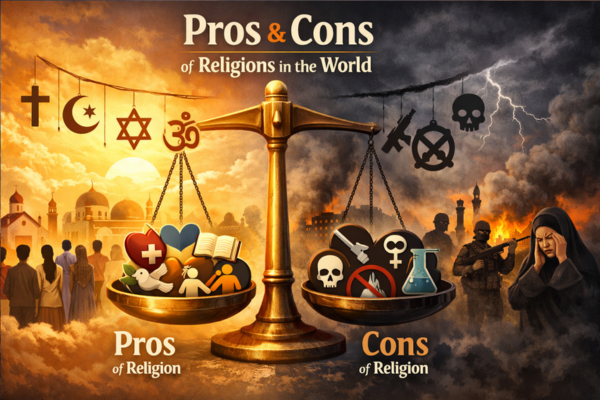
Pros and Cons of Religions in the World
Religions have been a central part of human civilization for thousands of years. They shape cultures, provide moral guidance, and influence political and social systems. From the ancient Vedic traditions in India to modern Christian movements across the world, religions continue to affect the lives of billions. Yet, like any powerful societal force, religions come with both advantages and disadvantages. Understanding these pros and cons helps us appreciate their role while acknowledging the challenges they can pose.
The Positive Impacts of Religion
1. Moral and Ethical Guidance
One of the most significant advantages of religion is that it provides a moral framework. Almost every religion offers teachings about right and wrong, encouraging followers to lead ethical lives. For instance, Buddhism emphasizes compassion and non-violence, while Christianity promotes love, forgiveness, and humility. These moral teachings often help individuals make responsible decisions in personal and professional life.
2. Sense of Community and Belonging
Religion creates a strong sense of community. Temples, churches, mosques, and synagogues serve as places where people gather, share experiences, and support one another. This sense of belonging reduces feelings of isolation and loneliness. Festivals, rituals, and religious gatherings further strengthen social bonds, providing emotional stability and cultural identity.
3. Psychological Comfort and Hope
In times of crisis or uncertainty, religion can offer psychological comfort. Belief in a higher power or afterlife often helps people cope with loss, failure, or challenges. Prayer, meditation, and rituals can reduce stress and anxiety. Many individuals find hope and resilience through faith, which improves mental health and life satisfaction.
4. Promotion of Charity and Altruism
Many religions emphasize helping others, which fosters social welfare. Charity, volunteer work, and community service are often encouraged in religious teachings. For example, Zakat in Islam mandates charitable giving, while Christianity promotes acts of service and kindness. These practices improve society by supporting vulnerable populations and promoting empathy.
5. Preservation of Culture and Traditions
Religions often act as custodians of culture. Through rituals, art, architecture, music, and literature, religious traditions preserve heritage across generations. Festivals like Diwali, Christmas, Eid, and Hanukkah not only celebrate faith but also promote cultural continuity, contributing to a shared human legacy.
6. Motivation and Personal Growth
Faith can inspire personal growth, discipline, and self-reflection. Meditation, prayer, fasting, and other spiritual practices help individuals develop self-control, patience, and mindfulness. Many people report that religion provides a sense of purpose, motivating them to strive for self-improvement and meaningful life goals.
The Negative Impacts of Religion
While religions have numerous benefits, they can also have drawbacks when misinterpreted or misused. Recognizing these disadvantages is important for a balanced perspective.
1. Intolerance and Conflict
One of the most significant challenges of religion is intolerance. Historical and contemporary conflicts often stem from religious differences. Wars, violence, and persecution have been fueled by competing religious beliefs. Even today, sectarian conflicts, discrimination, and extremist ideologies can emerge when followers perceive their faith as superior to others.
2. Resistance to Scientific Progress
Some religious doctrines can conflict with scientific discoveries. In certain cases, rigid adherence to religious beliefs has delayed scientific advancement or created public skepticism toward modern medicine, evolution, or climate science. While not all religions oppose science, literal interpretations of sacred texts sometimes clash with empirical evidence.
3. Gender Inequality and Social Restrictions
In some religious systems, gender roles are strictly defined, limiting opportunities for women and marginalized groups. Certain practices and rules can restrict education, career choices, or personal freedoms. While reform movements are ongoing, religion has sometimes perpetuated social hierarchies, discrimination, and inequality.
4. Psychological Pressure and Guilt
Religion can sometimes impose psychological pressure, especially when teachings emphasize sin, judgment, or punishment. Fear of divine retribution or failure to meet spiritual expectations may lead to guilt, anxiety, or low self-esteem. Excessive emphasis on ritualistic compliance over personal understanding can negatively impact mental well-being.
5. Exploitation and Misuse of Faith
Throughout history, religion has been exploited for personal or political gain. Leaders have manipulated faith to control populations, extract wealth, or justify unethical actions. Extremist groups often exploit religious sentiments, leading to violence, radicalization, and social instability.
6. Stagnation and Dogmatism
Rigid religious dogmas can hinder critical thinking and open-mindedness. Followers may resist questioning beliefs or exploring alternative perspectives, which can limit intellectual and cultural progress. While religion can promote moral reflection, excessive dogmatism may create divisions and prevent societal adaptation.
Balancing the Pros and Cons
Understanding the dual nature of religion requires a nuanced approach. Religions are not inherently positive or negative; their impact depends on interpretation, context, and human behavior.
-
Education and Awareness: Teaching the historical and cultural context of religions can reduce extremism and promote tolerance. Knowledge about different beliefs fosters empathy and peaceful coexistence.
-
Interfaith Dialogue: Encouraging conversations between religious groups helps bridge divides. Interfaith initiatives reduce prejudice, promote cooperation, and strengthen social harmony.
-
Critical Thinking and Reform: Religious communities that embrace reform and encourage critical reflection balance faith with modern values. Progressive interpretations often address issues like gender equality, human rights, and scientific understanding.
-
Separation of Religion and Politics: Maintaining a balance between religion and governance can prevent exploitation and conflict. Laws should protect freedom of belief while ensuring that religious influence does not infringe on rights.
Religions shape societies, influence behavior, and provide meaning in human life. Their advantages include moral guidance, social cohesion, psychological comfort, charitable work, and cultural preservation. However, they also have drawbacks, such as intolerance, resistance to scientific progress, social restrictions, psychological pressure, exploitation, and dogmatism.
The key lies in understanding religion as a human institution rather than an absolute authority. When approached with awareness, empathy, and adaptability, religion can be a source of inspiration, compassion, and societal good. Conversely, when misused or rigidly enforced, it can lead to division, oppression, and conflict.
Ultimately, religions in the world are a mirror of humanity itself—capable of both profound kindness and serious challenges. By promoting dialogue, critical thinking, and inclusive values, societies can maximize the benefits of religion while minimizing its negative impact.