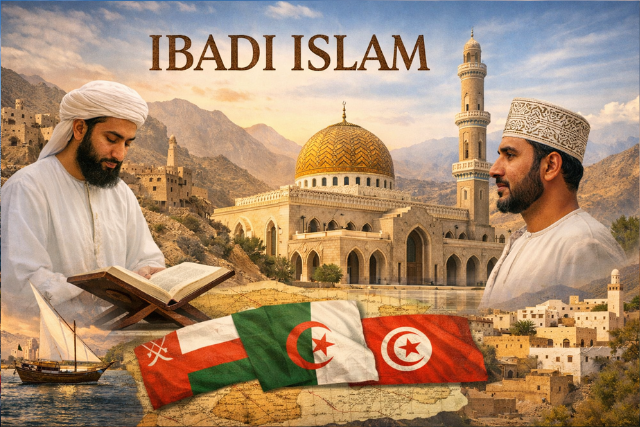
The Religion of Sunni Islam – History, Beliefs, and Countries Where Ibadi Muslims Live
Islam is commonly described as having two major branches—Sunni and Shia—but this simplified view overlooks a third, historically significant tradition known as Ibadi Islam. Although smaller in number, Ibadi Muslims have played an important role in Islamic history and continue to shape the religious and political life of several regions today. This article explains what Ibadi Islam is, traces its historical development, and lists the countries where Ibadi Muslims are found in the modern world.
What is Ibadi Islam?
Ibadi Islam is a distinct Islamic school that is neither Sunni nor Shia, although it shares theological elements with both. It emerged during the early decades of Islamic history and developed its own religious interpretations, legal traditions, and communal values. Today, Ibadi Islam is best known as the dominant form of Islam in Oman, making it the only country in the world where Ibadi Muslims form a majority.
Ibadi Islam emphasizes moderation, justice, communal harmony, and moral responsibility. Unlike extremist movements often associated—incorrectly—with early Islamic dissent, Ibadism is historically known for pragmatism and tolerance, especially in societies where Ibadis lived alongside followers of other Islamic schools and religions
Origins of Ibadi Islam
Early Islamic Context
Ibadi Islam emerged in the 7th century CE, shortly after the death of the Prophet Muhammad. This was a period of intense political and theological debate within the Muslim community, particularly concerning leadership, governance, and moral authority.
The roots of Ibadism are often linked to the broader Kharijite movement, which arose during the first Islamic civil wars. However, Ibadis later distanced themselves from radical Kharijite factions, rejecting violence and extreme positions. Over time, Ibadi scholars developed an independent identity grounded in moderation, ethical leadership, and community consensus rather than rebellion
The Role of Abdallah ibn Ibad
Ibadi Islam takes its name from Abdallah ibn Ibad, an early Islamic scholar and leader active in the late 7th century. While he was not the founder in a strict sense, his teachings and political stance helped define the movement’s moderate direction.
Ibn Ibad opposed both authoritarian rulers and violent rebellion, advocating instead for reform through moral example and collective responsibility. His approach influenced the shaping of Ibadi doctrine, especially its views on governance, justice, and social order.
Core Beliefs of Ibadi Islam
Although Ibadi Islam shares the fundamental pillars of Islam—belief in one God, the Prophet Muhammad, prayer, fasting, charity, and pilgrimage—it has distinctive interpretations in several areas:
1. Leadership and Governance
Ibadis believe that a Muslim leader (imam) should be chosen based on piety, knowledge, and moral character, not lineage or political power. If a leader becomes unjust, the community has the right to remove them peacefully.
2. Community Ethics
Ibadi teachings stress unity, honesty, and social responsibility. Moral conduct is viewed as essential not only for individuals but for the health of society as a whole.
3. Religious Tolerance
Historically, Ibadi communities have demonstrated a high degree of coexistence with other Muslim sects and non-Muslims. This tradition is particularly evident in Oman, where diverse religious communities have lived side by side for centuries.
Expansion of Ibadi Islam
Spread to Oman
By the 8th century, Ibadi Islam had taken root in Oman, where geography played a key role in its survival. The country’s mountains and relative isolation allowed Ibadi communities to establish autonomous religious and political institutions, including the Ibadi Imamate, which unified much of Oman under Ibadi leadership.
North Africa and the Rustamid Dynasty
Ibadi missionaries were also active in North Africa, particularly in present-day Algeria, Tunisia, and Libya. In the late 8th century, Ibadis founded the Rustamid Dynasty in Tahert (modern Algeria), creating a center of learning, trade, and religious scholarship. Although this state eventually fell in the 10th century, Ibadi communities continued to survive in isolated regions.
East Africa
Through Omani trade networks, Ibadi Islam spread to East Africa, especially Zanzibar and coastal areas of present-day Tanzania. These communities remain an important part of the region’s Islamic heritage.
Ibadi Islam in the Modern World
Oman: The Heart of Ibadi Islam
Oman is the only country where Ibadi Muslims form a majority of the population. Ibadi principles have strongly influenced Omani political culture, contributing to the country’s reputation for neutral diplomacy, internal stability, and religious tolerance.
Minority Communities Elsewhere
Outside Oman, Ibadi Muslims live mainly as minorities. Despite their smaller numbers, these communities maintain strong religious traditions, educational institutions, and communal identity.
Countries Where Ibadi Muslims Live Today
Below is a list of countries where Ibadi Islam is practiced, either as a majority or minority faith:
Countries with Significant Ibadi Populations
1. Oman – The only Ibadi-majority country
2. Tanzania – Especially in Zanzibar
3. Algeria – Concentrated in the M’zab Valley
4. Libya – Mainly in the Nafusa Mountains
5. Tunisia – Particularly on the island of Djerba
Smaller Ibadi Communities
6. Kenya
7. United Arab Emirates
8. Saudi Arabia (small communities)
9. Yemen (historical presence)
These populations reflect centuries of migration, trade, and religious scholarship rather than modern missionary expansion
Ibadi Islam Compared to Sunni and Shia Islam
While Sunni and Shia Islam dominate the Muslim world numerically, Ibadi Islam represents a third path shaped by early Islamic debates yet refined through centuries of practical governance and communal living.
Key differences include:
-
A unique approach to political authority
-
Emphasis on moral accountability over sectarian identity
-
A tradition of coexistence rather than confrontation
Despite these differences, Ibadis recognize other Muslims as part of the broader Islamic community.
Ibadi Islam is one of the oldest surviving traditions in the Muslim world, rooted in early Islamic history yet highly relevant today. From its origins in the 7th century to its modern presence in Oman, North Africa, and East Africa, Ibadism has demonstrated resilience, moderation, and adaptability.
Understanding Ibadi Islam offers a richer and more accurate picture of Islamic diversity—one that goes beyond the usual Sunni-Shia framework. As global interest in religious pluralism grows, Ibadi Islam stands as an important example of how faith, ethics, and governance can coexist in a balanced and peaceful way.
1. What is Ibadi Islam?
Ibadi Islam is one of the oldest branches of Islam and is often considered the “third branch” alongside Sunni and Shia Islam. It follows a moderate and independent path, focusing on justice, community consensus, and moral discipline.
2. What is the meaning of Ibadi Islam?
The term Ibadi Islam meaning comes from the early Islamic scholar Abdullah ibn Ibad, after whom the movement was named. It represents a school of thought that emphasizes piety, equality, and balanced religious interpretation.
3. What are Ibadi Islam beliefs?
Ibadi Islam beliefs center on:
- Strong faith in one God (Tawhid)
- Accountability for actions
- Leadership chosen by the community
- Rejection of extremism
Ibadi Muslims value tolerance, peaceful coexistence, and ethical behavior.
4. What are Ibadi Islam beliefs and practices?
Ibadi Islam beliefs practices include:
- Daily prayers (Salah)
- Fasting during Ramadan
- Charity (Zakat)
- Pilgrimage (Hajj)
Additionally, they emphasize modesty, honesty, and social responsibility in everyday life.
5. When was Ibadi Islam founded?
If you’re asking when was Ibadi Islam founded, it emerged in the 7th century (around 650–700 CE), making it one of the earliest Islamic traditions still practiced today.
6. What is the origin of Ibadi Islam?
The Ibadi Islam origin traces back to early Islamic history after political disagreements following the death of Prophet Muhammad. It developed as a distinct path promoting moderation and justice.
7. What is the Ibadi Islam symbol?
Unlike some religions, there is no official Ibadi Islam symbol. However, simplicity and unity are often reflected in their mosques and religious identity.
8. What is the difference between Sunni, Shia, and Ibadi Islam?
The differences between Sunni Shia and Ibadi Islam include:
- Sunni Islam: Focuses on following the Prophet’s traditions and elected leadership.
- Shia Islam: Shia Islam teaches that authority should remain among the descendants of the Prophet.
- Ibadi Islam: Supports leadership based on merit and community agreement.
This makes Ibadi Islam difference unique due to its balanced and non-political approach.
9. Ibadi Islam vs Sunni – what are the key differences?
When comparing Ibadi Islam vs Sunni:
- Ibadis emphasize stricter moral accountability.
- Sunnis have a larger global following.
- Ibadis follow their own legal and theological interpretations.
Despite differences, both share core Islamic beliefs.
10. Why is Ibadi Islam called the third branch of Islam?
Ibadi Islam third branch refers to its recognition as a separate tradition distinct from Sunni and Shia Islam. It maintains its own teachings, history, and leadership principles.
11. Which countries follow Ibadi Islam?
Regarding Ibadi Islam countries:
- Oman is the main center
- Some communities exist in Algeria, Libya, and East Africa
These regions maintain strong Ibadi traditions.
12. What is Ibadi Islam in Oman?
Ibadi Islam Oman mosque culture is deeply rooted in simplicity and spirituality. Oman is the only country where Ibadi Islam is the dominant form of Islam, influencing governance, culture, and daily life.
13. Is there Ibadi Islam in Algeria?
Yes, Ibadi Islam in Algeria exists mainly in the M’zab Valley, where communities have preserved their traditions for centuries.
14. What is the Ibadi Islam map?
An Ibadi Islam map typically shows concentration in:
- Oman (majority)
- North Africa (Algeria, Libya)
- Zanzibar and parts of East Africa
15. What is “Ibadi Islam Wiki” information?
If you search for Ibadi Islam wiki, you’ll find general summaries about its beliefs, history, and global presence. However, it’s always best to consult multiple sources for accurate understanding.
16. Are there books about Ibadi Islam?
Yes, many scholars have written about this tradition. Popular topics include:
- Ibadi Islam book collections on theology and history
- Guides like the essentials of Ibadi Islam, which explain beliefs in a simplified way
17. What is “EU4 Ibadi Islam”?
EU4 Ibadi Islam refers to the strategy game Europa Universalis IV, where Ibadi Islam appears as a religious category influencing gameplay mechanics and diplomacy.
18. What makes Ibadi Islam unique?
The Ibadi Islam difference lies in:
- Emphasis on justice and equality
- Moderate and peaceful interpretation
- Community-based leadership
This makes it one of the most balanced Islamic traditions.