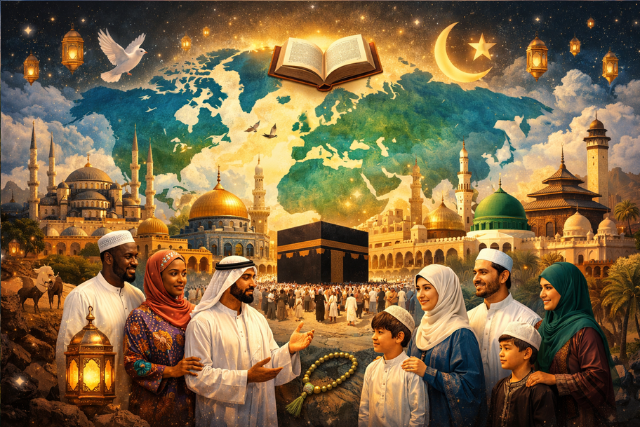
What Is an Islamic Religion?
Introduction to Islam
Islam is one of the world’s major religions and plays a central role in the spiritual, cultural, and social lives of billions of people. The word Islam comes from an Arabic root that means submission and peace. In a religious sense, Islam teaches complete submission to the will of one God, known in Arabic as Allah. People who practice Islam are known as Muslims, a term that refers to individuals who willingly devote themselves to the will of God.
Islam is not only a system of belief but also a complete way of life. It provides guidance on worship, personal behavior, family matters, social justice, ethics, economics, and governance. Today, Islam is practiced on every continent and is the second-largest religion in the world by number of followers.
Core Beliefs of Islam
At the heart of Islam is monotheism, the belief in one, unique, and indivisible God. Muslims believe that Allah is the same God worshipped by earlier prophets such as Adam, Noah, Abraham, Moses, and Jesus. According to Islamic belief, the final prophet was Prophet Muhammad, through whom God revealed the final message of guidance.
The main foundations of Islamic belief include:
-
Belief in one God (Allah)
-
Belief in angels
-
Belief in holy scriptures revealed by God
-
Belief in prophets and messengers
-
Belief in the Day of Judgment
-
Belief in divine destiny and human responsibility
These beliefs form the spiritual framework that shapes Islamic faith and practice.
The Holy Book of Islam
The sacred book of Islam is the Qur’an, which Muslims believe is the literal word of God revealed to Prophet Muhammad over a period of about 23 years. The Qur’an is written in Arabic and is considered the ultimate source of guidance for Muslims. It addresses matters of faith, morality, law, and human conduct.
Alongside the Qur’an, Muslims also follow the Sunnah, which consists of the sayings, actions, and approvals of the Prophet Muhammad. The Qur’an and the Sunnah collectively serve as the core sources that guide beliefs, practices, and principles within Islam.
The Five Pillars of Islam
The practical side of Islam is expressed through the Five Pillars of Islam, which are mandatory acts of worship for Muslims:
1. Shahada (Declaration of Faith)
Affirming belief in one God and that Muhammad is His messenger.
2. Salat (Prayer)
Performing five daily prayers at specific times.
3. Zakat (Charity)
Giving a fixed portion of wealth to those in need.
4. Sawm (Fasting in Ramadan)
Abstaining from food, drink, and harmful behavior from dawn to sunset during the month of Ramadan.
5. Hajj (Pilgrimage to Mecca)
Making a pilgrimage to the holy city of Mecca at least once in a lifetime, as long as an individual is physically capable and financially prepared.
These pillars strengthen faith, promote discipline, and encourage compassion and equality.
History of Islam
The Beginning of Islam
Islam began in the 7th century CE in the Arabian Peninsula, specifically in the city of Mecca (in present-day Saudi Arabia). Before Islam, Arabian society largely followed tribal traditions and practiced polytheism, worshipping multiple gods.
When Prophet Muhammad was forty years old, he experienced the first divine message, delivered to him by the angel Gabriel. This marked the beginning of Islam. The early message emphasized monotheism, moral responsibility, social justice, and care for the poor and oppressed.
Early Challenges and Spread
Prophet Muhammad faced strong opposition from powerful tribal leaders in Mecca who feared the loss of their authority and traditions. Due to persecution, Muhammad and his followers migrated to Medina in 622 CE, an event known as the Hijra, which marks the beginning of the Islamic calendar.
In Medina, Islam grew rapidly. A unified community was formed, based on faith rather than tribal ties. Over time, Islam spread across Arabia through peaceful preaching, treaties, and, in some cases, armed conflict.
Expansion After Prophet Muhammad
After the death of Prophet Muhammad in 632 CE, Islam continued to spread beyond Arabia under the leadership of the Caliphs. Within a century, Islamic civilization extended across parts of the Middle East, North Africa, Central Asia, and Southern Europe.
Islamic societies became centers of learning, science, medicine, philosophy, and trade. Scholars preserved ancient knowledge and made original contributions that influenced global civilization.
Types (Branches) of Islam
Although Muslims share the same core beliefs, Islam has several major branches that developed due to historical and political differences.
1. Sunni Islam
Sunni Islam is the largest branch, representing about 85–90% of Muslims worldwide. Sunnis believe that leadership after Prophet Muhammad should be chosen by the Muslim community. They follow established traditions and legal schools for religious interpretation.
Sunni Islam focuses on communal harmony, collective agreement, and following the traditions established by the earliest generations of Muslims.
2. Shia Islam
Shia Islam makes up about 10–15% of Muslims. Shia Muslims believe that leadership after Prophet Muhammad should have remained within his family, beginning with his cousin and son-in-law, Ali.
Shia Islam places strong emphasis on spiritual leadership (Imams) and has its own religious traditions, practices, and legal interpretations.
3. Ibadi Islam
Ibadi Islam is a smaller and less well-known branch. It is most prominent in Oman and parts of East Africa. Ibadis emphasize moderation, tolerance, and community harmony. They are historically distinct from both Sunni and Shia traditions.
Islamic Culture and Way of Life
Islam strongly influences daily life, including dress, diet, family values, business ethics, and social behavior. Concepts such as honesty, charity, respect for parents, care for neighbors, and justice are deeply rooted in Islamic teachings.
Islam encourages education and knowledge, considering learning a form of worship. Throughout history, Islamic civilizations established libraries, universities, and hospitals, contributing significantly to global progress.
Countries That Follow Islam
Islam is practiced in many countries across Asia, Africa, Europe, and other regions. Some countries have a Muslim majority, while others have significant Muslim minorities.
Muslim-Majority Countries (By Region)
Middle East
-
Saudi Arabia
-
Iran
-
Iraq
-
Turkey
-
Yemen
-
Jordan
-
United Arab Emirates
-
Qatar
-
Kuwait
-
Oman
South Asia
-
Pakistan
-
Bangladesh
-
Afghanistan
-
Maldives
Southeast Asia
-
Indonesia (largest Muslim population in the world)
-
Malaysia
-
Brunei
Central Asia
-
Kazakhstan
-
Uzbekistan
-
Turkmenistan
-
Kyrgyzstan
-
Tajikistan
Africa
-
Egypt
-
Nigeria
-
Algeria
-
Morocco
-
Tunisia
-
Libya
-
Sudan
-
Somalia
-
Senegal
-
Mali
Europe (Muslim-Majority or Significant Presence)
-
Albania
-
Bosnia and Herzegovina
-
Kosovo
Countries with Large Muslim Minorities
-
India
-
China
-
Russia
-
United Kingdom
-
France
-
Germany
-
United States
-
Canada
-
South Africa
-
Australia
Muslims live as minorities in many countries and contribute actively to society while maintaining their religious identity.
Islam in the Modern World
In the modern era, Islam continues to shape the lives of millions through faith, culture, and values. Muslims engage with contemporary issues such as technology, education, economics, and global relations while interpreting their religion in changing social contexts.
Despite misunderstandings or stereotypes, Islam fundamentally teaches peace, compassion, justice, and respect for human dignity. Like all major religions, its followers are diverse in culture, language, and traditions.
Islam is a global religion with deep historical roots, rich spiritual teachings, and a profound impact on world civilization. From its origin in 7th-century Arabia to its presence across continents today, Islam has evolved while maintaining its core belief in one God and moral responsibility.
Understanding Islam—its beliefs, history, branches, and global presence—helps promote knowledge, respect, and peaceful coexistence in an increasingly interconnected world.