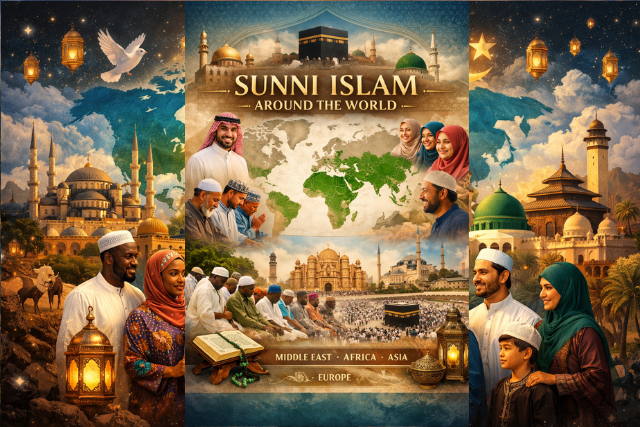
The Religion of Sunni Islam – History, Beliefs, and Countries That Follow Sunni Islam
Sunni Islam stands as the principal branch of Islam, observed by the largest share of Muslims around the world. It is deeply rooted in the teachings of the Prophet Muhammad and emphasizes unity, tradition, and adherence to established religious practices. Understanding Sunni Islam requires exploring its religious foundation, historical development, core beliefs, and global presence.
This comprehensive guide explains what Sunni Islam is, how it began, its historical evolution, and which countries predominantly follow Sunni Islam today.
What Is Sunni Islam?
Sunni Islam is a major denomination within Islam that follows the Quran and the Sunnah, which are the traditions and practices of the Prophet Muhammad. The designation “Sunni” is linked to the Arabic phrase Ahl as-Sunnah wa al-Jama‘ah, highlighting loyalty to prophetic teachings and communal consensus.
Sunni Muslims believe that the guidance of Islam should be derived from:
-
The Quran (the holy book of Islam)
-
The Sunnah (the sayings, actions, and approvals of Prophet Muhammad)
-
Scholarly consensus (ijma)
-
Logical reasoning (qiyas) when necessary
Sunni Islam emphasizes continuity, collective decision-making, and respect for religious scholarship.
Core Beliefs of Sunni Islam
Sunni Muslims follow the central beliefs that form the basis of Islam, including:
Belief in One God (Tawhid)
Sunni Islam strictly follows monotheism, believing in one God (Allah) who is all-powerful, all-knowing, and merciful.
Belief in Prophets
Sunni Muslims believe in all prophets sent by God, including Adam, Noah, Abraham, Moses, Jesus, and Muhammad, who is considered the final prophet.
Belief in Holy Books
The Quran is regarded as the final and complete revelation from God, confirming earlier scriptures.
Belief in Angels
Angels are believed to be spiritual beings who carry out God’s commands.
Belief in the Day of Judgment
All humans will be held accountable for their actions in the afterlife.
Belief in Divine Destiny (Qadar)
Everything happens by God’s knowledge and will, though humans still possess free choice.
The Five Pillars of Sunni Islam
Sunni Muslims practice the Five Pillars of Islam, which form the foundation of religious life:
1. Shahada – Declaration of faith
2. Salat – Five daily prayers
3. Zakat – Giving charity to those in need
4. Sawm – Fasting during the month of Ramadan
5. Hajj – A holy pilgrimage to Mecca observed by Muslims who possess sufficient strength and financial capacity.
These pillars guide spiritual discipline, ethical behavior, and community responsibility.
History of Sunni Islam
The Origins After the Prophet Muhammad
The history of Sunni Islam begins after the death of Prophet Muhammad in 632 CE. A central question arose among Muslims:
Who should lead the Muslim community?
Sunni Muslims believed that leadership should be determined through consultation among the community rather than hereditary succession. As a result, Abu Bakr, a close companion of the Prophet, was chosen as the first leader (Caliph).
This belief in community-based leadership became a defining principle of Sunni Islam.
The Rashidun Caliphate
The early period of Sunni Islam is closely associated with the Rashidun Caliphate, led by four caliphs:
-
Abu Bakr
-
Umar ibn al-Khattab
-
Uthman ibn Affan
-
Ali ibn Abi Talib
Sunni Muslims honor all four as rightly guided leaders. During this time, Islam expanded rapidly across the Middle East, North Africa, and parts of Asia.
Development of Sunni Islamic Law
As Islam spread, scholars began interpreting religious texts to address new social and legal challenges. This led to the formation of four major Sunni schools of Islamic jurisprudence:
-
Hanafi – Known for flexibility and reasoning
-
Maliki – Based on the practices of Medina
-
Shafi‘i – Emphasizes hadith and legal methodology
-
Hanbali – Focuses on strict textual interpretation
These schools differ in legal interpretation but agree on fundamental beliefs.
Sunni Islam During Islamic Empires
Sunni Islam became dominant under major Islamic empires such as:
-
The Umayyad Caliphate
-
The Abbasid Caliphate
-
The Ottoman Empire
These empires helped establish Sunni Islam as the primary religious framework in many regions, influencing governance, education, culture, and law.
Sunni Islam in the Modern Era
In the modern world, Sunni Islam continues to play a vital role in religious, social, and cultural life. Sunni communities exist across continents and adapt their religious practices to different cultural contexts while maintaining core beliefs.
Differences Between Sunni Islam and Other Islamic Branches
The main difference between Sunni Islam and other branches lies in leadership succession and religious authority. Sunni Islam prioritizes:
-
Community consensus
-
Established traditions
-
Scholarly interpretation
Despite differences, Sunni Muslims share essential beliefs with other Muslims, including the Quran, prayer, fasting, and pilgrimage.
Countries That Follow Sunni Islam
Sunni Islam is practiced by Muslims in many countries across the world. Below is a list of countries where Sunni Muslims form the majority of the population.
Middle East and North Africa
-
Saudi Arabia
-
Egypt
-
Jordan
-
Kuwait
-
Qatar
-
United Arab Emirates
-
Oman
-
Yemen
-
Morocco
-
Algeria
-
Tunisia
-
Libya
South Asia
-
Pakistan
-
Afghanistan
-
Bangladesh
Southeast Asia
-
Indonesia
-
Malaysia
-
Brunei
Central Asia
-
Kazakhstan
-
Uzbekistan
-
Turkmenistan
-
Kyrgyzstan
-
Tajikistan
Sub-Saharan Africa
-
Senegal
-
Nigeria
-
Sudan
-
Somalia
-
Mali
-
Niger
-
Chad
Europe and the Balkans
-
Turkey
-
Albania
-
Bosnia and Herzegovina
-
Kosovo
Other Regions
-
Maldives
-
Gambia
-
Sierra Leone
In many other countries, Sunni Muslims may not form a majority but still represent a significant portion of the population.
Global Spread of Sunni Islam
Sunni Islam spread through:
-
Trade routes
-
Migration
-
Education
-
Cultural exchange
Merchants, scholars, and travelers helped establish Sunni Islamic practices across Asia, Africa, and Europe, making it a truly global religion.
Sunni Islamic Culture and Society
Sunni Islam influences various aspects of daily life, including:
-
Family values
-
Ethics and morality
-
Education
-
Community relations
Mosques, schools, and charitable organizations play an important role in Sunni Muslim societies.
Role of Scholars in Sunni Islam
Religious scholars (ulama) are highly respected in Sunni Islam. They interpret religious texts, issue guidance, and help communities understand Islamic teachings in changing times.
Sunni Islam is the largest and most widely practiced branch of Islam, deeply rooted in the Quran and the traditions of the Prophet Muhammad. Its history began with community-based leadership and developed through centuries of scholarship, governance, and cultural influence.
Today, Sunni Islam is followed by millions of people across the Middle East, Asia, Africa, Europe, and beyond. Despite cultural differences, Sunni Muslims remain united by shared beliefs, religious practices, and a commitment to faith, tradition, and community.