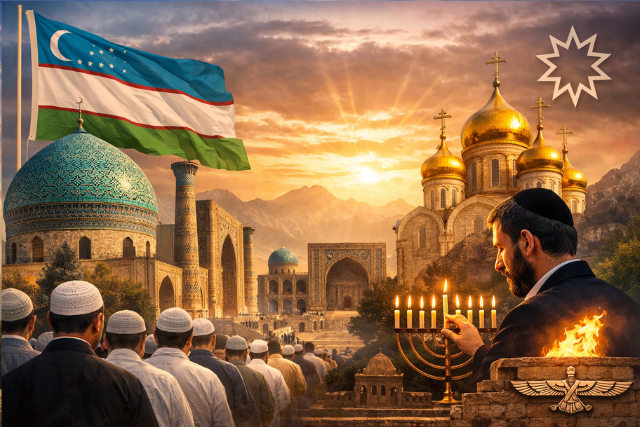
Which religion is practiced in Uzbekistan in 2026?
Uzbekistan, located at the heart of Central Asia, is a country where religion, culture, and history are deeply intertwined. Although the state officially defines itself as secular, religious identity continues to play an important role in social traditions, national heritage, and everyday life. As of 2026, Uzbekistan remains one of the most religiously homogeneous countries in the region, with Islam overwhelmingly practiced by the majority of the population.
Uzbekistan as a Secular but Religiously Rooted State
The Constitution of Uzbekistan guarantees freedom of religion and formally separates religious institutions from the state. At the same time, the country recognizes the cultural importance of faith, especially Islam, which has shaped Uzbek civilization for more than a millennium.
Since gaining independence from the Soviet Union in 1991, Uzbekistan has experienced a gradual revival of religious identity. However, this revival has occurred within a framework of state regulation, aiming to balance religious freedom with social stability.
Dominant Religion in Uzbekistan in 2026: Islam
Percentage of Muslims in Uzbekistan (2026)
Islam is practiced by approximately 94–96% of Uzbekistan’s population in 2025, making it by far the dominant religion in the country.
Sunni Islam and the Hanafi School
The overwhelming majority of Uzbek Muslims follow Sunni Islam, specifically the Hanafi school of jurisprudence. This school is known for its flexibility and historical adaptability, which has helped Islam integrate deeply into Central Asian societies.
Islam in Uzbekistan is generally practiced in a moderate and traditional form. Daily religious life often emphasizes moral conduct, family values, hospitality, and respect for elders rather than strict literalism.
Shia Muslims in Uzbekistan
A small minority of Muslims in Uzbekistan are Shia, representing around 1% or less of the population. Shia communities are mainly concentrated in historic cities such as Bukhara and Samarkand, often linked to Persian cultural heritage.
Christianity in Uzbekistan in 2026
Percentage of Christians in Uzbekistan
Christianity accounts for approximately 1–3% of the population in 2025, depending on classification and migration trends.
Russian Orthodox Christianity
The largest Christian denomination in Uzbekistan is Russian Orthodox Christianity. Most Orthodox Christians are ethnic Russians, Ukrainians, or other Slavic minorities who settled in the region during the Russian Empire and Soviet periods.
Orthodox churches are primarily found in major urban centers such as:
-
Tashkent
-
Samarkand
-
Bukhara
Although the Christian population has declined slightly due to emigration, Orthodox Christianity remains the most visible non-Muslim faith in the country.
Catholic and Protestant Communities
Smaller Christian groups include:
-
Roman Catholics
-
Lutherans
-
Baptists
-
Pentecostals
-
Seventh-day Adventists
Together, these communities make up less than 1% of Uzbekistan’s population. Their presence is legally recognized, though religious activities are subject to registration requirements.
Judaism in Uzbekistan in 2026
Percentage of Jews in Uzbekistan
Judaism is practiced by less than 0.1% of the population, with an estimated 5,000–6,000 Jews remaining in the country.
Bukharan Jews and Historical Significance
Uzbekistan is historically significant for Bukharan Jews, one of the oldest Jewish communities in the world. Their roots in Central Asia stretch back more than 2,000 years.
Today, most Jewish residents live in Tashkent, while smaller communities exist in Samarkand and Bukhara. Although emigration has reduced their numbers, Jewish cultural heritage remains an important part of Uzbekistan’s multicultural history.
Other Religions Practiced in Uzbekistan
Zoroastrianism
Zoroastrianism, one of the world’s oldest religions, has deep historical roots in Central Asia. In modern Uzbekistan, fewer than 0.1% of residents identify with Zoroastrian beliefs, mainly in small cultural or heritage-based communities.
Baháʼí Faith
The Baháʼí Faith has a small but legally registered presence in Uzbekistan. Followers represent a tiny fraction of the population, well below 0.1%. Baháʼí communities are mostly found in urban areas and focus on education, unity, and social harmony.
Buddhism, Hinduism, and Other Faiths
Other religions such as Buddhism, Hinduism, and Krishna Consciousness exist in very small numbers, often linked to foreign residents or diplomatic communities. Combined, these groups account for less than 0.05% of the population.
Irreligion and Atheism in Uzbekistan
Percentage of Non-Religious Population
In 2025, approximately 3–4% of Uzbekistan’s population identifies as non-religious, secular, or atheist.
This group includes:
-
Individuals shaped by Soviet-era secular education
-
Younger urban residents
-
People who culturally identify with Islam but do not actively practice religion
Despite this, complete atheism remains relatively uncommon compared to many European countries.
Religion Percentages in Uzbekistan (2026 Overview)
Here is a clear summary of religious affiliation in Uzbekistan in 2026, based on consolidated demographic projections:
-
Islam (Sunni & Shia): ~94–96%
-
Christianity (all denominations): ~1–3%
-
Judaism: ~0.02%
-
Zoroastrianism: ~0.01%
-
Baháʼí Faith & other religions: ~0.05%
-
Irreligious / Atheist: ~3–4%
Government Policy and Religious Practice
Uzbekistan maintains a controlled model of religious freedom. Religious organizations must be officially registered, and missionary activities are regulated. Since 2016, reforms have gradually eased some restrictions, allowing greater visibility of religious life while preserving state oversight.
Mosques, churches, and synagogues operate legally, and major religious holidays are respected culturally, even though the state remains secular.
The Cultural Role of Religion in Daily Life
For most Uzbeks, religion is closely connected to:
-
Family traditions
-
Weddings and funerals
-
Moral values
-
Community identity
Islamic customs such as Ramadan fasting, charitable giving, and respect for elders are widely observed, even by those who are not strictly religious.
Religious Landscape of Uzbekistan in 2026
In 2026, Uzbekistan remains a predominantly Muslim country, with Islam shaping its cultural identity, historical legacy, and social values. While Christianity, Judaism, and other religions form small minorities, they contribute to the country’s religious diversity and multicultural heritage.
The balance between secular governance and religious tradition continues to define Uzbekistan’s unique approach to faith—one rooted in history, shaped by regulation, and practiced with moderation.