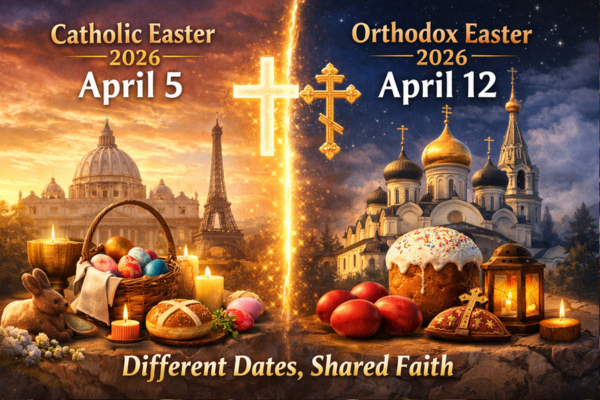
Easter 2026
Sunday, April 5, 2026 (Catholic & Protestant); Sunday, April 12, 2026 (Orthodox)
In 2026, Easter will be celebrated on two different Sundays because Western (Catholic and Protestant) churches follow the Gregorian calendar, while most Orthodox churches follow the Julian-based ecclesiastical calendar. Below is a clear and fully original overview of which countries celebrate Catholic or Orthodox Easter and how they observe the holiday.
Countries That Celebrate Catholic Easter (April 5, 2026)
Catholic Easter is observed in countries where the majority of Christians belong to the Roman Catholic Church or Western Christian traditions.
🇪🇺 Europe
-
Italy
-
Spain
-
France
-
Portugal
-
Poland
-
Ireland
-
Austria
-
Belgium
-
Croatia
-
Hungary
-
Lithuania
-
Slovakia
-
Slovenia
-
Malta
The Americas
-
Mexico
-
Brazil
-
Argentina
-
Colombia
-
Peru
-
Chile
-
Paraguay
-
Ecuador
-
Venezuela
-
Costa Rica
-
Guatemala
-
Panama
-
United States (Catholics & most Protestants)
-
Canada (Western Christians)
Other Regions
-
Philippines
-
East Timor
-
Australia (Western Christians)
-
New Zealand (Western Christians)
Countries That Celebrate Orthodox Easter (April 12, 2026)
Orthodox Easter is celebrated in countries where Eastern Orthodox Christianity is dominant.
🇪🇺 Eastern & Southeastern Europe
-
Greece
-
Romania
-
Bulgaria
-
Serbia
-
Montenegro
-
North Macedonia
-
Georgia
-
Moldova
-
Belarus
-
Ukraine (many Orthodox communities)
-
Russia
Middle East & Caucasus
-
Armenia (Armenian Apostolic Church has its own calculation but usually close)
-
Cyprus
Some countries, such as Ukraine, Romania, and Greece, have both Catholic and Orthodox populations, meaning Easter may be celebrated on different dates within the same country.
How Catholic Countries Celebrate Easter
Catholic Easter traditions focus strongly on church services and symbolic rituals.
1. Holy Week Observances
The week before Easter includes:
-
Palm Sunday processions
-
Holy Thursday Mass
-
Good Friday services
-
Easter Vigil on Saturday night
In countries like Italy and Spain, large religious parades move through city streets featuring statues and candles.
2. Church Mass on Easter Sunday
Families attend a special morning Mass celebrating the resurrection of Jesus Christ.
3. Festive Meals
Common foods vary by region:
-
Lamb dishes in Europe
-
Sweet breads like panettone-style cakes
-
Chocolate eggs for children
-
Hot cross buns in English-speaking countries
4. Easter Eggs & Decorations
Eggs represent new life. Many families dye or decorate eggs and organize egg hunts for children.
How Orthodox Countries Celebrate Easter
Orthodox Easter traditions are deeply symbolic and often include midnight services.
1. Midnight Resurrection Service
On Saturday night before Easter Sunday, believers gather in church. At midnight, candles are lit, and priests proclaim Christ’s resurrection. Worshippers greet one another with special phrases meaning “Christ is risen.”
2. Red Eggs
Eggs are typically dyed red to symbolize the blood of Christ and new life. Families tap eggs together in a friendly game to see whose egg remains unbroken.
3. Traditional Foods
After a long fasting period (Great Lent), families celebrate with:
-
Roasted lamb
-
Sweet bread (like kulich or tsoureki)
-
Cheese dishes
-
Rich pastries
4. Family Gatherings
Orthodox Easter is often the most important religious holiday of the year. Large family meals and visits are common.
Why the Dates Are Different
Both traditions calculate Easter as the first Sunday after the first full moon following the spring equinox. However:
-
Western churches use the Gregorian calendar
-
Orthodox churches use the Julian calendar (for liturgical calculations)
Because the calendars differ by 13 days, Easter sometimes falls on different Sundays. In 2026, the difference is one week.
Countries Where Both Dates May Be Observed
Some nations celebrate both Catholic and Orthodox Easter due to mixed populations:
-
Ukraine
-
Romania
-
Germany
-
United States
-
Canada
-
Australia
In these countries, it is common for public institutions to recognize one main date, while religious communities observe their respective traditions.
Common Global Easter Symbols
Despite calendar differences, many Easter customs overlap worldwide:
-
Candles symbolizing light
-
Eggs symbolizing renewal
-
Lamb symbolizing sacrifice
-
Church bells ringing in celebration
-
Special breads prepared only once a year
-
Catholic Easter 2026: April 5
-
Orthodox Easter 2026: April 12
-
Celebrated in dozens of countries across Europe, the Americas, Africa, and Asia
-
Marked by church services, family meals, symbolic foods, and cultural traditions
Although the dates differ, the meaning remains the same: celebrating the resurrection of Jesus Christ and the message of hope, renewal, and new life.