When does China celebrate the New Year in 2026 Worldwide?
Chinese New Year—also called the Spring Festival or Lunar New Year—is one of the most important cultural celebrations in the world. It marks the beginning of a new year according to the traditional Chinese lunisolar calendar and is observed by millions of people across Asia and in Chinese communities globally. In 2026, the festival arrives with unique symbolism, rich traditions, and weeks of joyful customs that focus on family, renewal, and good fortune.
This in-depth guide explains when Chinese New Year falls in 2026, what makes this year special, and how people celebrate Chinese New Year, from ancient rituals to modern festivities.
When Is Chinese New Year in 2026?
In 2026, the celebration of Chinese New Year officially starts on Tuesday, February 17. This date marks the first day of the lunar new year and is determined by the appearance of the new moon that falls between late January and mid-February each year. Unlike the fixed Gregorian calendar, the Chinese calendar follows lunar cycles, which is why the festival date changes annually .
The celebration does not last just one day. Traditionally, Chinese New Year festivities continue for 15 to 16 days, beginning on New Year’s Eve and concluding with the Lantern Festival, which falls on the fifteenth day of the new lunar year.
What Animal Year Is 2026?
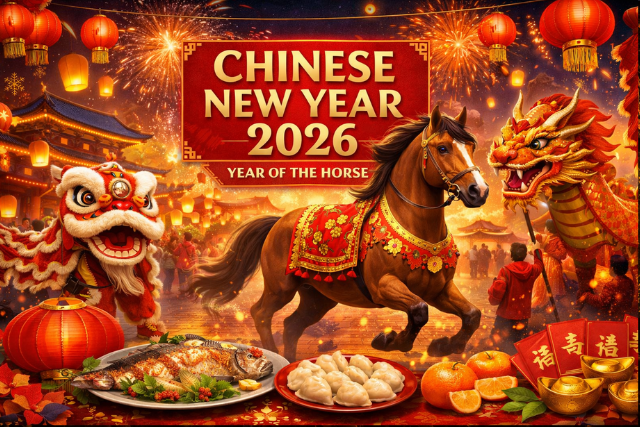
The year 2026 is known as the Year of the Horse, specifically the Fire Horse in the 60-year Chinese zodiac cycle. The Horse is associated with energy, independence, movement, and determination. When combined with the Fire element, the year is believed to emphasize passion, bold action, creativity, and transformation.
In Chinese culture, zodiac signs influence beliefs about personality traits, luck, and the general “energy” of the year. While interpretations vary, many people view the Year of the Horse as a time to embrace change, pursue goals confidently, and move forward with courage.
Why Chinese New Year Is So Important
Chinese New Year is far more than a calendar change. It symbolizes:
-
A fresh beginning after the hardships of the past year
-
Reunion and unity, as families gather from near and far
-
Honoring ancestors and expressing gratitude for protection and guidance
-
Welcoming prosperity, health, and happiness into the new year
For centuries, the festival has served as a spiritual, cultural, and social anchor, connecting generations through shared rituals and values.
How Do People Prepare for the Chinese New Year?
1. Deep Cleaning the Home
Before the Chinese New Year arrives, households carefully tidy and refresh their living spaces in preparation for the festival. This practice symbolizes sweeping away bad luck and misfortune accumulated over the previous year. Cleaning is usually completed before New Year’s Day, as sweeping during the festival is believed to remove good luck.
2. Decorating With Red and Gold
Red is the dominant color of Chinese New Year because it represents good fortune, joy, and protection from evil. Homes, streets, and businesses are decorated with:
-
Red lanterns
-
Paper cuttings with auspicious symbols
-
Spring couplets featuring hopeful phrases
-
Images representing wealth, longevity, and happiness
Gold accents are often added to symbolize prosperity and success.
3. Shopping for the New Year
Before the festival begins, people buy new clothes—often in red tones—as wearing something new symbolizes a fresh start. Food shopping is also a major activity, as families prepare elaborate meals to welcome the new year.
Chinese New Year’s Eve: The Reunion Dinner
One of the most meaningful traditions is the New Year’s Eve reunion dinner. Family members, even those living far away, make a special effort to return home. This meal is considered the most important of the year and represents unity, respect, and continuity.
Typical reunion dinners include multiple symbolic dishes:
-
Fish, representing abundance and surplus
-
Dumplings, shaped like ancient gold ingots, symbolizing wealth
-
Noodles, eaten long to represent longevity
-
Chicken or pork, signifying family togetherness and prosperity
The meal is not rushed. It is a time for conversation, laughter, and reflection on the year gone by.
How Is Chinese New Year Celebrated?
1. Welcoming the New Year at Midnight
As the clock approaches midnight, families welcome the new year with joy and excitement. Traditionally, loud noises were believed to scare away evil spirits. Today, this is expressed through:
-
Fireworks and firecrackers (where permitted)
-
Drums and cymbals
-
Cheers and festive greetings
They share warm greetings, hoping for joy, good health, and achievements in the year ahead.
2. Giving Red Envelopes (Hongbao)
One of the most loved customs is the exchange of red envelopes, known as hongbao. These envelopes usually contain money and are given by:
-
Parents to children
-
Elders to younger family members
-
Employers to employees
The red envelope symbolizes protection and good luck, while the money inside represents blessings for the year ahead. The amount is usually an even number, as even numbers are considered auspicious.
3. Visiting Relatives and Friends
During the first few days of Chinese New Year, people visit relatives, neighbors, and close friends. These visits strengthen social bonds and allow families to share meals and exchange good wishes.
Common greetings focus on prosperity, peace, and good health. Rather than casual conversation, the emphasis is on positive words believed to influence the year’s fortune.
4. Lion and Dragon Dances
Festive public events frequently include lively lion and dragon performances, particularly in major cities and Chinatowns across the globe. These performances are energetic and colorful, accompanied by loud drums.
-
Lion dances are believed to bring luck and chase away negative energy.
-
Dragon dances symbolize strength, wisdom, and prosperity.
Businesses often invite performers to bless their premises for success in the new year.
5. Traditional and Modern Foods
Food plays a central role throughout the festival period. Beyond the reunion dinner, families prepare and share special treats such as:
-
Sweet rice cakes, symbolizing growth and progress
-
Dumplings with hidden fillings for luck
-
Candied fruits and seeds, representing sweetness and fertility
In modern times, traditional foods are often blended with contemporary dishes, especially in urban areas.
The Lantern Festival: Closing the Celebrations
Chinese New Year celebrations traditionally conclude with the Lantern Festival, held on the fifteenth day of the lunar new year. On this evening, streets and parks glow with lanterns of all shapes and sizes.
Families admire lantern displays, solve riddles written on lanterns, and enjoy sweet rice balls that symbolize unity. The Lantern Festival marks the return to everyday life while preserving the festive spirit.
How the Chinese New Year Is Celebrated Today
While rooted in ancient traditions, the Chinese New Year has evolved with modern lifestyles:
-
Many people send digital red envelopes through mobile apps
-
Online greetings complement face-to-face visits
-
Cities organize large public festivals, parades, and cultural shows
-
Travel increases significantly as families reunite
Despite these changes, the heart of the festival—family, hope, and renewal—remains unchanged.
Chinese New Year Beyond China
Chinese New Year is celebrated widely outside China, including in Singapore, Malaysia, Indonesia, Vietnam, and Chinese communities across Europe, North America, and Australia. While customs vary by region, the shared themes of unity and good fortune connect celebrations worldwide.
Chinese New Year 2026 begins on February 17, ushering in the dynamic Year of the Horse. It is a time filled with meaning, blending centuries-old traditions with modern expressions of joy. From cleaning homes and sharing reunion dinners to giving red envelopes and enjoying lion dances, every ritual reflects a deep desire for renewal, prosperity, and togetherness.
Whether celebrated in a small family gathering or a large public festival, Chinese New Year continues to unite people through hope, culture, and the promise of a fresh beginning.