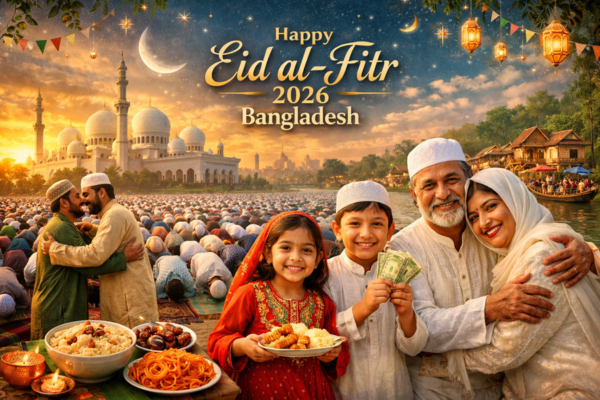
When will Muslims of Bangladesh celebrate Eid al-Fitr in 2026?
Eid al-Fitr is one of the most joyful and spiritually meaningful festivals in Bangladesh. It marks the conclusion of Ramadan, the holy month of fasting, prayer, patience, and self-discipline observed by Muslims across the country. In Bangladesh, where the majority of the population follows Islam, Eid al-Fitr is not just a religious event—it is a nationwide celebration that transforms daily life, family routines, travel patterns, markets, and public spaces.
This detailed guide explains when Eid al-Fitr will be celebrated in Bangladesh in 2026, why the date can vary, and how Bangladeshis observe and celebrate Eid, from religious rituals to cultural traditions and festive foods.
When Is Eid al-Fitr in Bangladesh in 2026?
Expected Date of Eid al-Fitr 2026
In Bangladesh, Eid al-Fitr in 2026 is expected to be observed on Friday, 20 March or Saturday, 21 March 2026, depending on the official sighting of the new moon marking the beginning of Shawwal, the tenth month of the Islamic lunar calendar .
Because Bangladesh follows physical moon sighting, the final confirmation is traditionally announced by the National Moon Sighting Committee on the evening of the 29th day of Ramadan. If the moon is seen on Thursday evening, Eid will fall on Friday, 20 March. If not, Ramadan completes 30 days and Eid is celebrated on Saturday, 21 March 2026.
Why Eid al-Fitr Dates Are Not Fixed
Unlike holidays based on the Gregorian calendar, Eid al-Fitr follows the Islamic lunar calendar, which is about 10–11 days shorter each year. The beginning of Shawwal depends entirely on the visual sighting of the crescent moon, which means:
-
Dates can differ between countries
-
Weather conditions may delay confirmation
-
Official announcements are made only one day before Eid
This lunar method preserves centuries-old Islamic tradition and is widely respected in Bangladesh .
Public Holidays for Eid al-Fitr in Bangladesh
Eid al-Fitr is recognized as a national public holiday in Bangladesh. In most years:
-
The government declares 2 to 5 consecutive holidays
-
Banks, offices, courts, and schools remain closed
-
Transport services operate at extended capacity
In 2026, depending on the confirmed Eid day, public holidays are expected between 20 and 23 March, allowing families ample time to travel and celebrate together .
Religious Importance of Eid al-Fitr
Eid al-Fitr symbolizes:
-
Gratitude to Allah for strength during Ramadan
-
Spiritual renewal after a month of fasting
-
Equality and compassion within the Muslim community
The festival begins with Eid prayers (Salat al-Eid), which are mandatory for adult Muslims and performed in congregation.
How Eid al-Fitr Is Celebrated in Bangladesh
1. Eid Morning Prayers
Eid day in Bangladesh begins early in the morning. After performing ghusl (ritual purification), people dress in clean or new clothes and head to:
-
Large mosques
-
Eidgahs (open prayer grounds)
-
Community prayer fields
Thousands gather shoulder-to-shoulder, symbolizing unity, equality, and shared faith. After prayers, sermons focus on peace, charity, and gratitude.
2. Zakat al-Fitr: Charity Before Celebration
Before Eid prayers, every eligible Muslim must give Zakat al-Fitr, a compulsory charitable donation meant to help the poor participate in Eid.
In Bangladesh:
-
Zakat al-Fitr is often given as rice, wheat, or money
-
Mosques, charities, and individuals distribute it locally
-
Many families ensure donations are given discreetly and respectfully
This act reinforces social balance and compassion, core values of Islamic teaching.
3. “Eid Mubarak” and Social Greetings
After prayers, people greet one another with:
“Eid Mubarak” – meaning Blessed Eid
It is customary to:
-
Shake hands
-
Hug family members
-
Visit elders first
-
Exchange warm wishes with neighbors
Social barriers temporarily fade, and reconciliation is encouraged during Eid.
Traditional Eid Foods in Bangladesh
Food is at the heart of Eid al-Fitr celebrations in Bangladesh. Homes are filled with rich aromas as families prepare special dishes that are rarely made at other times of the year.
Popular Eid Dishes Include:
-
Shemai (vermicelli dessert) – cooked with milk, sugar, nuts, and cardamom
-
Polao features scented rice gently cooked in ghee and seasoned with spices.
-
Beef curry (Kala bhuna, Rezala)
-
Chicken korma
-
Firni – creamy rice pudding
-
Jilapi and sweets
Shemai is considered essential—many households start Eid day by serving it to guests.
New Clothes and Eid Fashion
Buying new clothes is one of the most visible signs of Eid preparation in Bangladesh.
Common Traditions:
-
Men wear panjabi, pajama, kurta
-
Women wear sarees, salwar kameez, hijabs
-
Children receive brand-new outfits
Shopping centers and local markets remain crowded throughout the last ten days of Ramadan, often staying open late into the night.
Eid Travel: Returning to Villages
Eid al-Fitr triggers one of the largest internal migrations in Bangladesh.
Key Travel Trends:
-
Millions leave cities like Dhaka and Chattogram
-
People return to ancestral villages
-
Buses, trains, and ferries operate at full capacity
Despite traffic congestion, traveling home for Eid is considered emotionally essential.
Eid for Children: Eidi and Joy
For children, Eid is pure excitement.
-
Eidi (money gifts) from elders
-
Sweets and treats
-
Visiting relatives
-
Wearing new clothes
Children often plan Eid days around collecting Eidi and meeting cousins.
Media, Television, and Entertainment
During Eid:
-
Special TV dramas and comedy shows air
-
Bangladeshi TV channels release exclusive Eid content
-
Social media fills with greetings and family photos
Eid programming is a major event in the Bangladeshi entertainment industry.
Eid al-Fitr and Community Harmony
One unique aspect of Eid in Bangladesh is interfaith respect. Non-Muslim neighbors often:
-
Visit Muslim households
-
Share sweets
-
Exchange greetings
This reflects Bangladesh’s tradition of communal coexistence.
Economic Impact of Eid al-Fitr
Eid significantly boosts the national economy:
-
Retail sales surge
-
Garment and textile sectors see peak demand
-
Transport and food industries expand operations
For many small businesses, Eid season generates a major portion of annual income.
Eid al-Fitr in Bangladesh in 2026 is expected to be celebrated on 20 or 21 March, depending on moon sighting. Beyond its date, Eid represents unity, generosity, renewal, and joy. From early morning prayers to festive meals and family reunions, Eid al-Fitr brings the entire nation together in celebration and gratitude.
In Bangladesh, Eid is not just a religious festival—it is a deeply human experience, woven into culture, tradition, and everyday life.