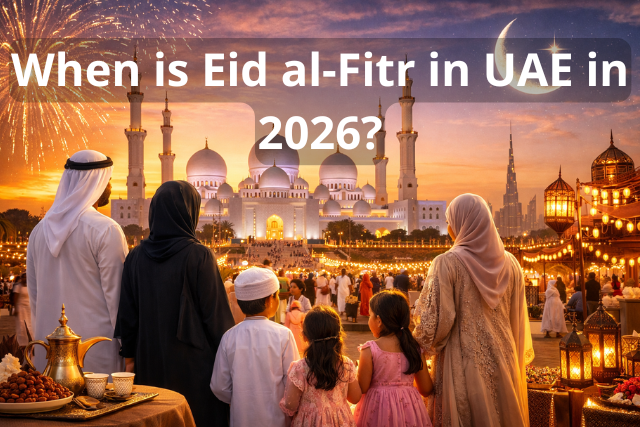
When United Arab Emirates celebrate Eid al-Fitr in 2026?
Eid al-Fitr is one of the most important religious festivals in the United Arab Emirates, marking the joyful conclusion of the holy month of Ramadan. In the UAE, this occasion is not only a deeply spiritual event but also a nationwide celebration that blends faith, culture, family traditions, and modern hospitality. In 2026, Eid al-Fitr is expected to fall in late March, bringing several days of public holidays, vibrant festivities, and communal unity across all seven emirates.
This guide explains when Eid al-Fitr will be observed in the UAE in 2026 and offers an in-depth look at how Eid al-Fitr is celebrated in the United Arab Emirates, from religious rituals to food, fashion, travel, and social customs.
When Is Eid al-Fitr in the UAE in 2026?
In 2026, Eid al-Fitr in the United Arab Emirates is expected to begin on Friday, March 20. The exact date depends on the official sighting of the crescent moon, which signals the start of the Islamic month of Shawwal. UAE authorities rely on moon-sighting committees and astronomical observations to confirm the final date shortly before the celebration begins.
If Ramadan lasts 30 days, Eid celebrations may extend from March 20 to March 22, 2026, resulting in a long weekend and nationwide public holiday. Government offices, schools, and many private businesses close or operate on reduced hours during this period, allowing residents to fully participate in the festivities .
Why Eid al-Fitr Is So Significant in the UAE
Eid al-Fitr literally means “the festival of breaking the fast.” It symbolizes gratitude, spiritual renewal, and compassion after a month of fasting, prayer, and self-discipline during Ramadan. In the UAE, where Islam shapes both public life and cultural identity, Eid is observed with great respect and enthusiasm.
The celebration reflects core values deeply rooted in Emirati society:
-
Thankfulness for spiritual strength
-
Generosity toward the less fortunate
-
Strong family and community bonds
-
Hospitality and social harmony
These values are visible not only in religious practices but also in everyday interactions throughout the Eid period.
Moon Sighting and Official Announcement
Unlike fixed-date holidays, Eid al-Fitr follows the lunar Islamic calendar. In the UAE, official religious authorities observe the sky on the 29th night of Ramadan to confirm the new moon. Once the crescent is sighted, the government formally announces the start of Eid.
This announcement is widely shared through television, news portals, mosque loudspeakers, and official government channels, ensuring the entire country receives the confirmation simultaneously.
Eid al-Fitr Public Holidays in the UAE
In the United Arab Emirates, Eid al-Fitr is officially recognized as a nationwide holiday observed across the country:
-
Three official days of Eid holidays
-
Possible extension if Ramadan completes 30 days
-
Additional weekend combinations creating long breaks
This makes Eid one of the most anticipated holiday periods for residents, travelers, and businesses alike .
How Eid al-Fitr Is Celebrated in the United Arab Emirates
1. Eid Morning Prayers
The day begins early with Eid prayers, performed shortly after sunrise. Thousands of worshippers gather at:
-
Large open prayer grounds (musallahs)
-
Mosques across cities and towns
-
Special prayer areas arranged by local authorities
Imams deliver sermons emphasizing gratitude, unity, and charity. The atmosphere is peaceful yet uplifting, as people from different nationalities stand together in prayer.
2. Giving Zakat al-Fitr
Before the Eid prayer, Muslims are required to give Zakat al-Fitr, a charitable donation meant to help those in need enjoy the celebration. In the UAE, this obligation is made easy through:
-
Registered charity organizations
-
Online payment platforms
-
Mosque donation points
This act ensures that everyone, regardless of financial status, can take part in Eid joyfully.
3. Family Gatherings and Social Visits
After prayers, families return home to celebrate together. Emirati households traditionally welcome:
-
Extended family members
-
Neighbors and close friends
-
Guests from different communities
Homes are prepared in advance with fresh decorations, perfumes, and traditional seating arrangements. Visiting elders is considered especially important, as showing respect to parents and grandparents is a key cultural value.
4. Traditional Emirati Food and Sweets
Food plays a central role in Eid celebrations across the UAE. Tables are filled with dishes that reflect both Emirati heritage and multicultural influences.
Common Eid foods include:
-
Harees – slow-cooked wheat and meat
-
Machboos – spiced rice with meat or seafood
-
Luqaimat – sweet dumplings drizzled with date syrup
-
Dates and Arabic coffee (Gahwa) served to guests
Sharing meals strengthens bonds and symbolizes generosity.
5. Wearing New and Traditional Clothing
Putting on fresh, newly bought outfits for Eid is a long-standing custom that adds to the joy of the celebration.
In the UAE:
-
Men often wear fresh white kanduras
-
Women choose elegant abayas, embroidery, or festive dresses
-
Children receive new outfits as part of the celebration
Shopping malls and markets experience a surge in activity before Eid, with special collections launched specifically for the occasion.
6. Eidiya: Giving Gifts and Money
One of the most joyful customs is Eidiya, where elders give money or gifts to children. This tradition:
-
Brings excitement to younger family members
-
Teaches generosity and sharing
-
Strengthens family relationships
Eidiya is often given in decorative envelopes or combined with small presents.
7. Public Celebrations and Entertainment
Across the UAE, Eid transforms cities into festive destinations. Residents and tourists enjoy:
-
Fireworks displays in major cities
-
Cultural performances and concerts
-
Family-friendly events in parks and beaches
-
Eid-themed attractions in malls
Dubai, Abu Dhabi, Sharjah, and other emirates host large-scale celebrations that reflect both tradition and modern entertainment.
8. Travel and Tourism During Eid
-
Visit relatives abroad
-
Take domestic holidays within the Emirates
-
Book luxury staycations at resorts
Hotels, airlines, and tour operators offer special Eid packages, making this a highly active season for the tourism sector.
Eid in a Multicultural Society
One unique aspect of Eid al-Fitr in the UAE is its multicultural participation. While the festival is Islamic, non-Muslim residents often:
-
Receive Eid greetings from colleagues
-
Participate in public events
-
Enjoy festive sales and holidays
This inclusive atmosphere reflects the UAE’s commitment to tolerance and cultural coexistence.
Eid Greetings Commonly Used in the UAE
During Eid, people exchange warm greetings such as:
-
“Eid Mubarak”
-
“Kul Aam Wa Antum Bikhair”
-
“May your Eid be filled with peace and blessings”
These greetings are shared in person, through messages, and across social media platforms.
Economic and Social Impact of Eid al-Fitr
Eid al-Fitr significantly boosts the UAE economy, particularly in:
-
Retail and shopping
-
Hospitality and tourism
-
Food and catering services
At the same time, it reinforces social responsibility through charitable initiatives, community outreach programs, and volunteer activities.
In 2026, Eid al-Fitr in the United Arab Emirates is expected to begin on Friday, March 20, subject to moon sighting confirmation. More than just a holiday, Eid represents unity, gratitude, and compassion at every level of society. From early morning prayers to festive meals, generous charity, and joyful gatherings, Eid al-Fitr in the UAE beautifully blends spiritual devotion with rich cultural traditions.
Whether you are a resident, a visitor, or someone curious about Islamic celebrations, experiencing Eid in the UAE offers a powerful insight into the country’s values, hospitality, and sense of community .