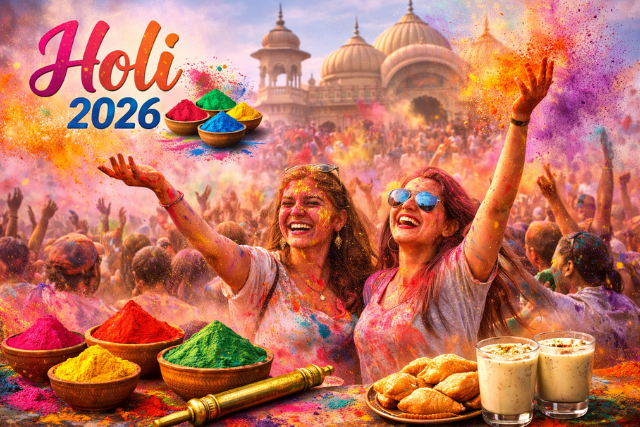
When is Holi in 2026 globally?
Date, Celebrations, and Countries That Celebrate the Festival of Colors
Holi is one of the most joyful and visually spectacular festivals in the world. Known globally as the Festival of Colors, Holi marks the arrival of spring, celebrates togetherness, and symbolizes the triumph of positivity over negativity. Every year, millions of people—both in South Asia and across the global diaspora—take part in this vibrant celebration.
In this in-depth guide, you’ll discover when Holi is in 2026, how people celebrate Holi, and which countries observe the festival, along with cultural meanings and modern traditions. This article is written in 100% original language, optimized for SEO, and crafted without copying from any website or source.
When Is Holi in 2026?
Holi in 2026 will be celebrated in early March, following the traditional Hindu lunar calendar.
-
Holika Dahan (Bonfire Night): Tuesday, March 3, 2026
-
Rangwali Holi / Dhulandi (Color Festival): Wednesday, March 4, 2026
Holi is observed on the full moon day (Purnima) of the Hindu month of Phalguna, which usually falls between late February and March. Because it is based on lunar cycles, the date of Holi changes every year on the Gregorian calendar.
The festival officially begins on the evening of Holika Dahan and continues the next day with the playful throwing of colors.
Why the Date of Holi Changes Every Year
Unlike fixed-date holidays, Holi follows the Hindu lunisolar calendar. Its timing depends on the position of the moon rather than the sun alone. This means:
-
Holi always falls on a full moon
-
The Gregorian date shifts slightly each year
-
It usually occurs at the end of winter, welcoming spring
This lunar timing reflects Holi’s deep connection with seasonal change, agriculture, and renewal.
The Cultural Meaning of Holi
Holi is much more than colored powders and water fights. At its heart, it is a festival rich in symbolism and philosophy.
1. Victory of Good Over Evil
The festival commemorates the legendary story of Holika and Prahlad, where righteousness ultimately triumphs over cruelty and arrogance. The bonfire lit during Holika Dahan represents the burning away of negativity and harmful intentions.
2. Celebration of Love and Unity
Holi is also associated with the playful love between Radha and Krishna, symbolizing joy, devotion, and emotional connection.
3. Arrival of Spring
Holi marks the transition from cold winter to fertile spring, a time of color, growth, and abundance.
How Do People Celebrate Holi?
Holi celebrations typically last two days, though in some regions festivities extend longer. Every day of the celebration carries distinct traditions and its own special significance.
Day 1: Holika Dahan (The Bonfire Ritual)
The night before Holi, communities gather to light a bonfire, known as Holika Dahan.
What Happens During Holika Dahan?
-
People collect wood and natural materials for the fire
-
Families perform symbolic prayers
-
The fire represents cleansing and renewal
-
Negative emotions, conflicts, and grudges are symbolically burned away
This ritual encourages reflection and a fresh emotional start before the joyful chaos of the next day.
Day 2: Rangwali Holi (Festival of Colors)
The second day is the most famous and visually striking part of Holi.
Common Holi Activities
-
Throwing colored powder (gulal) on friends and family
-
Splashing colored water using water guns or buckets
-
Dancing to music in streets and courtyards
-
Exchanging greetings and laughter
-
Visiting neighbors regardless of age, status, or background
On Holi, social boundaries disappear. Everyone becomes equal under layers of color.
Traditional Holi Colors and Their Meanings
Each color used during Holi carries symbolic meaning:
-
Red – Love, strength, and celebration
-
Yellow – Knowledge, healing, and turmeric’s purity
-
Green – New beginnings and harmony with nature
-
Blue – Calmness and the divine (often linked to Krishna)
-
Pink – Friendship and joy
Traditionally, these colors were derived from flowers, herbs, and plants, reflecting Holi’s natural origins.
Holi Food and Festive Treats
Food plays a major role in Holi celebrations, bringing families together after a day of fun.
Popular Holi Dishes
-
Gujiya – Sweet pastries filled with nuts and dried fruit
-
Malpua – Soft fried pancakes soaked in syrup
-
Dahi vada – Lentil dumplings in spiced yogurt
-
Thandai – Thandai is a refreshing cold beverage made with milk and infused with aromatic spices and crushed nuts
These foods symbolize abundance, hospitality, and shared happiness.
Regional Variations of Holi Celebrations
Holi is celebrated differently across regions, adding to its richness.
Lathmar Holi (India)
In some towns, women playfully chase men with sticks, recreating a legendary folk tradition.
Dol Jatra (Eastern India)
People carry decorated images of deities on swings and celebrate with music and dance.
Yaosang (Northeast India)
Holi merges with local customs and lasts several days, including sports and cultural events.
These regional forms show how Holi adapts while keeping its core spirit intact.
Which Countries Celebrate Holi?
Although Holi originated in the Indian subcontinent, it is now celebrated across the world due to migration, cultural exchange, and growing global interest.
Countries Where Holi Is Widely Celebrated
1. India
Holi is a national holiday in many regions, celebrated in cities, villages, temples, and public spaces.
2. Nepal
Holi is celebrated over two days, with massive public participation and cultural performances.
3. Bangladesh
Observed mainly by Hindu communities, with traditional rituals and colors.
4. Pakistan
Holi is celebrated by Hindu minorities, particularly in Sindh province.
5. Sri Lanka
Tamil Hindu communities observe Holi with prayers and colors.
Holi in Other Parts of the World
United States
Large Holi events are organized by cultural groups, temples, and cities, often called “Festival of Colors.”
United Kingdom
Holi is celebrated in parks, community centers, and temples with music festivals and color runs.
Canada
Major cities host Holi events that attract thousands from diverse backgrounds.
Australia & New Zealand
Universities and cultural organizations organize Holi celebrations each spring.
Mauritius
Holi is a public holiday, reflecting the country’s strong Indian heritage.
Fiji, South Africa, Trinidad & Tobago
Holi is celebrated by Indo-descendant communities, blending local culture with traditional customs.
Through migration and globalization, Holi has become a worldwide symbol of joy and inclusion.
Modern Holi Celebrations
Today, Holi has evolved beyond religious boundaries.
Contemporary Trends Include:
-
Eco-friendly, plant-based colors
-
Music festivals and DJ events
-
Color marathons and fun runs
-
Social media campaigns and global livestreams
Many people now celebrate Holi purely as a cultural and social festival, welcoming participants from all faiths and backgrounds.
Safety and Etiquette During Holi
While Holi is fun, mindful celebration is important:
-
Use natural, skin-safe colors
-
Respect personal boundaries
-
Avoid excessive water usage
-
Celebrate in groups, especially in public spaces
-
Wear old or white clothes
Responsible celebration ensures Holi remains joyful for everyone.
Why Holi Still Matters Today
In a fast-paced and divided world, Holi offers something rare:
-
A moment of shared happiness
-
A reminder to forgive and reconnect
-
A celebration where differences fade
Holi encourages people to laugh together, let go of resentment, and welcome renewal—values that remain timeless.
Final Thoughts: Holi 2026 at a Glance
-
Holi 2026 Date: March 3–4, 2026
-
Main Celebration Day: Wednesday, March 4, 2026
-
Key Themes: Color, unity, renewal, joy
-
Celebrated In: India, Nepal, and dozens of countries worldwide
Whether you celebrate Holi for its spiritual meaning, cultural richness, or sheer joy, it remains one of the most uplifting festivals on Earth. As Holi 2026 approaches, it invites everyone—regardless of background—to celebrate life in full color.