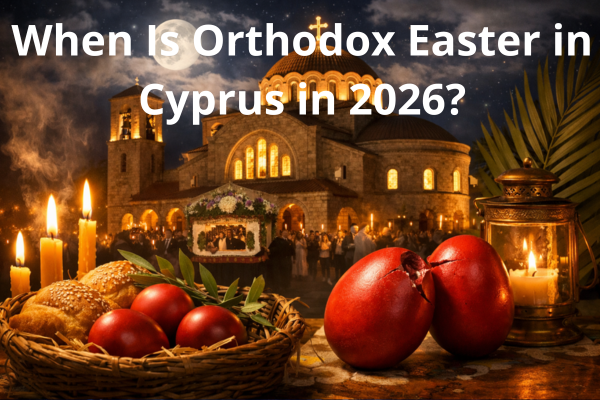
When is Orthodox Easter in Cyprus in 2026?
Orthodox Easter is the most significant and widely celebrated religious festival in Cyprus. For 2026, the date of Orthodox Easter Sunday falls on April 12, 2026.
This special date follows the ancient Eastern Orthodox tradition of calculating Easter using the Julian calendar rather than the modern Gregorian calendar. Because the two calendars diverge over time, the date for Orthodox Easter (also called Pascha) often differs from the Western Easter observed by Roman Catholic and Protestant communities.
In Cyprus, Orthodox Easter is not just a single day’s celebration—it marks the culmination of Holy Week and is observed with deep reverence, centuries-old traditions, family gatherings, festive feasting, and unique cultural customs reflective of the island’s Greek Orthodox heritage.
Below, we explore everything you need to know about Orthodox Easter in Cyprus in 2026, its religious and cultural importance, how the date is determined, major traditions, holiday timing, and tips for visitors.
When Is Orthodox Easter in Cyprus 2026?
For 2026:
-
Orthodox Good Friday: April 10, 2026
-
Orthodox Holy Saturday: April 11, 2026
-
Orthodox Easter Sunday: April 12, 2026
-
Orthodox Easter Monday: April 13, 2026
-
Orthodox Easter Tuesday (bank observance): April 14, 2026
The most important date is Sunday, April 12, 2026—the day Christians honor Jesus Christ’s Resurrection, central to the Orthodox faith.
How Is the Date of Orthodox Easter Determined?
Unlike Western Easter, which uses the Gregorian calendar, Orthodox Easter is based on the Julian calendar. The main rules are:
-
Easter must fall on the first Sunday after the first full moon that occurs on or after the spring equinox.
-
The calculation follows traditional Orthodox Paschalion methods that align with religious observances established at early Church councils.
-
In most years, this Julian-based date comes later than the Western Easter date.
Because the Julian calendar gains days relative to the Gregorian system, the date steadily shifts. As a result, Orthodox Easter usually occurs between early April and early May.
Religious Significance of Orthodox Easter
Orthodox Easter, or Pascha, is the single most sacred holiday in the Eastern Orthodox Church. It is a celebration of the resurrection of Jesus Christ from the dead, central to Christian salvation theology.
Why It Matters
-
Resurrection Celebration: Easter symbolizes the victory of life over death and hope over despair.
-
End of Lent: It marks the end of Great Lent, a 40-day period of fasting, prayer, and spiritual reflection.
-
Spiritual Renewal: It’s a time for believers to renew their faith and partake in special services, culminating in the joyful Easter Sunday liturgy.
The week leading up to Easter—Holy Week—includes solemn and moving services, each focusing on the final days of Christ’s life, crucifixion, and burial.
Holy Week in Cyprus
Holy Week starts on Palm Sunday and concludes on Holy Saturday.
This period is filled with religious observances:
Palm Sunday
-
Celebrates Jesus’ arrival in Jerusalem.
-
Churches distribute palms or bay leaves to worshippers.
Holy Monday to Wednesday
-
Special readings reflect Jesus’ teachings and parables.
Holy Thursday
-
Commemorates the Last Supper with the washing of feet and ceremonial rituals.
Good Friday
-
A deeply solemn day reflecting on Christ’s crucifixion.
-
Many attend processions and services symbolizing His suffering.
Holy Saturday
-
Marks the time Jesus lay in the tomb.
-
Evening services transition into midnight vigils.
Easter Sunday
-
Begins late at night or early morning.
-
A triumphant celebration heralds Christ’s resurrection.
These services draw worshippers from across Cyprus to cathedrals, parish churches, and community ceremonies in towns and villages alike.
Traditional Easter Foods in Cyprus
Food plays a major role in Easter celebrations, especially after the strict fasting of Lent ends. Some traditional Easter foods include:
-
Magiritsa – A soup made from lamb offal and fresh herbs, eaten after the midnight service.
-
Roast Lamb – A centerpiece feast representing Christ as the “Lamb of God.”
-
Red-Dyed Eggs – Symbolizing new life and the blood of Christ; cracking them is a festive tradition.
-
Flaounes – A special Cypriot cheese and herb pastry enjoyed throughout the Easter period.
These dishes bring families together for festive meals and social gatherings.
Easter Traditions in Cyprus
Orthodox Easter in Cyprus blends religion and culture in remarkable ways:
1. Midnight Services
The most anticipated liturgy takes place at midnight on Holy Saturday. Worshippers gather in candlelight and proclaim Christos Anesti (“Christ is risen”) as church bells ring.
2. Processions
On Good Friday, dramatic processions feature embroidered icons, lit candles, and floral decorations. These processions reflect the church’s retelling of Christ’s Passion.
3. Easter Eggs
Red-dyed eggs are used in playful matches where families and friends tap eggs to see whose egg remains unbroken—a symbol of Christ’s resurrection.
Public Holidays During Easter in Cyprus
In Cyprus, several dates around Easter are recognized as public holidays:
-
Good Friday (April 10, 2026)
-
Orthodox Easter Monday (April 13, 2026) – a national public holiday.
-
Easter Tuesday (April 14, 2026) – often observed as a bank holiday.
While Easter Sunday (April 12) is the focus of religious celebrations, the government recognizes the surrounding days to allow families to observe traditions and gather.
Visiting Cyprus for Easter
If you’re planning a trip to Cyprus in 2026, Easter is a phenomenal time to experience the island’s culture.
Tips for Visiting
-
Book Early: Hotels and transport fill up fast due to Easter travel.
-
Participate Respectfully: Attend church services and processions with cultural sensitivity.
-
Enjoy the Festivities: Visit local markets and sample traditional foods.
-
Explore Beyond Churches: Many towns host music, arts, and community gatherings during the holiday period.
Easter is a blend of solemn observance and joyful celebration—a unique experience in the Mediterranean.
Why Orthodox Easter Can Fall on Different Dates
Each year, the date of Orthodox Easter changes because it’s tied to lunar cycles and calculated with the Julian calendar. Meanwhile, Western churches use the Gregorian calendar.
This difference is why Orthodox Easter sometimes falls:
-
After Western Easter
-
On a different Sunday entirely
-
Occasionally, in rare years, it might fall on the same day depending on the lunar cycle
In 2026, Orthodox Easter is later than the Western Easter date due to the Julian calendar’s influence.
Orthodox Easter in Cyprus 2026
Here’s a quick overview of the key dates:
| Event | Date (2026) |
|---|---|
| Good Friday | April 10 |
| Holy Saturday | April 11 |
| Orthodox Easter Sunday | April 12 |
| Easter Monday | April 13 |
| Easter Tuesday (bank day) | April 14 |
Orthodox Easter in Cyprus is a spiritually rich and culturally vibrant festival, cherished by the majority of the island’s population and observed with deep devotion, ancient rites, and community festivities.
Very Happy and Blessed Easter 2026!