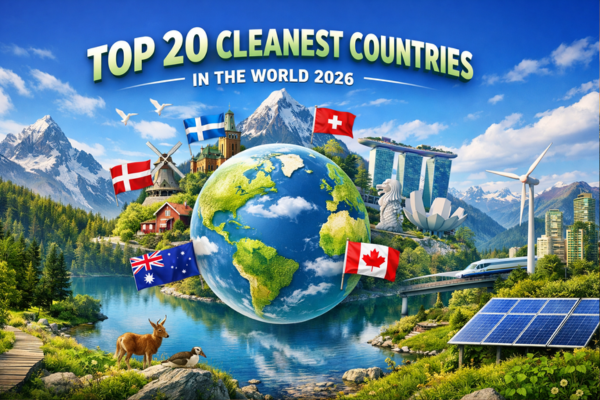
Top 20 Cleanest Countries in the World in 2026
In 2026, global awareness of environmental quality has never been higher. Clean air, pure water, efficient waste management, strong sustainability policies, and healthy ecosystems are key measures used to evaluate how “clean” a country truly is. Governments, researchers, and international organizations use the Environmental Performance Index (EPI) and similar metrics to assess nation-by-nation performance across air quality, sanitation, water purity, waste control, and biodiversity protection.
Below, we rank the top 20 cleanest countries in the world in 2026 based on the most recent environmental performance rankings, air quality data, and sustainability outcomes.
1. Denmark
Denmark consistently ranks at or near the top of global environment indexes due to its robust renewable energy infrastructure (especially wind power), low pollution levels, and strict environmental governance. Danish cities lead in waste sorting and recycling, and the country invests heavily in climate resilience programs.
2. Finland
Finland is world-renowned for its pristine forests, clear lakes, and low urban pollution. With a deep commitment to sustainability and circular economy strategies, Finland excels in air and water quality, waste management, and preservation of natural habitats.
3. Sweden
Sweden’s environmental policies are designed for long-term sustainability. Strong regulations on emissions, extensive clean energy usage (including hydro and wind power), and high wastewater treatment standards make it one of the cleanest nations on Earth.
4. Switzerland
Switzerland benefits from a combination of strict environmental protections, active conservation of alpine ecosystems, and excellent infrastructure for clean energy and public transport. These factors reinforce its high cleanliness and sustainability ratings.
5. Norway
With abundant renewable energy from hydropower and a national focus on environmental stewardship, Norway maintains excellent air and water quality standards. Its natural landscapes remain remarkably preserved, and pollution levels stay impressively low.
6. Iceland
Iceland’s energy is predominantly renewable — powered by geothermal and hydroelectric sources. This, combined with low industry pollution and extensive monitoring of air and water quality, positions Iceland among the world’s cleanest nations.
7. Netherlands
Despite being a densely populated country, the Netherlands achieves high cleanliness through advanced waste management systems, strong air quality regulations, and innovative environmental policies that emphasize sustainable urban planning.
8. Germany
Germany’s environmental success stems from clean tech innovation, strict emissions standards, and strong enforcement of environmental law. Recycling, renewable energy, and clean transport initiatives are core to the country’s cleanliness ratings.
9. Luxembourg
Small but highly developed, Luxembourg excels in cleanliness through efficient infrastructure, widespread recycling, and strong environmental governance. It consistently scores well on environmental performance rankings worldwide.
10. Austria
Austria’s mountainous landscapes and protected biospheres remain unspoiled thanks to strict environmental protections. Cities like Vienna also make sustainability a priority, enhancing overall cleanliness scores.
11. Estonia
Estonia is notable for its significant progress in environmental performance over the last decade. Programs focusing on clean energy, air quality, and conservation have helped it secure a spot among the cleanest nations globally.
12. United Kingdom
The U.K. has boosted its environmental performance through cleaner public transport, ambitious renewable targets, and reductions in industrial pollution. Air and water quality measures continue to improve year after year.
13. France
France balances large urban centers with extensive natural reserves. Its environmental policies emphasize pollution control, renewable energy adoption, and sustainable agriculture, helping it rank among the cleaner countries.
14. Ireland
Ireland has made impressive gains in environmental quality thanks to modern infrastructure, reductions in particulate pollution, and investment in green energy projects. It continues to improve public health and ecosystem vitality.
15. Czech Republic
Central Europe’s Czech Republic ranks well due to strong air pollution controls, improvements in water quality, and growing adoption of sustainable practices across industries.
16. Slovakia
Slovakia’s environmental efforts are reflected in improved cleanliness metrics, particularly in urban air quality and water systems, as well as expanding protected areas for biodiversity.
17. New Zealand
New Zealand often appears on lists of clean countries thanks to its wide open spaces, low population density, and dedication to sustainability. Its air is exceptionally clean, and beaches and lakes are well-protected.
18. Singapore
Singapore stands out in Asia for its stringent public cleanliness laws, effective waste management systems, and urban greening programs. Though a small city-state, its environmental standards are world-class.
19. Canada
Canada’s vast forests, expansive wilderness, and low air pollution make it one of the cleanest large countries. Cities like Vancouver and Ottawa regularly report excellent air quality.
20. Australia
Australia rounds out the top 20 with improvements in air quality, water sanitation, and environmental policy enforcement — all reinforced by strong conservation programs for its unique ecosystems.
What Makes These Countries “Clean”?
Understanding why these nations lead in cleanliness requires looking beyond simple rankings. The top cleanest countries in the world in 2026 share several common traits:
1. Strong Environmental Governance
Countries that enforce strict environmental laws — covering emissions, water protection, waste, and chemical pollutants — consistently score higher. Governments set targets, monitor progress, and penalize violations, encouraging cleaner air and water.
2. Investment in Clean Energy
Renewable power sources like wind, solar, hydro, and geothermal reduce reliance on fossil fuels and slash emissions. Countries that lead in renewables tend to have cleaner air and lower carbon footprints.
3. Waste Management and Recycling
Effective waste collection, recycling, and treatment systems reduce landfill use and prevent toxic materials from entering soil and waterways. For example, many top nations have mandatory recycling programs and incentives for waste reduction.
4. Public Awareness and Behavior
A high level of environmental literacy among citizens supports cleaner cities and rural areas. When people understand the value of clean air and water, they’re more likely to adopt eco-friendly habits like cycling, conserving water, and reducing plastic use.
5. Natural Geography
Geography plays a role too. Countries with large expanses of untouched nature (like Iceland or Canada) often have fewer sources of pollution. Mountain ranges, oceans, and winds help disperse pollutants and protect air quality.
Cleanliness Beyond Rankings
Being “clean” isn’t just about numbers — it means healthier lives, reduced disease risk, and more sustainable development for future generations. Air quality affects respiratory health, clean water prevents disease outbreaks, and proper waste handling protects ecosystems and communities alike.
Cities within these top countries also reflect high cleanliness standards. Urban innovations such as electric public transport, green buildings, automated recycling, and pollution-monitoring technologies all contribute to overall country rankings.
In 2026, the leadership of Northern and Western European countries in global cleanliness rankings remains strong, but other nations like New Zealand, Singapore, Canada, and Australia also show that high cleanliness and sustainability are achievable across regions.
Whether you are:
– Planning to live in a cleaner environment
– Investing in eco-tourism
– Studying sustainability trends
…this list highlights where environmental health is strongest today — serving as both inspiration and a benchmark for future progress.