
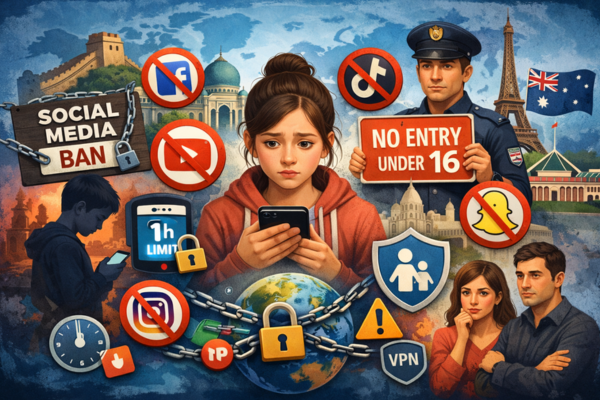
Countries That Ban or Restrict Social Media for Children and Young People in 2026: Why the Bans and What They Mean
In the age of digital communication, social media platforms such as YouTube, Facebook, Instagram, TikTok, Snapchat, and others have become central parts of young people’s lives. While these networks offer entertainment, creativity, and connection, many governments are raising serious concerns about their impact on children’s mental health, privacy, safety, and development.
By 2026, several countries have introduced laws, age limits, or restrictions that either ban access to social media for children under a certain age or impose strict rules designed to protect young users. This article explores which countries have taken action, why they did it, and what effects these changes may have on children and society.
Why Governments Are Restricting Social Media for Children?
Before we look at specific countries, it’s important to understand the key reasons behind these decisions.
Authorities across various nations are taking action in response to growing worries regarding:
1. Mental Health Risks
Many studies suggest a strong link between excessive social media use and increased rates of depression, anxiety, and low self-esteem among young people. Governments worry that unlimited access could damage children’s emotional well-being.
2. Exposure to Harmful Content
Children can easily encounter violent, explicit, or disturbing content. Even with content moderation systems, inappropriate material still slips through. This has raised safety concerns for younger users.
3. Online Addiction
Social media platforms are designed to keep users engaged. Features such as endless scrolling, notifications, and algorithmic recommendations can lead to addictive behavior, particularly in developing brains.
4. Privacy and Data Collection
Children’s personal data — including their interests, habits, locations, and messages — are often collected by platforms. Governments worried this data could be misused or sold without adequate protection.
5. Cyberbullying and Online Harassment
Social media can expose children to cyberbullying, trolling, and social exclusion. Some countries find existing protections insufficient and seek stronger rules.
6. Distraction from School and Learning
Excessive social media use may disrupt sleep, reduce concentration, decrease academic performance, and limit real-world social interaction.
Countries Restricting Social Media Use for Children by 2026
The following nations have implemented bans, age restrictions, or major reforms aimed at protecting young people from the potentially harmful effects of social media.
India — Age Verification and Restrictions
India has taken one of the most comprehensive approaches in the world to regulate social media for young people.
-
Children under 16 years old must undergo strict age verification to access major platforms.
-
Platforms must provide parental controls and restrict certain features for minors.
-
Failure to comply may result in fines, blocking orders, or platform removal.
Why India Took Action:
India’s government cited rising concerns over mental health issues, cyberbullying, and unmoderated content affecting children. With a massive youth population and widespread smartphone adoption, officials argue that strict regulations are necessary to ensure safer online experiences.
Impact:
The rules have forced major platforms to redesign sign-up processes, strengthen safety features, and invest in local content moderation in regional languages.
China — Targeted Bans and Time Limits
China has long restricted young people’s access to social media and gaming. By 2026 these policies are even stronger:
-
Children under 13 years old are not permitted to have accounts on major platforms.
-
Users ages 13–18 are allowed limited hours per day in evenings and weekends.
-
Online activities are closely monitored by state authorities.
Why China Did It:
Chinese policymakers argue that social media and online gaming distract from education, weaken family values, and erode traditional culture. The government positions itself as a guardian of youth well-being and national stability, often emphasizing discipline and structured study.
Impact:
While many older teens adapt by finding alternate forms of entertainment, the strict limits have significantly reduced daily screen time for younger teens in China.
France — Child Protection Laws
France has introduced laws that protect children online, focusing on privacy and consent.
-
Social media platforms must obtain explicit parental consent before allowing children under 15 years old to join.
-
Platforms have strict rules about targeted advertising to minors.
-
Children have the right to request removal of data and content at any age.
Why France Did It:
French authorities point to privacy as a fundamental right, especially for children. They worry that profiling young users for advertising could influence their choices and put them at risk of exploitation.
Impact:
Platforms that fail to meet France’s strict rules face fines and restrictions. Many have adjusted terms worldwide to maintain compliance.
Saudi Arabia — Cultural and Religious Considerations
In Saudi Arabia, social media access for young users is influenced by cultural and religious norms.
-
Children under 12 are not allowed accounts on major platforms without parental supervision.
-
Saudis under 18 require parental authorization and monitoring tools enabled by platforms.
-
Content that violates cultural moral codes is strictly blocked.
Why Saudi Arabia Did It:
The policies reflect cultural values emphasizing modesty, family guidance, and moral education. Leaders argue that protecting children from content that conflicts with cultural and religious beliefs is essential.
Impact:
International platforms now provide options for family-friendly filters and restricted content categories for users in Saudi Arabia.
South Korea — Emphasis on Mental Health
South Korea has faced growing anxiety about youth screen time and mental strain from online comparison and pressure.
-
Users under 14 cannot create accounts without parental permission.
-
Platforms must provide self-limit tools for daily usage.
-
National campaigns educate families about healthy digital habits.
Why South Korea Did It:
South Korea’s government emphasizes youth well-being and prevention of social isolation caused by digital immersion. Officials link early social media use with increased rates of anxiety and declining face-to-face communication skills.
Impact:
Parenting programs and school curricula now include digital wellness training.
Australia — Safe Online Youth Act
Australia has introduced legislation that balances digital freedom with youth protection.
-
Children under 15 need parental approval to access social platforms.
-
Advertisements targeting children are strictly limited.
-
Platforms must have fast response teams for abusive behavior reports involving minors.
Why Australia Did It:
Australia’s approach focuses on harm reduction. Rather than banning outright, the government emphasizes safety features, transparency, and accountability for tech companies.
Impact:
Tech firms in Australia must publish annual reports on how they protect children online, including data handling and abuse prevention.
New Zealand — Digital Well-Being Framework
New Zealand encourages best practices for young social media users.
-
Platforms must prove they support safe usage environments for under-16s.
-
Parents and schools receive support to foster digital resilience.
-
Education programs include lessons on online safety and etiquette.
Why New Zealand Did It:
New Zealand focuses on building responsible digital citizens rather than imposing harsh bans. The government promotes a combination of regulation, education, and technology design that supports healthy engagement.
Impact:
Schools and families are more involved in decision-making about screen time limits and digital citizenship.
What Is the “Worth” of These Bans?
When people talk about the “worth” of banning social media for young people, they mean the benefits, costs, and overall value of such policies. Bans or restrictions can have both positive outcomes and challenges.
1. Improved Mental Health
Limiting exposure to addictive algorithms and harmful content can reduce anxiety, depression, and feelings of inadequacy among youth. Studies suggest that less comparison to curated online lives can strengthen self-confidence and mood.
2. Better Academic Performance
Fewer daily hours on social platforms often means more time for studying, hobbies, exercise, and sleep — all of which help with focus and grades.
3. Enhanced Privacy Protection
Bans and restrictions often require platforms to limit data collection from minors. This helps shield children from being profiled or having sensitive information exploited.
4. Reduced Exposure to Cyberbullying
While social conflict can still happen offline or in other digital spaces, strict moderation and restricted access lower the chances that children will be harmed by harassment on major platforms.
5. More Family Involvement
When parents must authorize accounts or use monitoring tools, families are more involved in how children interact with technology.
Challenges and Criticisms
Even policies designed to protect youth come with notable challenges:
1. Freedom and Expression
Some critics argue that banning social media access can limit young people’s freedom of speech and access to information.
2. Underground Access
Tech-savvy teens might find unofficial ways to access restricted platforms, such as through VPNs or shared accounts, weakening the policy’s effects.
3. Economic Impact
Content creators, educators, and businesses targeting teens may see reduced reach, affecting their income and engagement metrics.
4. Implementation Difficulties
Verifying age online is technically challenging. Some kids may lie about their age, while others may lack proper identification to prove their age online.
5. One-Size-Fits-All Concerns
Policies that work in one country may not adapt well in another due to cultural, economic, or technological differences.
What Parents and Educators Should Know
Even when bans exist, adults play a crucial role in supporting children’s healthy relationship with technology.
Teach Critical Thinking
Encourage children to think critically about what they see online — facts vs. opinions, real life vs. online life.
Model Healthy Tech Behavior
Parents who balance screen time help children adopt similar habits.
Use Built-In Protection Tools
Parental controls, daily time limits, and content filters can help create safer digital spaces for young people.
Encourage Offline Activities
Sports, reading, creative hobbies, and in-person socializing help children develop important skills outside screens.
By 2026, many nations have taken bold steps to protect young people from possible harms associated with social media platforms. From age restrictions and enforced limits to parental consent and privacy laws, each country’s approach reflects cultural priorities, technological concerns, and public health goals.
Rather than preventing young people from engaging with the world entirely, these laws aim to make online spaces safer, more accountable, and more nurturing. The future may bring even smarter safeguards, better digital literacy education, and reshaped social networks designed specifically with children’s well-being in mind.