
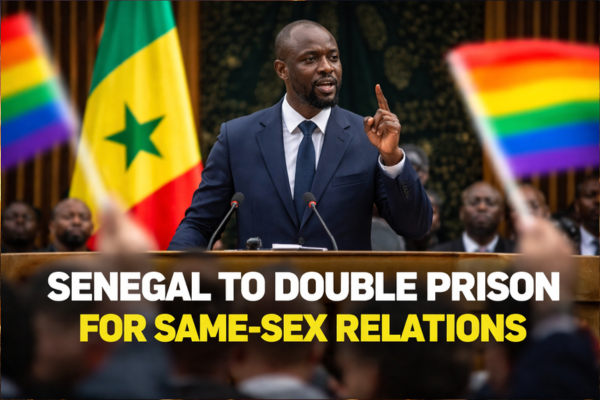
Prime Minister of Senegal Introduces Bill to Double Prison Terms for Same-Sex Relations
In Senegal, one of West Africa’s most politically active and culturally influential countries, a controversial legal proposal has ignited heated debate both domestically and internationally. On 24 February 2026, Prime Minister Ousmane Sonko introduced a draft bill that would significantly toughen penalties for same-sex relations by doubling prison terms for consensual same-sex conduct. This shift represents a major escalation in how the state treats LGBTQ+ issues, stirring deep reactions from civil society, religious groups, human rights organizations, foreign governments, and global media.
What Is in the Proposed Bill?
Under current Senegalese law, same-sex relations are already criminalized; “acts against nature” between adults of the same sex are punishable by one to five years in prison and a fine.
The new draft bill submitted by the government would change this significantly, including:
Higher Prison Sentences
-
Consensual same-sex acts would be punishable by five to ten years in prison, up from the existing maximum of five years.
-
The maximum sentence — often ten years — would apply especially in cases involving individuals under the age of 21, intensifying consequences for acts with younger adults.
Fines and Civic Penalties
-
Beyond imprisonment, convictions could include fines of up to 10 million CFA francs (roughly USD $3,500–$18,000 depending on the source), and convicted individuals might see their civic rights suspended for years.
“Promotion” and Advocacy
-
The bill also seeks to criminalize what it calls “promotion or advocacy” of same-sex relationships, with sentences of three to seven years for individuals or organizations found to be encouraging LGBTQ+ rights or visibility.
New Definitions in Law
-
The draft law broadens the legal language around what constitutes an “unnatural act,” potentially giving judges broad discretion in enforcement.
Historical and Legal Background
Longstanding Criminalization
Senegal’s Penal Code already criminalizes consensual same-sex relations. Article 319 of the code, as amended, penalizes “unnatural acts” between adults of the same sex with prison time and fines. This provision has been in place since independence and reflects deep cultural conservatism.
Social and Cultural Context
Senegal is a majority Muslim country with traditional social norms that view homosexuality and non-heterosexual orientations as taboo or inconsistent with cultural values. Earlier legislative changes and public attitudes have often leaned conservative on issues like sexuality and gender roles. Local religious groups — both Muslim and Christian — have regularly called for maintaining strict laws and even stiffening them.
Reaction Within Senegal
Support Among Some Groups
-
Religious and traditionalist groups have welcomed the bill, arguing it protects Senegalese cultural norms and moral values.
-
Supporters frame the legislation as upholding family structures and resisting what they view as foreign cultural influence.
This sentiment resonates in parts of Senegal’s civil society and reflects tensions between traditional beliefs and global discourse on human rights.
Opposition and Concerns
-
Local human rights advocates — including civil liberties organizations and LGBTQ+ activists — strongly oppose the bill.
-
Critics argue that expanding penalties will worsen discrimination, legitimize violence, and force LGBTQ+ individuals deeper into hiding.
-
Recent arrests of individuals on charges related to same-sex conduct have already raised fear and anxiety among marginalized communities in Senegal.
International and Human Rights Response
The bill has drawn widespread condemnation from international human rights groups. Organizations such as Human Rights Watch and other global advocacy bodies view the legislation as a regression in human rights protections that:
-
Violates treaties on equality and non-discrimination.
-
Deepens stigma and vulnerability for sexual minorities.
-
Threatens public health outcomes by discouraging access to HIV testing, treatment, and other services.
These international voices stress that punitive laws foster environments where violence and persecution go unchallenged.
Foreign Governments and Aid
Several Western nations and diplomatic missions have also expressed concern. Some have cautioned that tough new laws could strain diplomatic ties or impact development aid, as human rights criteria influence foreign assistance policies. However, Senegal’s leadership has framed their stance as affirming national sovereignty over external pressure — a recurring theme in many debates over cultural autonomy and human rights.
Regional Trends in Africa
Senegal’s proposed law comes amid broader conversations across Africa about LGBTQ+ rights and national identity. Several countries — particularly in East Africa — have recently debated or passed legislation restricting same-sex relations or outlawing advocacy, often citing tradition or public morality.
For example:
-
In Uganda, strict anti-homosexuality laws carry severe prison sentences, and recent arrests of women alleged to have engaged in same-sex acts underscore harsh enforcement.
-
Other countries in the region have similarly contentious debates about gender, sexuality, and lawmaking, with civil society groups warning of rising oppression.
Senegal’s move is significant because, historically, it has been seen as relatively moderate compared to neighboring states — but this new proposal signals a shift in regional legal approaches to LGBTQ+ matters.
What Happens Next?
Parliamentary Review
The draft bill has been approved by the Council of Ministers and sent to the National Assembly (parliament). However:
-
A date for the parliamentary vote has not been set.
-
If passed, the bill would become law and sharply expand the scope and severity of penalties for consensual same-sex conduct.
Possible Legal Challenges
Even after parliamentary approval, the law could face legal challenges, civil society pushback, and international pressure. Legal experts note that tightening already strict laws in an environment of rising arrests and prosecutions could have far-reaching consequences for justice, public health, and civil liberties.
Potential Consequences
For Senegalese Society
-
Increased criminalization may drive LGBTQ+ individuals further underground, making them more susceptible to violence, abuse, and discrimination.
-
Fear of arrest could reduce access to crucial health services, including HIV prevention and treatment, at a time when public health outcomes depend on open engagement with vulnerable communities.
-
Young adults — particularly those under age 21 — may face particularly harsh sentencing, which advocates argue risks violating age-based rights protections.
International Relations
-
Countries and international organizations that condition aid or trade on human rights standards may reassess partnerships.
-
Senegal’s diplomatic standing with Western nations could be affected, particularly in areas like development funding, cultural exchanges, and governance programs.
Civil Rights Climate
-
Civil liberties groups fear that criminalizing advocacy and “promotion” of same-sex relationships will chill free speech, media reporting, and education about sexual orientation and gender identity.
The introduction of this bill marks a pivotal moment in Senegal’s legal and cultural history. By potentially doubling prison terms for same-sex relations and broadening the legal reach into advocacy and public expression, the proposed legislation touches on fundamental questions of rights, identity, and governance. While many Senegalese support stricter laws based on cultural or religious values, international observers and rights organizations warn of grave harm to human rights protection and social inclusion.
The upcoming months — as the bill moves through parliamentary debate and possible enactment — will be critical not only for Senegal but also for broader regional discussions about law, tradition, and the rights of LGBTQ+ communities.