
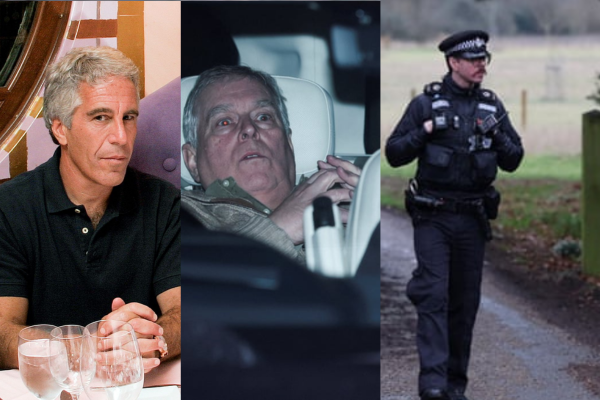
What Was Andrew Arrested For, and Where?
A Comprehensive and Updated Account of the Arrest of Andrew Mountbatten-Windsor
On February 19, 2026, the world watched a rare and historic event unfold: Andrew Mountbatten-Windsor, formerly known as Prince Andrew, was arrested by British police. The arrest took place on his 66th birthday — a fact that itself caught global attention. This article explores the full story: what he was arrested for, where it happened, what the allegations involve, and why the case matters.
Who Is Andrew Mountbatten-Windsor?
Before diving into the arrest, it’s important to understand who Andrew Mountbatten-Windsor is:
-
He is a member of the British royal family — the younger brother of King Charles III and, until recently, was known publicly as Prince Andrew.
-
In recent years, he was stripped of official royal duties and titles following ongoing controversies and legal issues.
-
Andrew’s public profile has been deeply affected by his past associations and ongoing legal scrutiny.
Where Did the Arrest Happen?
The arrest took place at Wood Farm, a residence on the Sandringham Estate in Norfolk, England. This location is not just any countryside house — it holds historical and personal significance. It’s the home where his late mother, Queen Elizabeth II, spent time and celebrated her last birthday before her passing.
On the morning of February 19, 2026, at around 8:00 a.m., officers from Thames Valley Police arrived at Wood Farm and conveyed to Andrew that he was being arrested. He was taken to a nearby police station — Aylsham Police Station in Norfolk — where he was held for questioning for approximately 11 to 12 hours before being released under investigation later that evening.
This event marked the first time in modern British history that a senior royal has been arrested in this formal way, underscoring the seriousness of the case.
What Exactly Was He Arrested For?
The official reason for the arrest was “suspicion of misconduct in public office.”
That term might sound generic or legalistic, so here’s what it means and why it matters.
“Misconduct in Public Office” Explained
Misconduct in public office is a criminal offense in the United Kingdom. It generally refers to situations where someone who holds — or once held — a public or official position abuses that position, violates professional obligations, or acts in a way that is seriously improper. The charge is often used when someone in authority fails to act appropriately in the performance of their duties.
In Andrew’s case, authorities say the suspicion centers on his actions and communications during his time as a UK trade envoy, a role in which he was expected to represent the country’s interests abroad and maintain confidentiality.
What Are the Allegations About?
While being arrested on suspicion doesn’t mean someone is guilty, the allegations against Andrew are connected to a much larger and controversial chapter involving the late Jeffrey Epstein, a convicted sex offender whose crimes and network have attracted international investigations for years.
Here’s the core of the allegations:
Sharing Confidential Information
Investigators believe that Andrew may have shared confidential UK government documents or reports with Jeffrey Epstein during his time as a British trade envoy. These documents are said to include sensitive information about official trips, international negotiations, or internal government processes — materials that should not have been disclosed to private individuals.
Law enforcement has tied this investigation, in part, to newly released files from the U.S. Department of Justice’s Epstein investigation, which included correspondence and records that raised questions about Andrew’s conduct.
Epstein Connection and Related Claims
The case is not solely about document sharing. While the current arrest is focused on misconduct in public office, there are also lingering claims connected to Epstein’s broader criminal network:
-
For years, various civil claims were made that linked Andrew to Jeffrey Epstein’s activities and associates.
-
Some of these claims involve allegations about Andrew’s personal conduct, though they have not directly led to criminal charges in the UK under this specific investigation.
-
Andrew has consistently denied any wrongdoing, including denying that he shared confidential government information or that he participated in criminal activities connected to Epstein’s circle.
How Did the Investigation Lead to an Arrest?
The arrest did not happen suddenly. It came after a period of growing scrutiny by British police and prosecutors following the release of previously sealed documents connected to Jeffrey Epstein’s investigations in the United States.
Law enforcement agencies, including the Thames Valley Police, looked into whether any criminal offenses may have been committed in the UK as a result of communications or interactions with Epstein or his associates. This led to months of review, followed by formal action when evidence suggested a potential offense under UK law.
The report that triggered the investigation was submitted by an organisation known as Republic, a group critical of the monarchy and known for advocating transparency and accountability.
What Happened After the Arrest?
After being taken into custody:
– Andrew was interviewed by police for several hours.
– He was then released from custody under investigation, meaning that the police are continuing their inquiries but have not formally charged him with a crime at this time.
– Authorities also searched multiple properties, including his current residence at Wood Farm and his former home, Royal Lodge near Windsor Castle.
The fact that he was released — rather than held in custody or charged immediately — is a normal part of UK criminal procedure when police need more time to analyse evidence and decide next steps.
Official Responses
The Royal Family
King Charles III issued a public statement expressing that the law must take its course and that authorities have his full cooperation. He emphasized that no one should be seen as above the law — a significant stance given the high profile of this case.
Members of the royal family, including Prince William and Princess Catherine, also publicly supported the law enforcement process and expressed concern for any victims connected to the wider situation.
Public Reaction
The arrest set off a wave of public and media attention around the world:
-
Some commentators saw it as a historic moment for accountability within institutions traditionally seen as above scrutiny.
-
Others debated the implications for the British monarchy and its role in society.
-
Legal experts pointed out that the case must proceed through the normal judicial and investigative channels, and that an arrest is only one step in what may be a long legal process.
Why This Matters?
The arrest of Andrew Mountbatten-Windsor is not just another celebrity or public figure arrest. It carries historic and legal weight for several reasons:
Historical Significance
This is believed to be the first formal arrest of a senior British royal in modern history, dating back to events from centuries ago. That, in itself, is a major moment in legal history.
Rule of Law
The case has become a focal point for discussions around justice, transparency, and equal treatment under the law — including whether individuals with status or privilege are held to the same legal standards as everyone else.
Epstein Legacy
Jeffrey Epstein’s criminal network has had global repercussions. This case ties into the long-running investigations into his activities and the people connected to him, keeping public attention on accountability and systemic failures that may have allowed abuse and exploitation to continue.
Current Status (As of February 2026)
– Andrew was arrested on February 19, 2026, on suspicion of misconduct in public office.
– He was detained, questioned, and released under investigation the same day.
– No formal criminal charges have yet been filed — but the investigation continues.
– Police searches at multiple properties connected to him have taken place.
✔️ The case remains a developing legal matter in the UK.
-
Who? Andrew Mountbatten-Windsor, former Prince Andrew and brother of King Charles III.
-
Where? Wood Farm on the Sandringham Estate, Norfolk, England — then taken to Aylsham Police Station.
-
What? Arrested on suspicion of misconduct in public office, linked to allegations that he shared confidential information while acting as a UK trade envoy — part of a broader examination of his connections with Jeffrey Epstein.
-
Outcome? Released under investigation; no formal charge yet, but police continue inquiries.
This case continues to unfold, and legal developments — including potential charges or court proceedings — may come in the months ahead. For now, the arrest itself stands as a historic and high-profile legal moment that reflects both individual accountability and broader questions about power and responsibility.